%201.svg)


.png)

What Is Vendor Managed Inventory (VMI)?

In Vendor Managed Inventory, the supplier (not the buyer) decides when and how much inventory to replenish at the buyer's location. Instead of the buyer's purchasing team generating orders off their own forecasts, the vendor monitors the buyer's stock levels, usually through shared data or direct system access. Then they ship replacement inventory to keep it within agreed min/max thresholds.
It's a shift in who owns the replenishment decision, not just who owns the inventory. Ownership of the goods can vary by agreement (more on that below). What defines VMI is that the vendor is the one watching the numbers and deciding when the next shipment goes out.
How VMI Works: The Six-Step Process

A functioning VMI relationship generally follows six repeatable steps:
1. Data sharing. The buyer gives the vendor visibility into current stock levels, consumption and sales history, and agreed min/max thresholds, typically through a shared system, EDI feed, or customer portal rather than emailed spreadsheets.
2. Demand analysis. The vendor reviews consumption trends, seasonality, and upcoming demand signals like promotions, production schedules, or new SKUs.
3. Replenishment decision. Based on current stock against the agreed thresholds, the vendor decides what to ship, how much, and when, without waiting for a purchase order.
4. Order generation and fulfillment. The vendor generates the replenishment order internally and ships against it, often auto-confirmed rather than manually approved by the buyer.
5. Receiving and reconciliation. The buyer receives the shipment, updates on-hand inventory, and confirms the replenishment matched what was actually needed.
6. Performance review. Both sides periodically review fill rates, stockout incidents, and inventory turns against the agreement, adjusting thresholds or forecasts as the relationship matures.
The cycle repeats continuously. Steps 1 and 2 have to run in near real time, or the rest of the cycle is working off stale information.
VMI vs. Traditional Inventory Management

In traditional inventory management, the buyer owns the entire replenishment cycle: monitoring their own stock, forecasting demand, deciding reorder points, and issuing purchase orders. The supplier has no visibility into the buyer's actual stock position until an order lands in their queue.
VMI inverts that. The practical difference shows up in three places:
- Who forecasts demand: the buyer's planning team, versus the vendor's.
- Who triggers the order: a purchase order from the buyer, versus a replenishment shipment the vendor initiates.
- Where the risk sits: largely with the buyer in a traditional model, shared or shifted toward the vendor under VMI.
Neither model is universally better. It depends on who forecasts more accurately for that product category, which is why some buyers run VMI for high-velocity SKUs and traditional purchasing for everything else.
VMI vs. Consignment Inventory: Key Differences

VMI and consignment inventory get confused because both involve a vendor managing stock at or for a buyer, but they answer different questions.
VMI answers: who decides when to replenish? Ownership of the goods typically transfers to the buyer at delivery, just as it would in a normal purchase.
Consignment answers: who owns the goods until they're used or sold? Under consignment, the vendor retains ownership even after the goods sit at the buyer's site, and the buyer only pays for what it actually consumes.
The two are independent. A VMI arrangement can run on consignment terms, with the vendor retaining ownership until use, or ownership can transfer at delivery like a normal sale. Whichever combination applies should be spelled out explicitly in the agreement. It determines who carries the balance-sheet inventory cost and who absorbs the loss if goods expire or go obsolete on the shelf.
Benefits of VMI for Buyers
- Fewer stockouts. The vendor is watching stock continuously and often catches supply-side constraints the buyer wouldn't see.
- Lower carrying costs and less administrative burden — less time spent generating POs, chasing forecasts, and expediting emergency orders.
- Better forecasting on complex SKU counts, since vendors with category expertise often forecast individual SKUs better than a generalist buyer-side team.
- Freed-up working capital, particularly under consignment-style VMI, where payment is deferred until consumption.
Benefits of VMI for Vendors
- A more stable demand signal. Real consumption data smooths out the bullwhip effect of buyers over- or under-ordering off incomplete information.
- Stickier customer relationships. A vendor embedded in the buyer's replenishment process is harder to displace than one who just fills POs.
- Better production and capacity planning, since real consumption data beats lumpy PO patterns for scheduling manufacturing runs.
- Fewer expedite and rush-order costs from buyer forecasting misses.
The tradeoff is real: the vendor takes on more forecasting responsibility, and often more inventory risk, than under a traditional PO relationship. That's the cost of the stickier relationship and the smoother signal.
Common VMI Challenges and How to Overcome Them
VMI is a relationship model as much as an inventory model, and it fails for relationship reasons about as often as technical ones.
- Trust. The buyer has to trust the vendor won't over-ship to move product; the vendor has to trust the buyer's data is accurate. Fix this with contractually defined service-level metrics like fill rate, stockout rate, reviewed on a set cadence, not assumed goodwill.
- Stale data. A vendor working off a weekly export is making decisions on old information. That's a systems problem: both sides need tools that share inventory data continuously, not periodically.
- Unclear accountability. Without a well-defined agreement, a stockout turns into finger-pointing. Spell out responsibility for forecasting accuracy, thresholds, and what happens when either side misses a commitment.
- Overreliance on one vendor. VMI is a partnership that requires ongoing oversight, not a way to outsource inventory risk and stop paying attention.
Real-World VMI Examples

The most cited VMI example is Walmart and Procter & Gamble, dating to the late 1980s. P&G got access to Walmart's point-of-sale and inventory data and took responsibility for replenishing shelves directly, rather than waiting for Walmart's buyers to place orders.
It's one of the earliest large-scale proofs that VMI could cut stockouts and inventory costs at the same time, a result that looks counterintuitive under a traditional model until you notice the party with the best demand visibility is also the one making the call.
VMI is at least as common in industrial distribution and manufacturing, a fastener or MRO supplier managing bin stock at a plant, or a raw material supplier managing buffer stock for a food or beverage producer to prevent a line stoppage.
In these relationships, the vendor often has direct system access to the buyer's warehouse stock for the specific SKUs it supplies, with replenishment triggered automatically once a location crosses its reorder point.
When VMI Makes Sense

VMI tends to work when:
- The vendor has meaningfully better forecasting ability or category expertise than the buyer.
- The relationship is long-term and high-volume enough to justify the integration effort.
- Both sides can commit to real-time or near-real-time data sharing.
- Consumption patterns are predictable enough for a vendor to forecast from consumption data alone.
VMI tends to struggle when:
- The relationship is short-term, low-volume, or transactional.
- Either side lacks the systems to share live inventory data.
- Trust is thin, or the relationship has a history of disputes over quality, timing, or billing.
- Demand is volatile or driven by factors the vendor can't see, like a promotional calendar that isn't shared.
What's in a VMI Agreement
A well-structured VMI agreement typically spells out:
- Min/max inventory thresholds for each SKU or location.
- Data-sharing terms: what's shared, how often, through what system.
- Ownership and billing terms: when title transfers, when payment triggers.
- Service-level expectations: target fill rates, acceptable stockout frequency, lead times.
- Roles and responsibilities: who forecasts, who approves exceptions, who handles returns.
- Review cadence and exit terms.
The Technology That Makes VMI Work

Every challenge above traces back to the same root issue: both sides need to see the same numbers in real time, and they need to trust what those numbers are telling them.
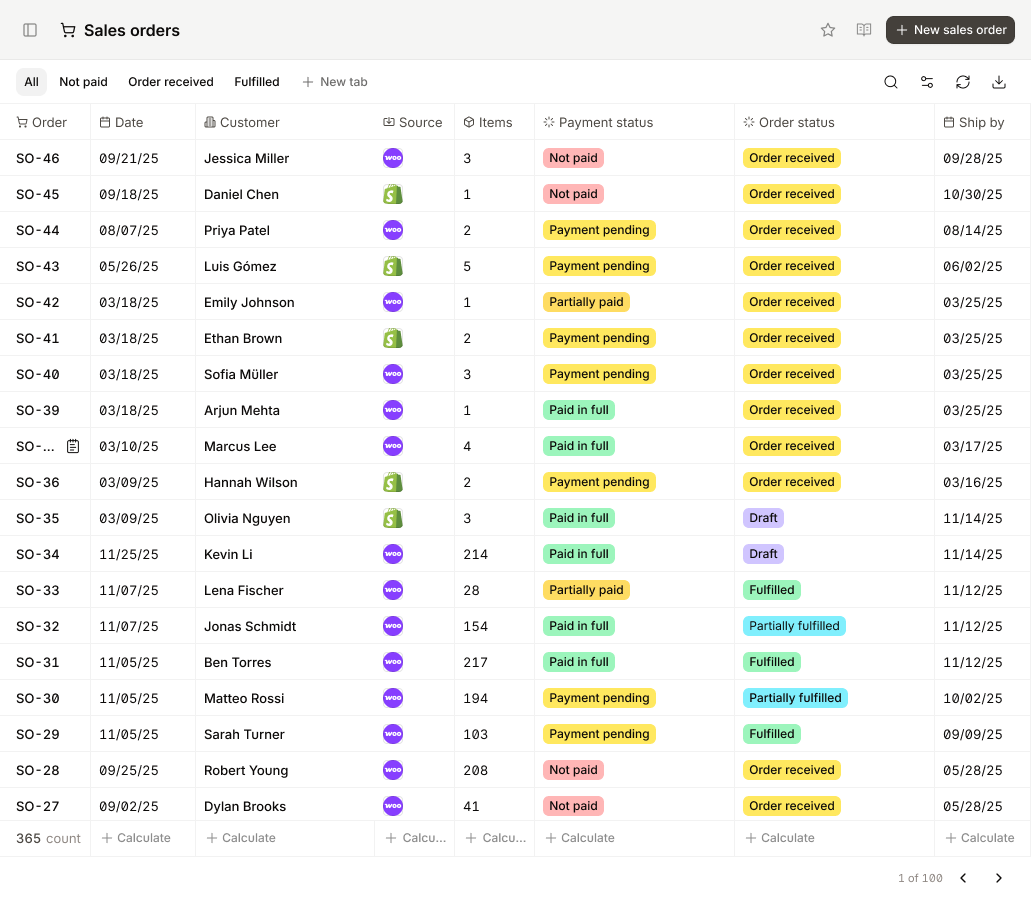
On the buyer side, that means inventory and multi-warehouse systems that show accurate stock positions by location and SKU without someone manually exporting a spreadsheet or picking up the phone. On the vendor side, it means purchase order and MRP tools that can take a buyer's live consumption data and turn it directly into a replenishment decision.
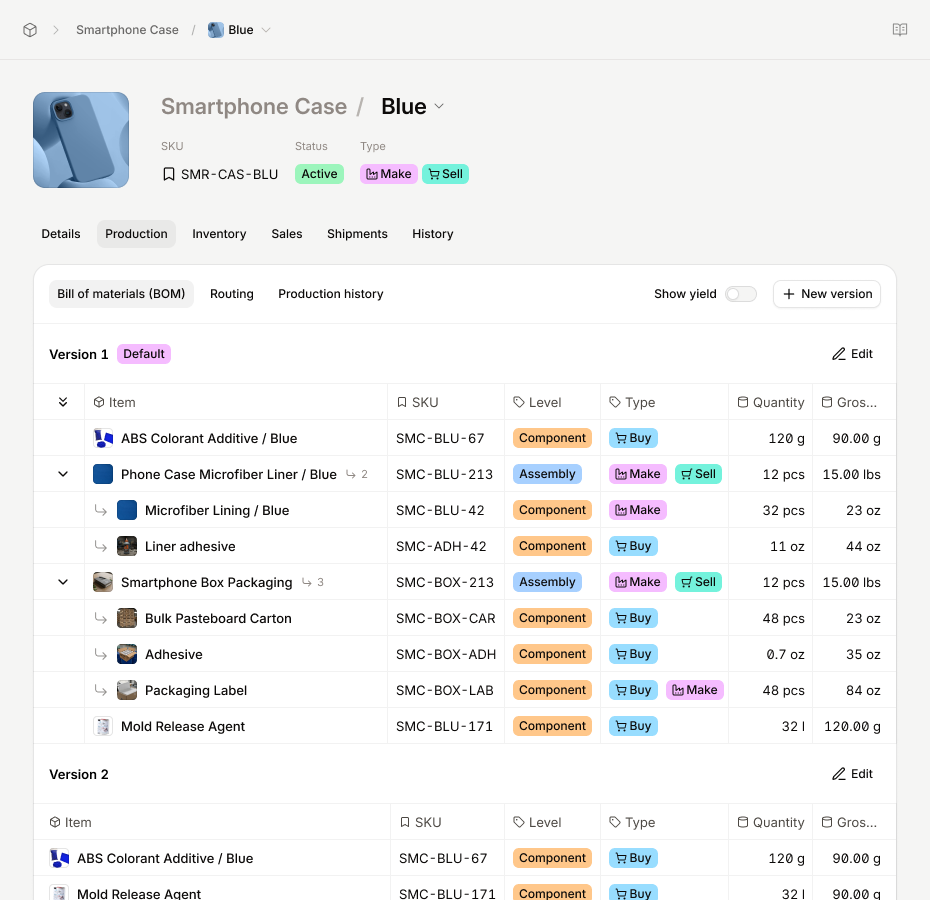
Digit handles both sides of this, whether you're the one sharing your inventory or the one acting on someone else's. If you're the buyer, you can give your vendor controlled visibility into your stock and thresholds without handing over your entire system. If you're the vendor, you can act on that shared data with automatic reorder triggers tied directly into your own purchase and production workflows.
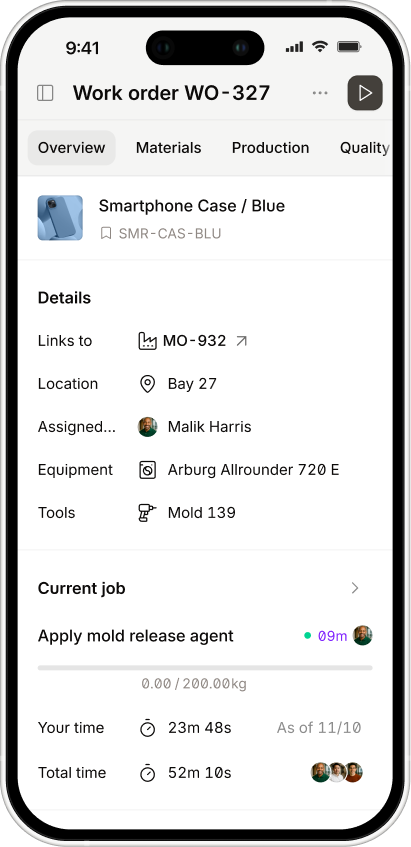
For food and beverage, traceability adds one more layer: lot-level visibility, so VMI isn't just tracking quantity but also expiry and rotation too.
VMI succeeds or fails on two things: whether the data flows in real time, and whether both sides trust what it's telling them. Learn more about how Digit supports VMI by booking a call.
.jpg)


.jpg)
.jpg)