%201.svg)





What is demand forecasting and demand planning

Demand forecasting and planning are methods that predict future customer demand for products or services. In turn, businesses make better decisions across inventory, production, and supply chain operations.
If you have ever wondered how manufacturers decide on what products to make, demand forecasting answers part of that question. It is also a way to manage the supply chain from start to finish. Both often get grouped together, even though they serve different purposes. This is because they often overlap.
Demand forecasting
Demand forecasting explains why decision makers plan things a certain way. Forecasts inform what did or didn’t work in specific shop-floor scenarios. This helps planners think on what to do about it in the next production cycle.
At the core of demand forecasting is analysis. Decision makers estimate what customers are likely to buy, in what quantities, and over what timeframes. That means deciding how many units to ship on an upcoming week or planning capacity for the year ahead.
Forecasts can be specific. For instance, it could be for a single product at one company, or more generalized, covering entire product categories or markets. The goal is getting as close to reality as possible, since good forecasts influence the outcomes for everything else.
Legacy ERPs depend on historical fixed data, while more modern forecasting systems, like large language models (LLMs), analyze massive datasets, noticing things that would be difficult to connect.
As markets change faster and product life cycles shorten, many organizations are moving away from Legacy ERPs. Instead, they are moving to modern ERPs with built-in AI coaching for predictive analytics.
Demand planning
Demand planning builds on this analysis. Different teams come to a consensus of what that future demand looks like and what to do with it. Unlike forecasting, planning uses the judgment, experience, and skills of different people.
Demand planners ask the crucial questions.
"What if the supplier that is often late has another delay?"
"What if demand spikes 20% due to the product being popular this season?"
They interpret forecasts and run these scenarios, adjusting plans as conditions change. Planners make sure the organization meets customer demand when and where it occurs. Demand planning takes a big part in controlling costs and supporting profitable growth. Planners work with their teams and partners to keep the supply chain responsive and resilient.
Responsiveness involves shifting production to a different product line when customer preferences change.
- Suppliers expedite deliveries when a rush order comes in.
- Resilience means that if one supplier goes down, there are backup suppliers ready to make this cancellation manageable.
Together, demand forecasting and planning transition reactive guesswork to informed decision-making.
Turning data into demand planning decisions

Effective demand forecasting requires a combination of execution tools and collaboration that help make data-driven decisions.
Data collection and spotting demand shifts
Accurate, up-to-date order volumes, buying patterns, and other external factors are useful ways to spot demand shifts. When data is scattered, teams respond too late. And knowing that demand is changing only matters if you can adjust purchasing, production, and scheduling in time to respond.
Clean, accurate data forms the foundation for everything that follows. Without it, forecasts become guesswork.
Internal sources such as sales history, marketing campaigns, and promotions guide forecasts. External factors, like market trends and economic conditions also matter. Other examples include:
- Sales data from online stores
- Wholesale orders
- Retail locations
- Production records
- Supplier lead times
Statistical forecasting and modeling
Statistical forecasting with historical data helps in generating baseline predictions. Time series models identify patterns and seasonality in your sales. An example might be predictable spikes in demand during holiday seasons. This also includes:
- Quarterly ordering cycles from major customers feed manufacturers' expectations. These models show how changes in price or promotions affect demand.
- For example, you might notice that a 10% price reduction drives a 25% increase in orders.
Switching from batch production to continuous flow might reduce order frequency. But, continuous flow would increase average order size and show up as different order patterns in your data.
Cross-functional collaboration
Information silos create miscommunication across sales, marketing, finance, procurement, and operations. Without a shared forecasting system, sales commit to delivery dates that production can't meet. Procurement misses signals about large deals, and operations make assumptions without full context.
Key Challenges in Demand Forecasting and Planning

Even with the right components in place, manufacturers face several obstacles. These are the major areas that make demand forecasting and planning difficult:
Data quality and accessibility
Incomplete or outdated data from disconnected systems creates flawed forecasts. When these sources don't talk to each other, planners guess.
In most legacy ERP or planning systems, the process often looks like this: You run a report, then export to Excel. This leads you to the analysis of historical sales. You manually adjust forecasts based on this information, trying to interpret what changed.
The system stores data, but it fails to guide you. The inefficiency in this, is that a forecast based on last quarter's sales data will miss the mark. It simply won't account for nuances like a recent supplier delay, or a spike in returns.
How to address it: Link sales, inventory, and production data so it updates across the board. Planners no longer guess, as they work from a single, up-to-date source of truth.
New product introductions
Launching a new product without historical sales data makes forecasting highly speculative. You can't rely on past patterns when there aren't any. Planners use similar products as a guide, but it's still guesswork until real sales come in. This uncertainty makes it difficult to set initial production runs.
- Order too much, and you're stuck with excess inventory.
- Order too little and you miss sales opportunities.
How to address it: Use comparable product data and start with conservative production runs. Then adjust based on early sales signals and customer feedback.
Balancing MTO and MTS production
Made to order (MTO) is when a customer places an order, which prompts you to create a work order, produce it and ship it to them. Made to Stock (MTS) is when you forecast the demand, build inventory ahead of time, and ship it immediately when orders arrive.
Most manufacturers handle both customized orders and standard inventory items. While MTO reduces inventory costs, it extends lead times.
MTS production is where accurate forecasts matter since you want to avoid overproduction or stockouts. Juggling both models complicates capacity planning, so you need enough production capacity to handle confirmed orders while still producing forecasted stock items.
How to address it: Separate your forecasting models for MTO and MTS products. Track capacity in real-time to balance confirmed orders against forecasted stock needs.
Production timeline complexity
Different products often need different production timelines. One item might take two days to manufacture while another takes three weeks. When you're managing many timelines, forecasting future capacity becomes challenging. You need to account for each unique timeline, and aggregate the data to spot potential issues or underutilized capacity.
How to address it: Map out all production timelines and use planning software that visualizes capacity across different timeframes. It's also a plus if your tool spots conflicts before they disrupt schedules.
Market volatility and shifting demand
Sudden changes in consumer preferences, economic downturns, or unexpected events disrupt established patterns. The pandemic showed how fast normal demand evaporated or spiked. Seasonal patterns you've relied on for years could shift when consumer priorities change. These disruptions make historical data less reliable as a predictor of future demand.
How to address it: Build flexibility into your forecasts with scenario planning. Also maintain closer-to-market inventory positions that let you respond quickly when demand shifts.
Supply chain disruptions
When a supplier scheduled to deliver in two weeks changes it to five, your entire production schedule shifts. These disruptions cascade. Delayed raw materials mean delayed production. This means delayed customer deliveries and could risk lost sales.
How to address it: Track supplier performance metrics. Maintain backup supplier relationships for these scenarios. Always adjust safety stock levels based on lead time variability rather than averages.
Seasonal misjudgments
Underestimating or overestimating seasonal demand swings leads to significant inventory imbalances. If you stock up for a holiday rush that doesn't materialize as expected, you're left with excess inventory tying up cash.
If you underestimate the surge, you face stockouts during your most profitable period. This challenge intensifies when seasonal patterns shift, or when unpredictable trends swing.
How to address it: Review seasonal performance after each cycle to refine your models. Use demand sensing to catch early signals of patterns changing.
Excessive inventory holding costs, frequent stockouts, lost sales, and reduced customer satisfaction. Addressing them requires the right combination of clean data, tools, and collaborative planning.
Best practices for manufacturing demand planning

Successful demand planning comes down to consistent execution. These practices help manufacturers maintain accuracy and responsiveness.
Conduct regular data audits
Schedule quarterly reviews of your data sources, and fix inaccuracies before they compound. Check for duplicate entries, outdated supplier information, and gaps in sales records. Clean data prevents small errors from snowballing into major forecast misses.
Combine forecasting methods
If you rely on one way, your predictions can easily be wrong. That's why you should start with statistical models as your baseline. They use past data to spot real patterns.
Add other methods, so your forecast becomes more accurate and handles surprises better. Quantitative methods provide objectivity while qualitative inputs catch what the numbers miss.
Build safety stock for forecast uncertainty
No forecast is ever perfect. Your predictions will sometimes be a little high or low. That's why you should figure out how much extra safety stock you'll need. Calculate safety stock based on your typical forecast error and supplier lead time variability.
If your model is often off by 10-15% on items that sell more in certain seasons, add that extra amount to your regular inventory plan. This way, small mistakes or delays won't cause you to run out of stock and lose sales.
Track metrics like forecast accuracy. You can do this by product line, inventory turnover rates, and stockout frequency. Review these monthly with your cross-functional team. When accuracy drops on specific products, investigate why. Use these insights to refine your approach.
Use collaborative tools for real-time visibility
Move forecasting discussions out of email threads. Look for tools with real-time visibility through a shared dashboard. Sales, production, and procurement teams should all see the same metrics in real-time. If sales updates expected close dates for major deals, production should see that change, rather than learn about it four days later in a meeting recap.
Align demand plans with business strategy
Connect your demand forecasts to broader business goals through Integrated Business Planning (IBP). If leadership plans to launch in new markets next quarter, your demand plan should reflect the production capacity and material requirements that expansion requires. Alignment prevents situations where strategic decisions and operational plans work against each other.
These practices support a system where accurate data feeds better forecasts. This, in turn, drives smarter decisions, which generate feedback that improves future planning.
Implementing demand planning in your manufacturing business

Moving from spreadsheets to dedicated demand planning software requires a thoughtful approach. Here's how to implement these solutions:
Start with your current pain points
When picking an operating system, begin by identifying your current pain points. A sales and production team that works from different numbers requires a unified view of real-time metrics across sales, production, shipping, and purchasing. A manufacturer struggling with new product forecasts needs different features than one battling seasonal inventory swings.
Assess your technology readiness
Within ERP system options, look for solutions that integrate and unify data. Powerful tools require skilled users. So, always consider whether this technology fits your operations team and if operators can easily configure the technology your business adopts.
Choose based on scalability and integration
Choose technology that shapes your business and grows with it through every stage. Systems that display real-time metrics across operations in a single view enable you to make informed decisions.
Guessing only gets you so far, so find a system that removes this blocker where countless hours are spent pulling data from separate sources, only for it to be incorrect.
Do this by using a system that eliminates constant manual data transfers, as this introduces errors and delays.
Look for solutions with native integrations to your existing tools or robust APIs that automate data flow between systems. Everyone works from the same real-time data from day one, rather than operating in silos.
How Digit Helps With Demand Planning
Digit is a cloud-based inventory and production management solution that connects your sales data, production schedules, and supplier information in one place, giving you the real-time visibility manufacturers need for accurate demand planning.
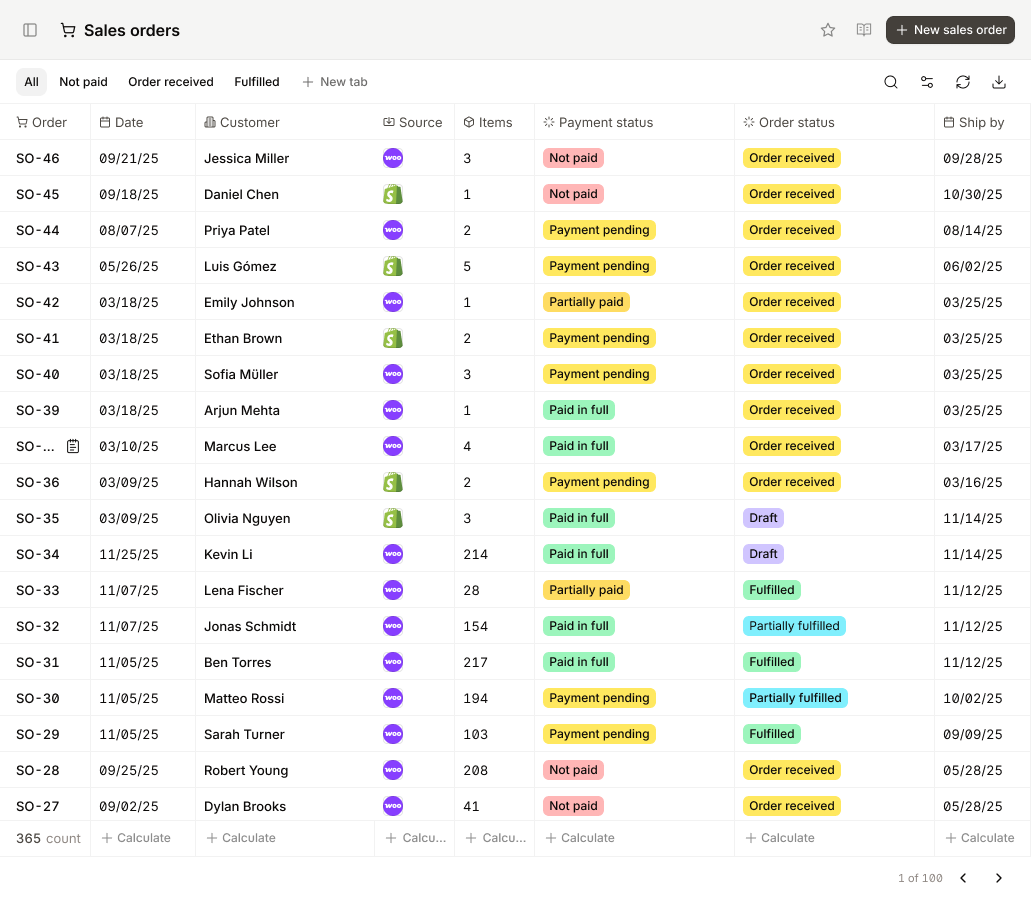
Digit helps manufacturers plan demand through a combination of historical sales data, real-time inventory levels, and production capacity, stored in one unified system of progress.
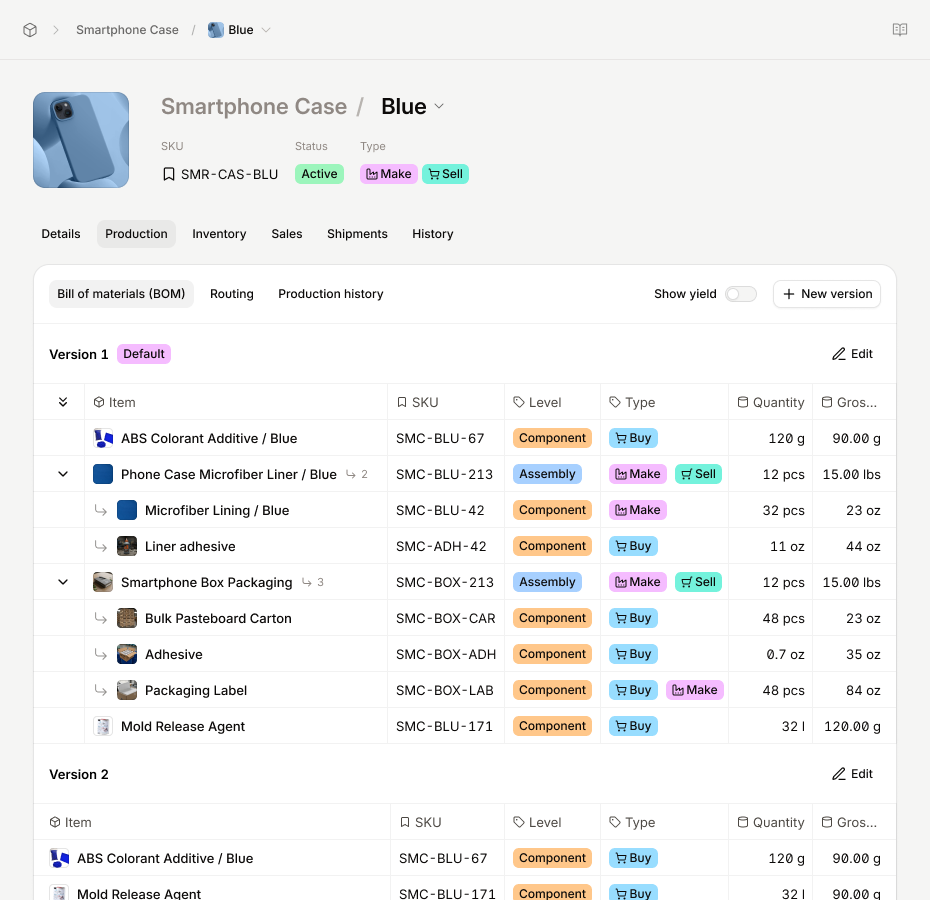
You can look at demand trends from the SKU level to understand which products are accelerating, plateauing, or declining, and use that visibility to make smarter production and purchasing decisions.
With this information, businesses easily know what items to prioritize and how to adjust capacity as needed. This helps avoid tying up working capital in excess inventory.
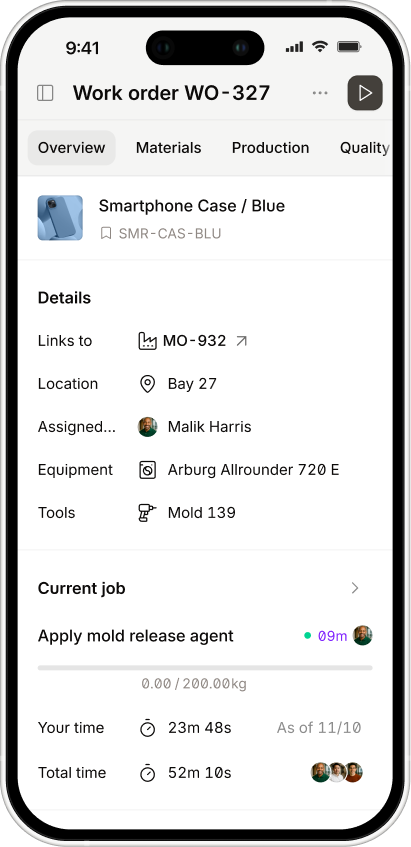
By connecting demand forecasting, inventory management, and production scheduling in one system, Digit eliminates the spreadsheet chaos, reduces forecast errors, and gives manufacturing teams insight into what they're producing, what customers actually want, when they want it, without excess inventory or costly rush orders.
Want to see for yourself? Book a demo today and see how you can take your demand planning to the next level.




.jpg)