

What Is Traceability in the Food Industry?
.jpeg)
Traceability in the food industry is the ability to track food products, ingredients, and raw materials throughout the supply chain.
So, regardless of whether you need to find out which vendor supplied a carrot or where all your carrot cakes went, you will be able to trace their origin or destination with traceability in the food industry. And to enable this level of traceability effectively, you will need to implement an end-to-end traceability system that gives you a full overview of a product's history, including its:
- Production
- Processing
- Distribution
In the food and beverage industry, traceability is a legal requirement.
And the reason for this is to address worst-case scenarios, such as containing a foodborne illness outbreak or identifying contamination events as quickly as possible to remove affected products from the marketplace and limit their exposure to more people.
Again, to be able to do this, forward and backward traceability in the food industry is required.
Forward vs. Backward Traceability: What's the Difference?
Traceability in the food industry happens in two directions:
Forward and backward
Understanding what stages these cover will help you know what to do if you ever need to respond to a problem.
Backward Traceability
Backward traceability starts at the finished product, and you trace its movement back through the supply chain all the way to the supplier, helping you identify what went into making that product or who was involved, such as:
- Ingredients
- Suppliers
- Packaging materials
- Production
So, let’s imagine that a quality issue is flagged during an audit for a batch of goods. Using backward traceability, you will trace that batch of finished goods back to its source, reviewing production logs, procurement records, and certificates of analysis to determine whether the problem traces back to the supplier or to a point within your own production flows.
Forward Traceability
With forward traceability, you’ll be going from the other direction, starting from the raw materials or ingredients, and moving along your supply chain, so you can see where a specific material was used for:
- Batches
- Finished products
- Customer shipments
Forward traceability is usually triggered when your supplier has identified a contaminated ingredient, and you will use this method to identify the finished products that are affected and, if any have been shipped out to customers.
And there you have it! The difference between forward and backward traceability in the food industry. But why is it important?
What is the Importance of traceability in the food industry?

The article has already touched on the importance of product traceability in the food industry — from being able to trigger recalls and locate problematic items.
If you’re managing perishable inventory (especially food products), then safety and quality are always at the forefront of priorities to protect your company legally and protect your company's brand image. Here are other reasons why traceability in the food industry is important.
Rapid Response and Recall Management
When it comes to food safety, speed is everything.
Traceability in the food industry, particularly through automation and software, gives businesses and regulatory agencies the tools to pinpoint where contamination occurred. Without this ability, recalls would need to be broader in scope, covering more products than necessary to be on the safe side. But with proper traceability in place, affected batches can be isolated and removed from circulation, keeping consumers safe and minimizing the disruption a recall causes for your business.
Regulatory Compliance
As mentioned, it’s good for your business that traceability in the food industry exists because it saves you a lot of time and money when handling a crisis — but it’s a legal requirement to have in place.
In the US, the FDA's Food Safety Modernization Act (FSMA) requires businesses that handle high-risk foods to maintain detailed records of key data elements at each step of the supply chain. Crossing the pond, food traceability is also a legal requirement for Europeans, as Regulation 178/2002 establishes traceability as a baseline obligation for all food and feed businesses. From a brand perspective, maintaining compliance-ready records demonstrates to regulatory bodies and consumers that you and your business are performing due diligence should something go wrong.
Consumer Trust and Transparency
Speaking of brand perspective among consumers, traceability in the food industry also allows you to make claims and be able to back those claims up.
Shoppers are becoming more conscious of what they buy. More and more, they care about where their food comes from and how it was produced. By implementing traceability, you can share with your customers how your products were made, with claims such as:
- Organic
- Fair-trade
- Locally sourced
And as opposed to it just being some marketing buzzword, you can make verifiable claims with supply chain data. In industries like seafood and meat, where mislabeling is common, verification means consumers can make more informed purchasing decisions based on health, ethics, or sustainability.
Supply Chain Efficiency and Waste Reduction
And bringing everything back to how food traceability in the food industry benefits businesses — traceability allows companies to improve their supply chain operations.
With a clear understanding of where your inventory is, how long it’s been stored, and which batches are about to expire, you can begin making better inventory rotation decisions and prioritize inventory to consume or sell before it spoils.
Common Challenges in Implementing Food Traceability
.jpeg)
Implementing traceability in the food industry means having to overcome:
- Fragmented systems
- Manual processes
- Limited real-time visibility
- Inconsistencies
If you’re struggling with any of the above, when the time comes for managing a recall or even demonstrating to regulators that your business is compliant, you’re going to have a difficult time implementing proper end-to-end visibility that the food industry demands.
Here's what else you’ll need to address within your workflows.
Fragmented Data Silos
Manufacturers have a ton of options to choose from when it comes to implementing software, either choosing one or multiple different types, such as:
The issues with mix and matching software to manage different aspects of your business mean your production data lives in one place, your quality audit updates exist somewhere else, and shipping information is stored in a WMS or some other food distribution warehouse management system. With your data split up like this, if investigators need to access it, they will need to piece together information from different sources, wasting time that could otherwise have been spent performing a recall if the information were centralized. According to research, over 80% of organizations cite data silos as a significant barrier to achieving operational excellence. And in food manufacturing, this problem is exacerbated, as with disconnected information, understanding the history of a product or performing any audits is going to take a lot of manual effort.
Food manufacturing solutions such as Digit give businesses all the tools they need to manage their entire supply chain in one place, centralizing data into a unified view for real-time traceability and reducing audit preparation times.
Manual Documentation and Human Error
Paper-based records and manual data entry remain surprisingly common in food manufacturing, introducing a level of error that automated systems simply don't.
Workers maintaining production records manually face constant pressure to remain accurate while meeting production demands, creating an environment that consistently leads to inconsistencies in:
- Batch tracking
- Labeling errors
- Incomplete documentation
When a trace investigation requires physically locating and reviewing paper records stored across multiple locations, what should take minutes can take days.
The downstream consequences include broader recalls and slower root-cause analysis. But the operational costs of manual systems extend well beyond crisis response into everyday inefficiencies.
Incomplete Forward Traceability
Traceability often breaks down the moment the product leaves the facility.
Manufacturers may have strong internal records but limited visibility into where finished goods were distributed, who received them, and how batches were split or combined by intermediaries along the way. This forward-looking blind spot helps explain why 48% of organizations identify ineffective recall management as their biggest supply chain risk. Different distributors and retailers using incompatible systems, combined with batch splitting practices, can quickly obscure original lot identities, making it impossible to issue targeted, timely recall notifications without extensive manual investigation.
Inconsistent Batch and Lot Tracking Across Production Lines
It’s not unusual for businesses to have manufacturing hubs in multiple locations as a simple way to reduce the time it takes to get products to customers and clients.
But what can quickly happen without proper multilocation management is that each location becomes essentially its own business, using different tools and processes to manage its batch and lot tracking. What this quickly leads to is inconsistencies with how data is tracked and saved. That means when you try to gauge the progress at each location, you don’t have the same framework or information to make proper decisions. Or even worse, if items move between these different locations, data for traceability will become broken, and you will be unable to effectively track an item's history.
So, to manage these challenges, try to find a solution that can easily track and maintain all the essential information you need for performing traceability in the food industry. And if you are looking for a tool, you can use the following as a guide to help you pick one.
3 Key Components of Food Traceability Software
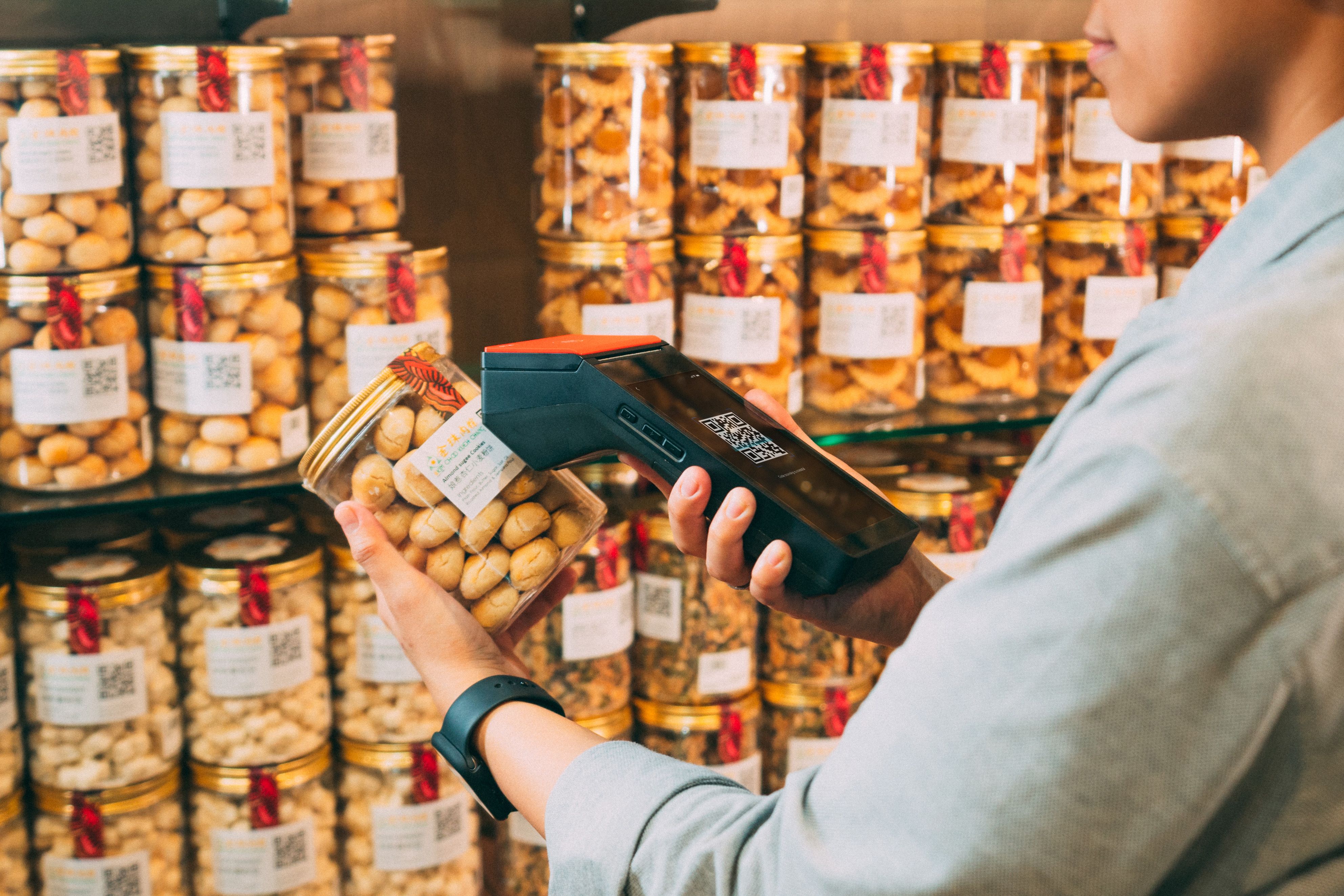
To properly implement traceability in the food industry, you’ll need food traceability software with the necessary end-to-end traceability and record-keeping capabilities.
When analyzing if a system is right for you, here are 3 components that you should consider a must-have when choosing software, as well as how they’re supposed to function.
1. Unique Product Identification
Unique product identification is exactly what you need to identify which product is which and what materials it contains.
Traceability Lot Codes (TLCs), lot numbers, or any standardized identifiers (as defined by GS1 Standards) are what will make this possible. The purpose of these codes is to help manufacturers differentiate their batches, regardless of whether it's a batch of ingredients or finished goods, as well as being able to tell you the status of those batches, such as whether an item is:
- Raw
- In process
- Fully packaged
Without reliable product identification at every stage, the rest of the traceability system has nothing to anchor to.
2. Critical Tracking Events
Critical Tracking Events (or CTEs for short) refer to a specific point along the production line or supply chain in which items are:
- Handled
- Transformed
- Change hands
If something happens to an ingredient or product, it needs to be documented properly so that any investigation can be carried out properly in the future. This information will help you identify where a potential quality issue may have come from, by recording things like:
- Harvesting and sourcing — Establishing the origin of your raw materials
- Processing and manufacturing — How those raw materials were converted or transformed into a food product
- Staging conditions and packaging — How items in your inventory are stored and handled
- Shipping and receiving — At what point did an item change ownership as it moved through the supply chain
3. Data Capture and Information Systems
Finally, with all the information that needs to be captured and saved to successfully implement traceability in the food industry, finding a tool that can automate as much of the data recording as possible will help you streamline this process.
This means searching for technology that helps you record lot and batch information at each CTE without relying on manual entry, such as:
- Barcodes
- QR codes
- RFID tags
Now that you know of the core functionalities you should expect from your software when looking for what’s available, you can put together a short list of systems that provide traceability in the food industry.
And to get you started on your hunt for the perfect software, we recommend checking out Digit.
Pro tip: You can also find more recommendations on software that’s great to use for implementing traceability in the food industry here: The 7 Best Food Traceability Software in 2026.
Managing Food Traceability with Digit
Digit is a cloud-based ERP manufacturing software that connects everything a food manufacturer needs to implement end-to-end traceability into their business, including centralizing data such as:
- Inventory
- Manufacturing
- Storage
- Shipping
Every batch and lot movement is recorded in real time, creating a complete audit trail from incoming ingredients through production and out to the customer. When a recall or audit occurs, that trail is immediately searchable and retrievable, with compliance documents like COAs, SDSs, and supplier records attached directly to each batch, so everything needed to demonstrate compliance is in one place and accessible from anywhere.
Inventory levels update automatically as product moves, expiration dates, and shelf-life requirements are monitored against live stock, and reorder alerts prevent the kind of supply disruptions that lead to shortcuts in documentation.
Want to see for yourself? Book a call, and we’d be more than happy to take you through Digit and how it can help you stay compliant with traceability in the food industry.