

What is Food Traceability Software
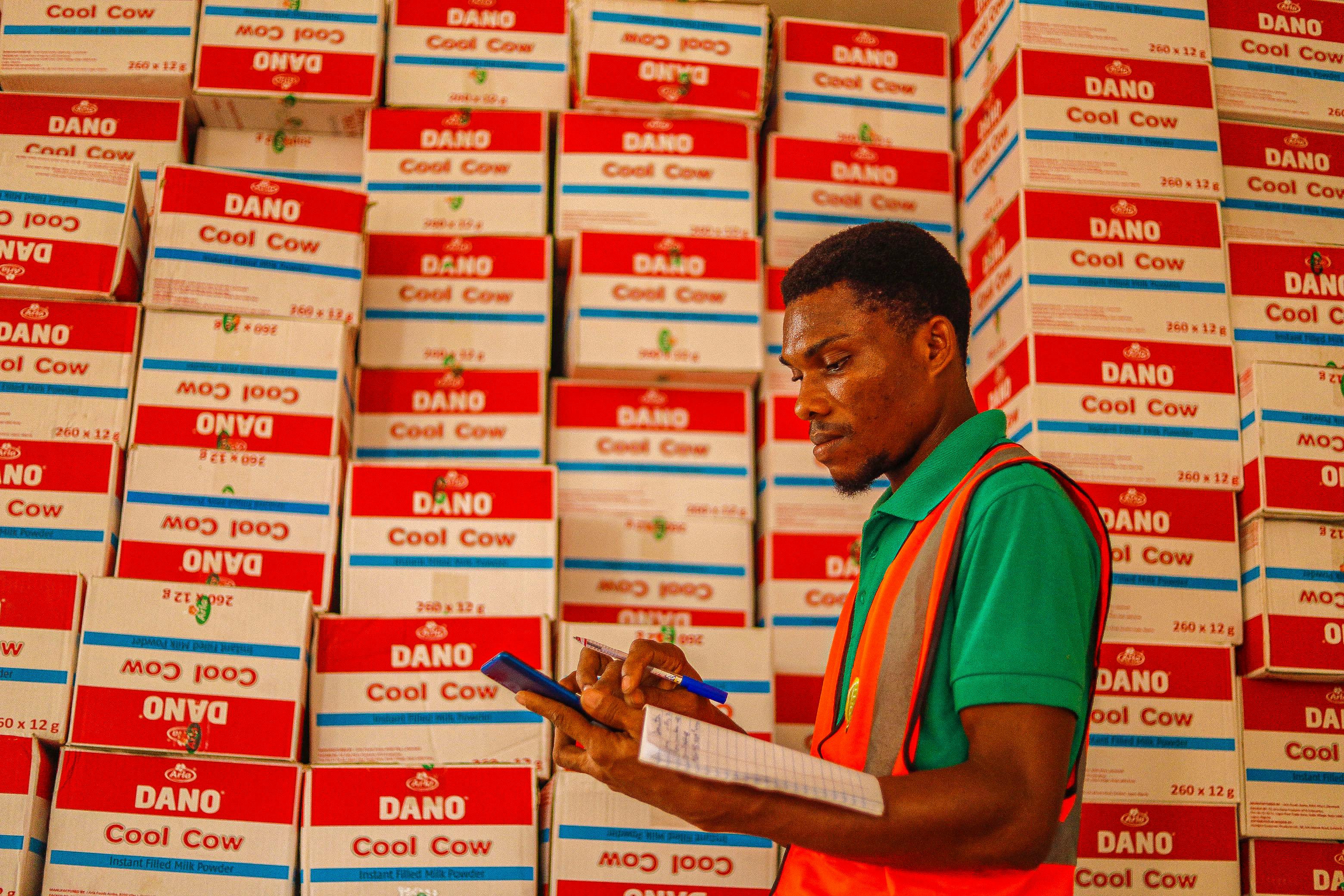
Food traceability software is a system that helps food distributors track food products as they are being made, stored, and shipped. If you’re still relying on paper logs and spreadsheets, or trusting your supplier’s labels, you’re a liability. With the FSMA 204 in full effect, the FDA requires traceability lot codes that need to be audited quickly.
Operators use food traceability software to monitor critical production tasks, such as:
- Receiving raw ingredients from vendors
- Lot and Batch tracking
- Assigning bin locations for storing
- Forward and backward traceability
- Picking, Packing, Shipping
- Recall management
- Operational analytics
Food manufacturing is one of the most heavily regulated industries in the US. So, businesses rely on food traceability software to ensure products are safe to distribute to customers and that they have transparent records to prove regulatory compliance.
When implementing food traceability software into your business, you’ll have different options to choose from, such as:
- ERP systems
- Cloud software for food traceability
- IoT or internet of things
- Barcode technology (RFID)
But if you’re reading an article like this and you're here weighing your options, you clearly know about the different traceability technologies. Although, finding the right one for your business is the tricky part since where they differ is in how well they actually deliver on those benefits.
The best ones in 2026 bridge the gap between compliance and operations. We’ve vetted these 7 platforms so you can stop tracking and start scaling. We’ll start off by breaking down the best options by features, ratings, and real-world fit.
The Best Food Traceability Software in 2026
The options below cover all business sizes and are standalone tools and broader platforms alike.
Here are the best food traceability software picks for 2026:
1. Digit
Digit is the best food traceability software tool in 2026 for manufacturing and distributing perishable goods.
Rating: 4.9/5
Pricing: Starts at $320/month
Available on: Web, iOS, Android
Compared to other software featured in this list, Digit is new to the food traceability space. But it's already making a case for itself as a modern, intuitive alternative to tools like NetSuite. At its core, it's a cloud-based solution built to give food businesses full visibility across their supply chain. It’s perfect for businesses that are stuck in spreadsheets or find traditional ERP systems too rigid or complex to move forward with.
It’s a solid upgrade for anyone looking to unify purchasing, production, planning, and fulfillment data into a single, real-time system, one that's fast to implement and easy for operators and managers alike.
Why Does Digit Win Best Food Traceability Software?
Digit brings the technical depth you'd expect from a well-established ERP system, but with the kind of clean, intuitive experience that modern users want to work with every day.
Rather than sinking countless hours into a complex, on-premise system just to get traceability, lot tracking, recall management, and compliance under one roof, Digit gets you there at a fraction of the cost and in a fraction of the time.
Users like Digit for the core objects made for operators in mind. They report:
- Rapid implementation (days, not months)
- Intuitive, easy to navigate interface
- Responsive customer support
- Real-time, barcode-driven traceability and inventory accuracy
Digit’s Core Features
Inventory and Warehouse Management — You can easily see what's in stock at any point in time across any of your warehouses and bin locations. When items are scanned in and out with barcodes, inventory levels update automatically, giving you accurate, real-time visibility into what you have on hand.
You can also track batches, lots, expiry dates, and container-nested inventory. It also supports FEFO workflows through expiration tracking to make sure the right product ships at the right time. Every item is followed step-by-step, from the supplier all the way to the final shipment.
Purchasing and Receiving — Purchasing in Digit connects directly to your vendors and SKUs, making it easy to create, track, and manage purchase orders. Receive shipments in full or partially as goods arrive, and immediately convert them into labeled inventory.
During receiving, you can generate and print barcode labels for pallets, boxes, or individual units. Each received lot is tied to its vendor, production batch, and key details such as expiration dates, supplier part numbers, and custom fields, ensuring full traceability from intake onward.
Supporting documents such as COAs, inspection reports, and supplier paperwork can be attached directly to the received inventory label, keeping lot-level records organized and audit-ready.
Recipe and Production Management — Digit supports single and multilevel formulations and BOMs, so you can guarantee consistent batch production every time. When a production order is created, Digit automatically commits the necessary ingredients and resources to fulfilling it. If you need to reprioritize runs for any reason, Digit reallocates resources automatically based on the updated schedule.
Sales and Fulfillment — Digit guides your team through picking and packing step by step, with lot-specific picking to ensure full traceability on every outbound shipment. Packing slips, bills of lading, and shipping documents are generated automatically. All you have to do is print and include them.
Planning and Forecasting — Set reorder points and safety stock levels to make sure you always have the ingredients and packaging you need on hand, accounting for factors like seasonality and perishability. You get one clear view across purchasing, production, and inventory.
Integrations and API — Connect natively with QuickBooks Online, Desktop, or Enterprise, as well as Shopify, WooCommerce, and Amazon. Digit's open API also lets you build custom workflows and integrations with the tools your business already relies on.
Pros
- Exceptional ease of use for food production and operations teams
- Real-time, barcode-driven lot and batch tracking
- Fast implementation with hands-on onboarding (2-8 weeks)
- Outstanding customer support and responsiveness
- Flexible, modern API
- Strong value for money compared to legacy ERPs
Cons
- Some advanced food manufacturing features are still in development
- Updates are system-wide rather than per-customer
Digit is ideal for:
- Mid-sized food and beverage businesses
- Companies ready to move on from spreadsheets or outdated ERP systems
- Operations needing traceability, production, and inventory management in one platform
2. Allera
Rating: 4.8/5
Pricing: Custom pricing available upon request
Best For: Small to mid sized food manufacturers, processors, and co-packers.
Implementation Time: 30 days
Available On: Web, iOS, Android
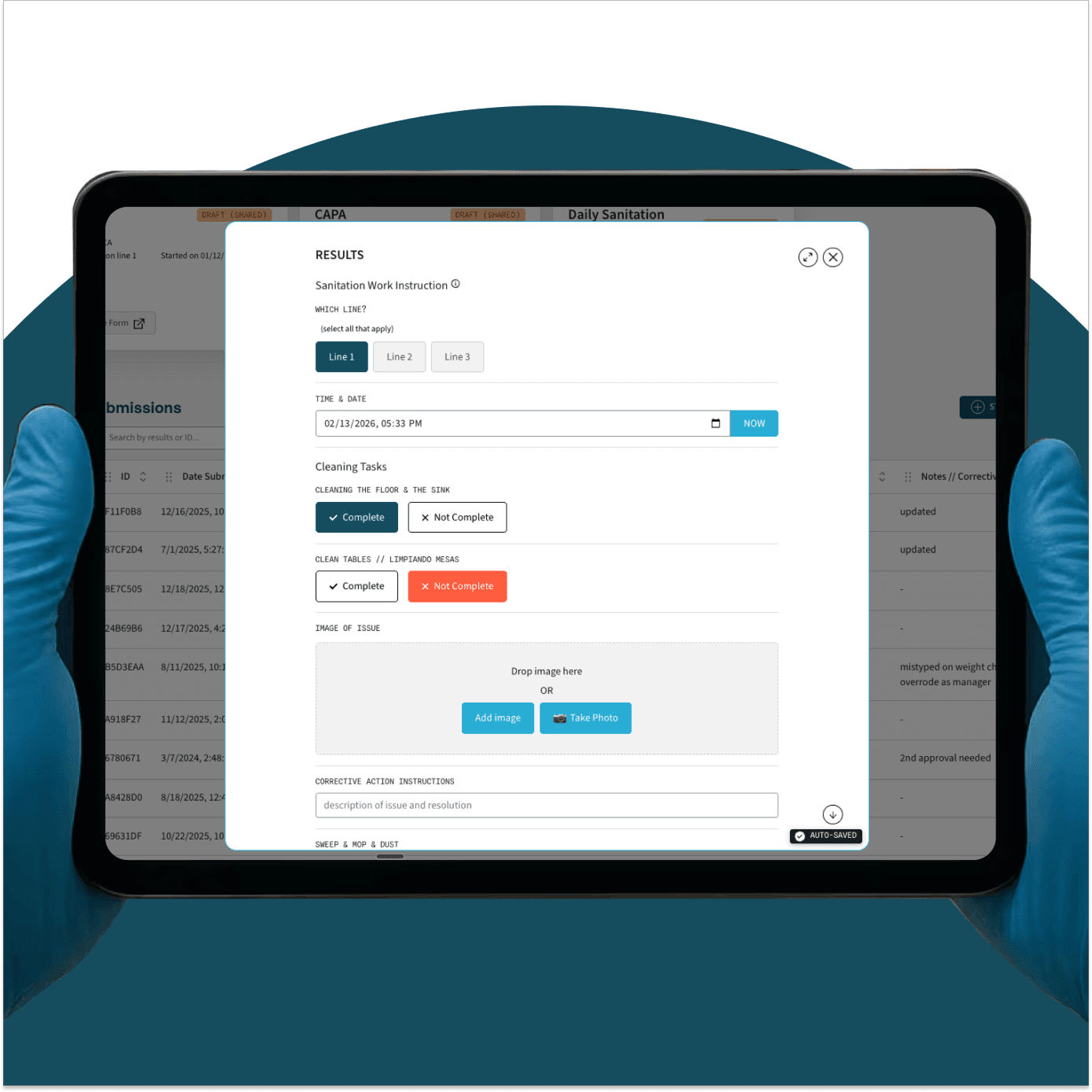
Allera is a modern food safety and traceability platform built for food manufacturers and processors that want centralized supplier control, digital compliance, and real-time traceability in one system. It unifies supplier management, document control, digital forms, training, and audit workflows so teams can stay audit-ready while reducing manual admin work. From supplier onboarding through production records, approvals, and recall execution, Allera connects documents, training, and traceability data in a single hub.
Core Features
- End-to-end traceability and recall management for ingredients and finished goods with rapid recall execution.
- Supplier onboarding and management with dynamic onboarding, expiration tracking, centralized records, and approval workflows.
- Document control with version control, permissions, revision tracking, and AI-assisted SQF compliance review.
- Training management that links SOP updates to employee training, tracks acknowledgments, and automates notifications.
- Digital forms and analytics for inspections, audits, and incidents with real-time dashboards.
- Audit readiness with instant access to compliance records, approvals, and supplier certifications.
- Offline and multilingual access so teams can capture data in low-connectivity environments with multi-language support.
Pros
- Centralized hub for suppliers, documents, training, and audits.
- AI-assisted compliance reviews to flag potential non-conformances early.
- Flexible document collection (uploads, email responses, magic links).
- Mobile-ready with offline functionality and multilingual support. Fast recall execution and FSMA 204–aligned traceability.
- Robust version control, approval workflows, and audit trails.
- Integrated training management tied to SOP updates.
- Scalable digital forms and analytics for inspections and audits.
- Strong onboarding and customer success support.
Cons
- Best suited for food manufacturers, less flexible for other industries.
- Global supply chains may still need regional customization.
- Not focused on the retail industry.
Is Allera Right for You?
Buy this if: You're a food manufacturer, processor, or co-packer whose biggest compliance headache is keeping suppliers, documents, and training records from living in five different places. If your team is chasing down COAs over email and scrambling to pull audit records on the fly, Allera will fix that fast. Implementation is around 30 days.
Skip this if: You're in retail, running a large global supply chain that needs heavy regional customization.
3. Wherefour
Rating: 4.5/5
Pricing: Contact vendor (Custom quotes based on volume)
Available on: Web, iOS, Android.
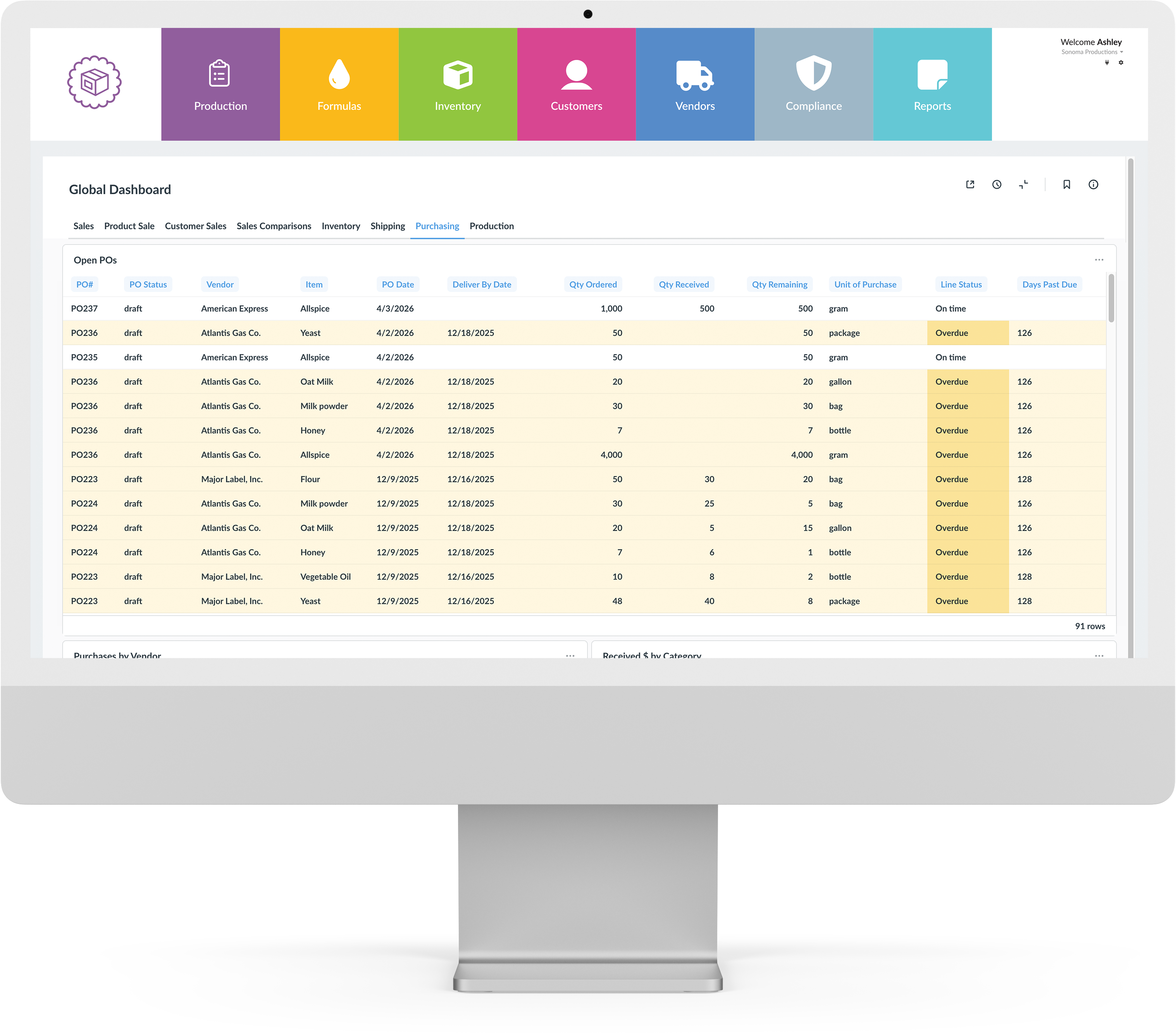
Wherefour is a modern, cloud-based ERP and traceability system built specifically for the product-making community. It has gained popularity because it removes the "data entry tax" usually associated with traceability. Wherefour bakes lot-tracking into the very act of moving inventory. If you are a small team that wears multiple hats, Wherefour is designed to keep you audit-ready 24/7 without requiring a dedicated compliance officer.
Core Features
- Instant Recall Reporting: Generate full forward and backward recall reports in seconds, filtered by lot, customer, or date.
- AI-Assisted Compliance: Use built-in AI to draft QA test definitions and organize supplier COAs directly within the inventory records.
- One-Click Forecasting: A simplified MRP module that looks at open orders and lead times to tell you exactly what to order next. •
- Mobile-First Shop Floor: Designed to work flawlessly on tablets and smartphones so operators can log production data from the mixing bowl or the dock.;
Pros
- Modern, intuitive interface that requires almost zero staff training.
- Exceptional customer support that specifically understands the "craft" food business model.
- Strong integration with QuickBooks and Xero to keep financials in sync.
- Mobile compatibility allows for a "paperless" production floor.
Cons
- Lacks a self-serve free trial; you must go through a demo process to get started.
- Once a work order is completed, undoing mistakes can be technically rigid.
- Learning curve for core features may slow down implementation
Is Wherefour Right for You? Buy this if: You are a growing natural products brand that needs to prove 24-hour FSMA 204 compliance to major retailers (like Whole Foods or Target) but doesn't want the complexity of a mid-market ERP. Skip this if: You are a large-scale industrial processor with high-volume automation; you may find the "simple" workflows too restrictive for complex, high-speed lines.
4. NetSuite ERP
Rating: 4.2/5
Pricing: Contact vendor (typically higher than standalone food traceability tools)
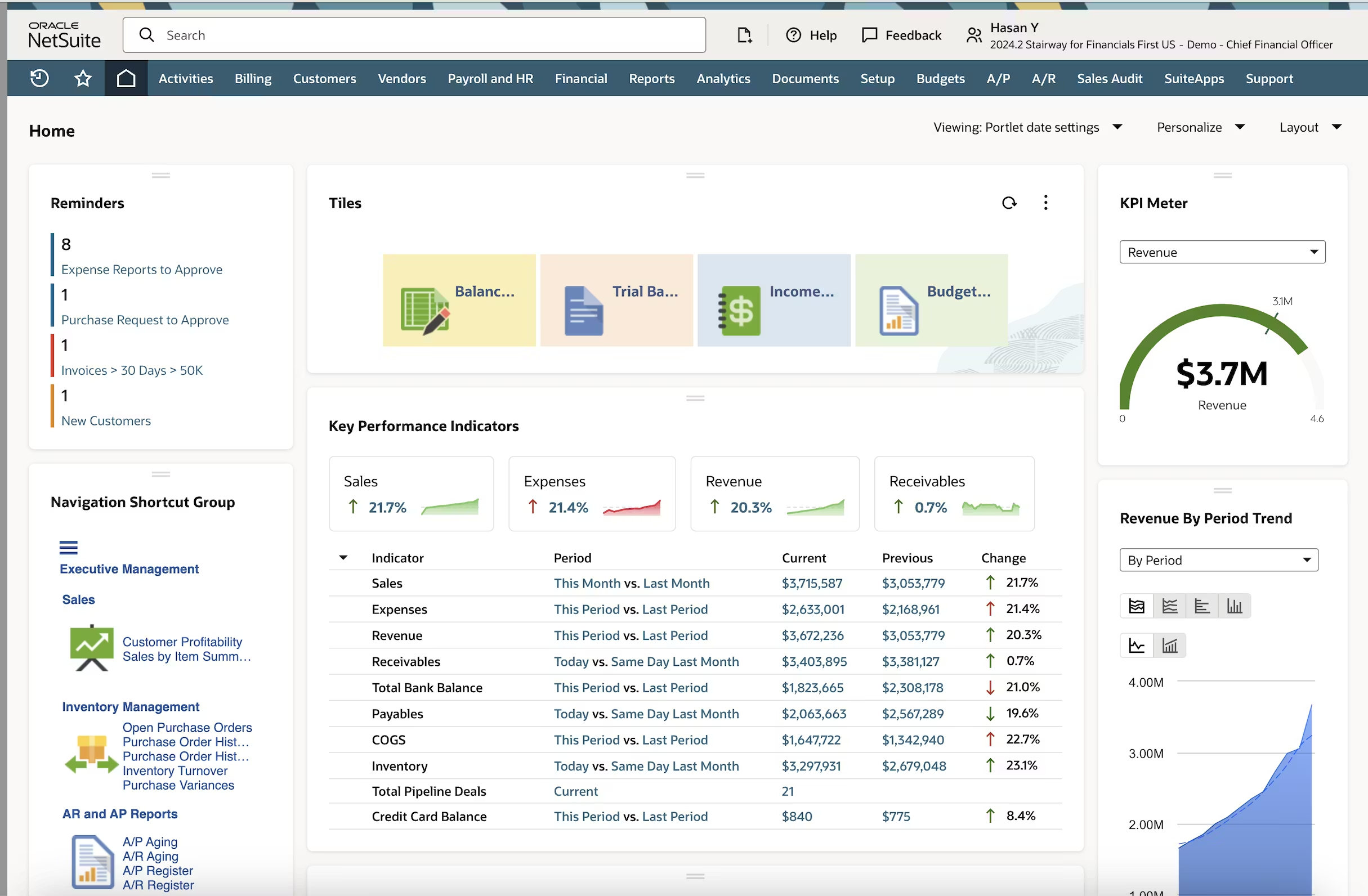
NetSuite Food Traceability is built into Oracle NetSuite ERP, giving your operations and back-office teams a single, shared system for managing inventory, compliance, and financials. It's best for mid-market food and beverage companies with the budget and time to invest in a unified ERP and traceability platform.
Core Features
- RFID and barcode scanning
- Lot and batch tracking with expiry date management
- Forward and backward traceability across the supply chain
- Real-time visibility into multi-location inventory
Pros
- ERP-first platform, making it a strong fit if you're already in the NetSuite ecosystem
- Robust traceability and inventory controls
- Scales well as your volume and supply chain complexity grow
Cons
- Significantly more expensive than standalone food traceability tools
- It is not a quick implementation as it takes several quarters to go live
- Advanced automation features often require additional add-ons or integrations
Is NetSuite Right for You?
If you want your traceability, inventory, and financial data all in one place and you're already using NetSuite, it's a reasonable fit, reducing data silos and improving accuracy through directed workflows. The trade-off is cost and long implementation time, which makes it better suited to larger food businesses that can absorb those investments.
5. FoodDocs
Rating: 4.4/5
Pricing: Starting at $2,999/year
Available on: Web, iOS, Android
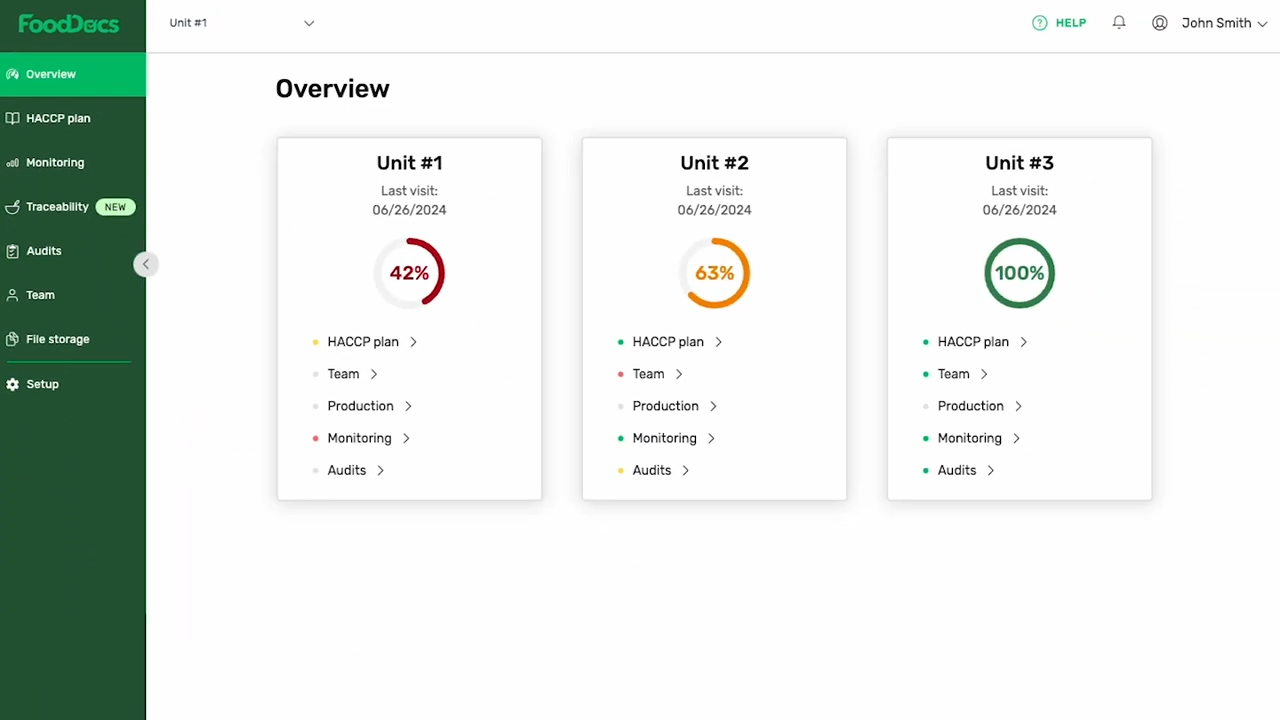
FoodDocs is an all-in-one food traceability platform built specifically for food producers, processors, and distributors. It's a strong fit for central kitchens, ready-to-eat producers, bakeries, butcheries, and beverage operations looking to simplify compliance and keep recall management under control.
Core Features
- Customizable traceability workflows with mobile barcode
- Real-time production monitoring
- Supplier receiving log to capture date, quantity, and quality of incoming ingredients
- Recipe management
- Shelf-life and expiry date tracking
- Automated compliance documentation for HACCP, GMP, FSMA, SQF, and BRCGS
Pros
- Purpose-built for food businesses, so features are immediately relevant out of the box
- Strong compliance and audit tools that reduce manual documentation burden
- Mobile-friendly, making it practical for floor-level staff
- Covers a wide range of food business types and production environments
Cons
- More compliance-focused than operationally deep, and most likely won’t replace a full ERP or inventory system.
- Pricing may be steep for very small operations
- Limited native integrations compared to broader ERP-based solutions
Is FoodDocs Right for You?
Buy this if: You are a small-to-midsize producer (like a central kitchen or craft brewery) whose biggest headache is passing audits. If your desk is covered in paper HACCP logs, FoodDocs will save your sanity in under 14 days.
Buy this if: You are a small-to-midsize producer (like a central kitchen or craft brewery) whose biggest headache is passing audits. If your desk is covered in paper HACCP logs, FoodDocs will save your sanity in under 14 days.
6. TrustWell (formerly Food LogiQ)
Rating: 4.3/5
Pricing: Contact vendor
Available on: Web
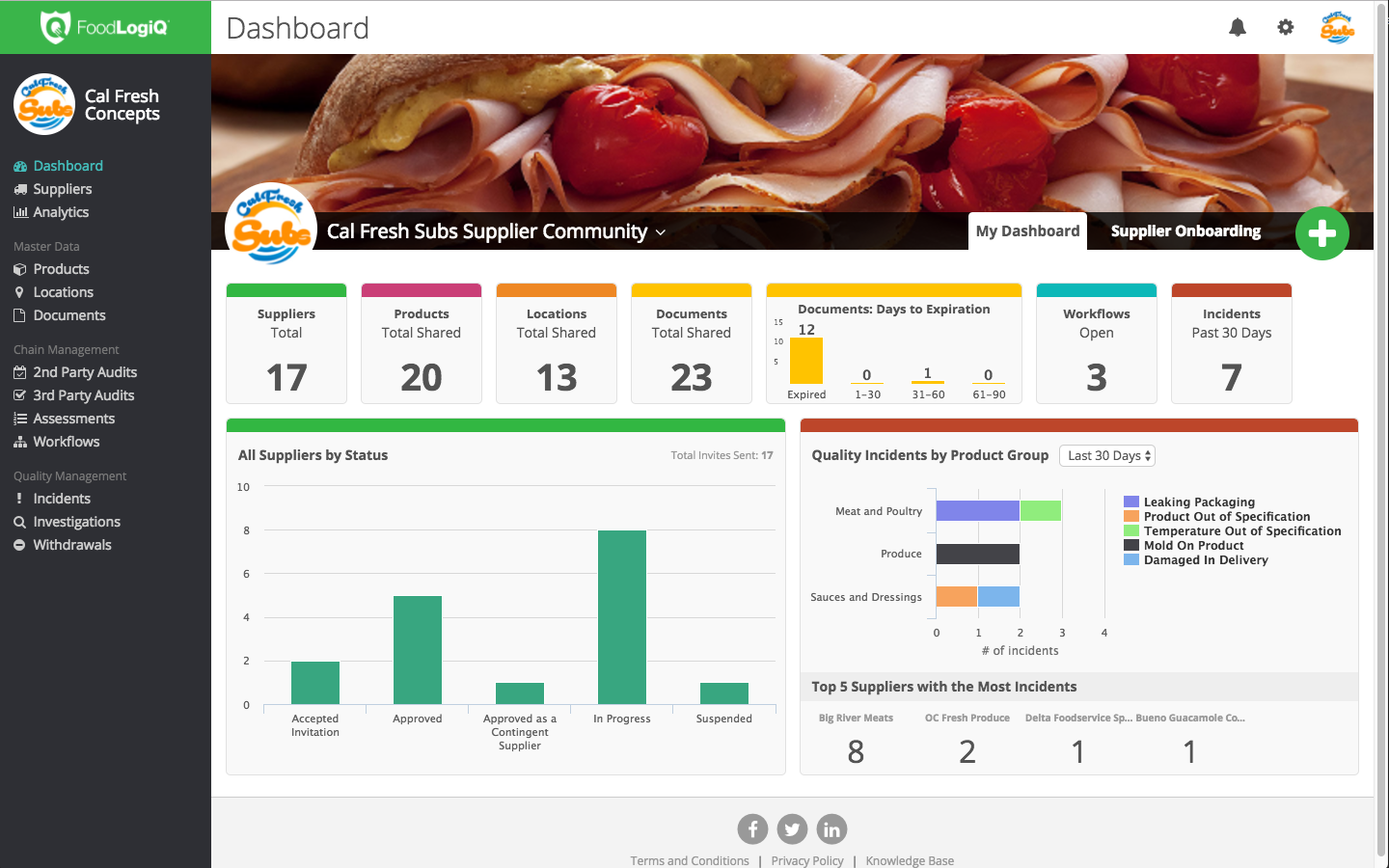
Trustwell is an enterprise-grade food traceability and compliance platform that has been connecting food data to business operations for over 40 years. Built around two core products, FoodLogiQ and Genesis Foods, it's designed for mid-to-large food businesses that need a comprehensive solution covering everything from recipe formulation and nutrition labeling through to supply chain traceability and recall management. It's one of the more established names on this list.
Core Features
- End-to-end supply chain traceability with FSMA 204 compliance tools
- Forward and backward traceability across the full supply chain
- Supplier compliance and quality management
- Recipe formulation and nutrition labeling with allergen identification
- Rapid recall and withdrawal management
- AI-powered regulatory compliance assistant (AskReg)
Pros
- One of the most comprehensive platforms available, covering traceability, compliance, labeling, and recall under one roof
- Strong track record with major food brands and enterprise-level operations
- FSMA 204 consulting services available alongside the software
- AI-assisted regulatory guidance
Cons
- Pricing and complexity put it out of reach for smaller operations
- The breadth of the platform can feel like overkill if you only need basic traceability
- Implementation support is often required, adding to the total cost
Is Trustwell Right for You?
If you're a mid-to-large food business that needs a platform capable of handling traceability, supplier management, labeling, and recall all in one place, Trustwell is one of the most battle-tested options available. For smaller operations with simpler needs, the scope and likely cost may be more than necessary.
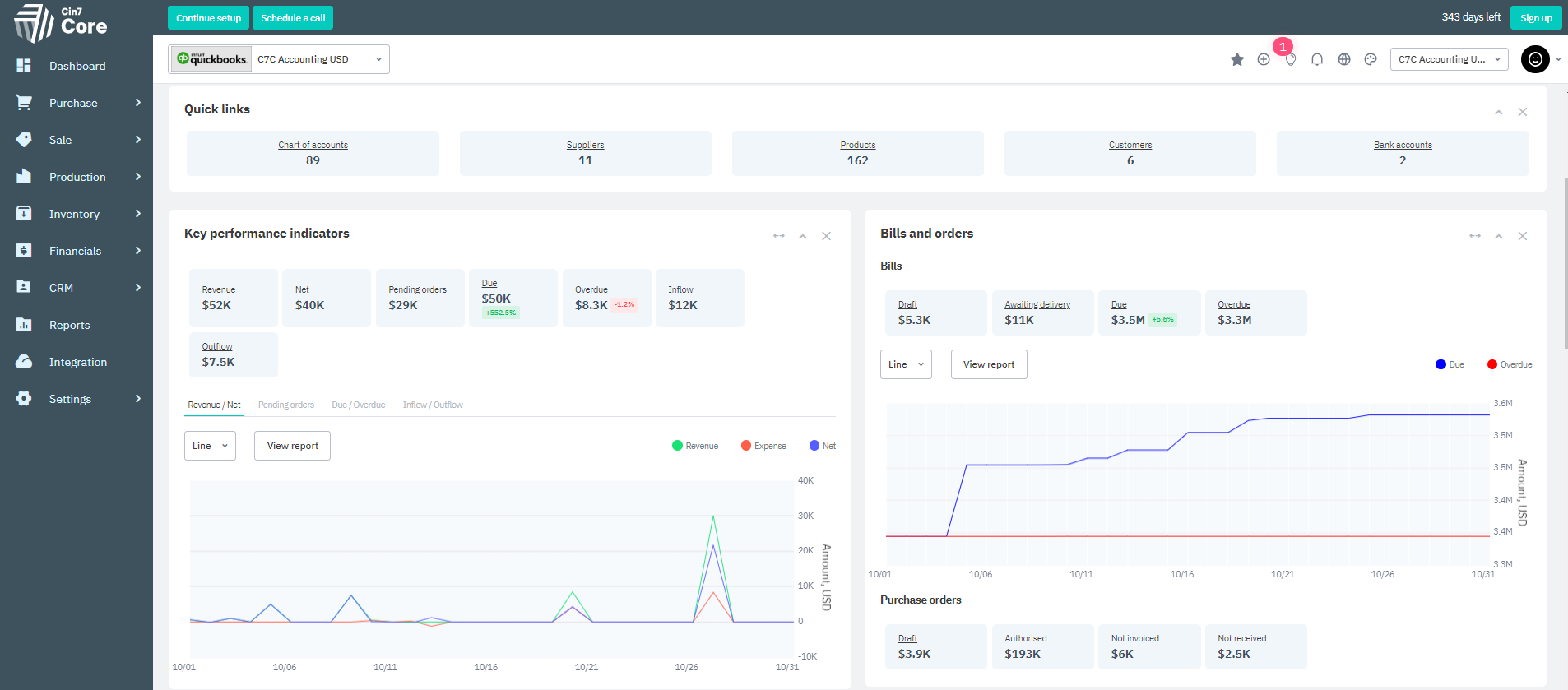
7. Cin7
Rating: 4.1/5
Pricing: Starting at $349/month (Core) need to contact for Omni pricing
Available on: Web, iOS, Android
Cin7 is a broad inventory and operations platform that has built out solid food and beverage-specific functionality. It's not a dedicated food traceability tool in the way some others on this list are. But for food businesses that need traceability as part of a wider inventory, sales, and operations solution, it punches well above its price point.
It comes in two versions: Cin7 Core for growing businesses, and Cin7 Omni for more complex, multichannel operations. Where it stands out for food businesses is in its combination of batch and lot tracking, FEFO (first expired, first out) inventory rotation, and over 700 integrations, making it a practical choice for businesses that sell across multiple channels and need everything connected in one place.
Core Features
- Batch and lot tracking with expiry date management
- FEFO inventory rotation to minimize waste from perishable stock
- Multi-location inventory tracking with real-time visibility
- MRP tools for production planning and raw material sourcing
- BOMs for recipe and production management
- Supplier management and purchase order tracking
- Integrations including Xero, QuickBooks, Shopify, and Amazon
Pros
- Strong value for money: customers note it delivers results comparable to legacy systems costing several times more
- FEFO tracking is a genuine differentiator for perishable goods management
- A large integration library makes it easy to connect with existing tools
- Scales well from small producers to larger multichannel operations
- Free trial available, lower barrier to entry than most on this list
Cons
- Longer implementation and onboarding given its breadth.
- Traceability is part of a broader inventory platform compared with tools like FoodDocs or Trustwell
- Advanced features can have a steeper learning curve
- Recall management is less developed than purpose-built food safety platforms
Is Cin7 Right for You?
If you're a food or beverage business that needs solid lot tracking and traceability alongside inventory management, order management, and multichannel selling, Cin7 is one of the more well-rounded options on this list. It's best suited to small and mid-sized operations that want one connected system rather than a dedicated compliance tool.
Frequently Asked Questions About Food Traceability Software
If you’re not sure whether a food traceability solution is for you, here are some questions and answers to help you decide what to get.
Is food traceability legally required?
Yes, and more specifically, FSMA 204 mandates detailed recordkeeping for certain high-risk foods, which means documented records of your suppliers, customers, and every transaction in between need to be readily accessible.
A traceability platform makes meeting those requirements manageable day-to-day rather than a scramble when an auditor shows up. Similar requirements exist under the EU General Food Law and Canada's Safe Food for Canadians Regulations, so if you're operating across borders, compliance isn't optional.
How does food traceability software actually work?
At its core, it tracks products from raw ingredients through production, packaging, and delivery by recording batch, lot, and transaction data at every stage.
That information is centralized so your team can search records, pull reports, or initiate a recall based on specific parameters: a date range, a supplier, an ingredient. Most platforms also automate data entry and connect with your existing tools like labeling systems, ERPs, and temperature sensors.
What technologies power food traceability systems?
The most common are Cloud platforms, RFID and IoT devices. RFID uses radio waves to transmit data from product tags to a reader in real time.
Can traceability software help with allergen management?
Yes. The software tracks allergen data at the ingredient level, so you have visibility into exactly where allergens appear throughout your production process.
How does it reduce food fraud?
Real-time tracking and detailed documentation make mislabeling, counterfeiting, or ingredient substitution significantly harder to pull off undetected. When every step of your supply chain is on record, there's less room for things to slip through.
Cloud-based or on-premise: which is better for food businesses?
For most small to mid-sized food operations, cloud-based wins. Lower upfront costs, faster setup, and no heavy IT burden make it the more practical choice, especially if you're managing multiple locations or need remote access.
Does traceability software support sustainability goals?
It can. Better inventory control means less waste, and many platforms let you track sourcing origin and packaging data, which is increasingly useful for backing up sustainability claims with actual documentation rather than just good intentions.