%201.svg)





The Scale of Food Waste in Manufacturing

Food waste is a major problem in kitchens and pantries around the world.
But, food manufacturing waste is on another whole level for the food and beverage industry. Of all the food wasted globally, around 16% to 19% comes from the manufacturing industry. The figure being so high is due to several factors, but the majority stems from:
- Processing inefficiencies
- Packaging errors
- Aesthetic standards applied to raw ingredients and finished products
Maybe those percentages don’t seem like a lot to you, but those percentages represent millions of tons of lost inventory every year, a multibillion-dollar financial burden, and a high environmental cost that manufacturers face growing pressure to reduce.
So, considering most manufacturers try to pride themselves on making their operations as lean as possible, why is it so difficult to implement food manufacturing waste reduction?
Where and Why Waste Happens in Manufacturing
These three main manufacturing processes account for this loss:
- Washing
- Peeling
- Slicing
During these stages of manufacturing, a significant amount of edible food is lost as raw materials are processed and transported along the manufacturing route.
But beyond the food processing stages, food waste comes from:
- Mechanical malfunctions
- Incorrect labeling
- Damage sustained
- Automated processes like bottling and wrapping
- Improper temperature control
- Poor demand forecasting
The list is basically endless, and any mistake at any stage of the supply chain can lead to food waste (regardless of whether the food was edible).
The Economic and Global Scale of Food Waste
In the United States alone, around 60 million tons of food is wasted every year.
It’s easy to see that the financial losses and costs associated with food waste must be high at those levels. But the loss carries over globally, as the cost of getting the ingredients to make a food product adds up. And when an ingredient is wasted, so too are labor, energy, and revenue that were incurred in producing that one food item.
Regulatory and Industry Responses to Food Waste
The EU Parliament has updated the Waste Framework Directive, requiring Member States to cut food manufacturing waste from processing by 10% by 2030.
In the United States, the approach it has taken for tackling food manufacturing waste reduction is with the Environmental Protection Agency, which has been set up to promote its Wasted Food Scale as guidance for manufacturers, prioritizing:
- Prevention
- Donation
- Upcycling
But despite the amount of food (and money) being lost due to how difficult it is to properly manage food manufacturing waste, we decided to look into the issue ourselves and put together a small guide on how you can start implementing waste reduction in food manufacturing.
7 Ways to Reduce Food Waste in Manufacturing
%20(2).jpg)
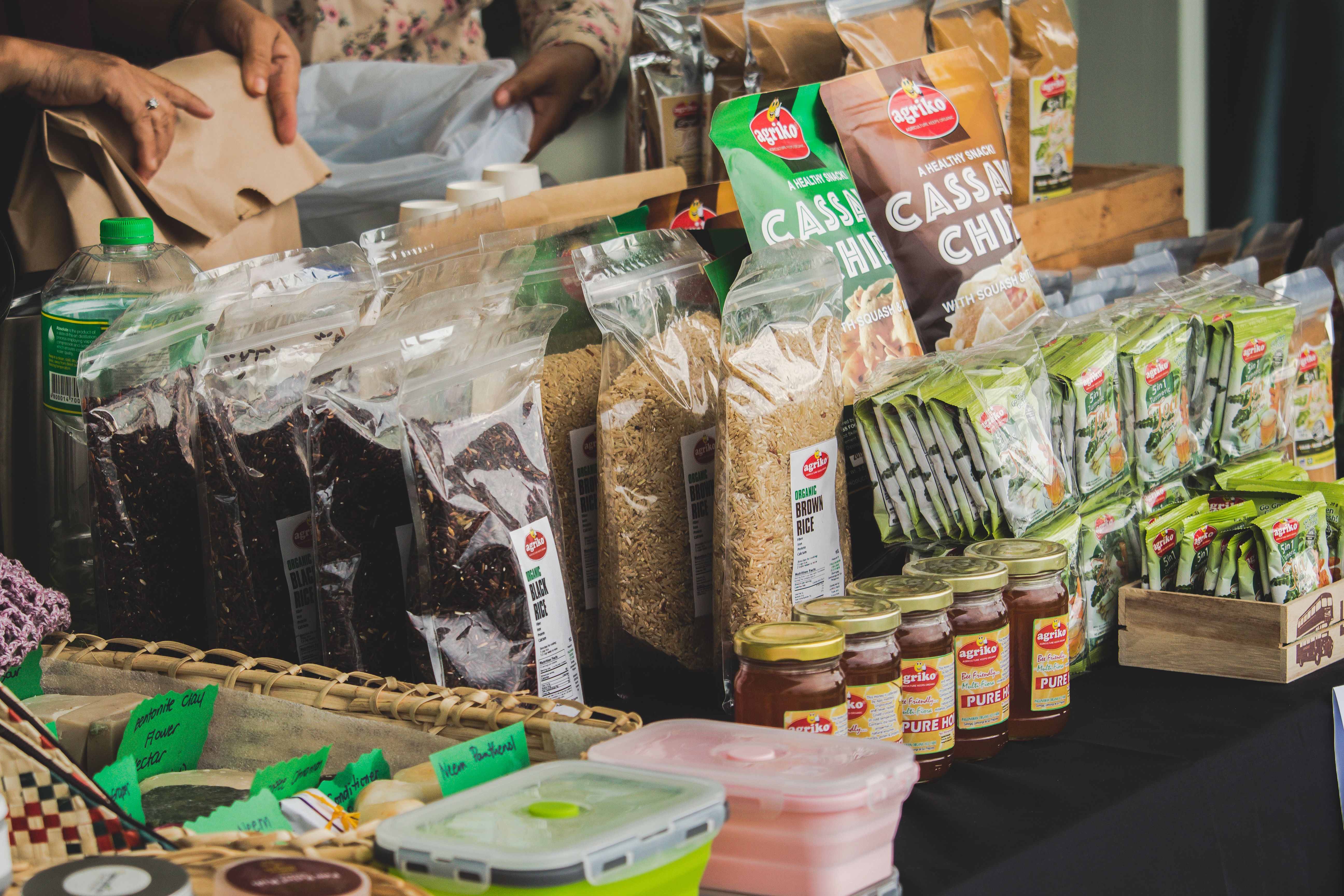
So, to start reducing food manufacturing waste on your shop floor, you'll need to develop and implement a strategy that covers the entire production process, from the moment you receive a shipment from a vendor to the moment the finished product is shipped to your customers.
Here are 7 ways to reduce food waste in manufacturing.
1. Accurate Demand Forecasting and Inventory Management
First things first: do an honest assessment of the goods you sell, because a quick way to eliminate spoilage is to focus only on producing the goods that sell.
To forecast your sales, it’s better to use a manufacturing ERP system that can help you create forecasts by tracking historical sales data. Having this information will help you determine which products to discontinue and the ideal inventory level to keep on hand to fulfill upcoming orders. For example, a study by Panorama Consulting Solutions found that manufacturers leveraging real-time ERP data saw improved inventory accuracy.
However, if you prefer to make a switch away from make-to-stock manufacturing, you can always use ERP to switch production over to a make-to-order workflow instead, which will make it easier to handle waste, as you’ll only be manufacturing products that have actual demand, making stock replenishment order-based as opposed to forecast-based. You can also use your ERP software to set reorder points, so if your inventory levels reach a threshold at which they need to be replenished before a stockout, the system will automatically notify you so you can create a manufacturing or purchase order.
Another way to improve your purchase order management is to review your policies for creating vendor orders.
For example, before placing an order, you and your team should confirm that you have the capacity to process, store, and sell the quantity you expect to need within the ingredient's expected shelf life, and you should be cautious about volume discounts that encourage over-ordering.
Finally, to improve your inventory management, you can review your stock rotation methods for handling goods.
In manufacturing, the most common stock rotation method is FIFO (First In, First Out). Using the FIFO method means that inventory gets prioritized based on which item entered the inventory first. The issue with this is that it ignores the expiry date, and sometimes the oldest item in inventory isn’t the first to spoil. FEFO (First Expired, First Out) resolves this by prioritizing the items in storage that are due to expire first.
2. Process Optimization and Lean Manufacturing
Take a look at your production lines and ask yourself if everything that is happening on the shop floor is bringing real value to the customer.
If the answer is no, that activity is likely costing you money without adding value for the customer — in ways like:
- Overproduction
- Waiting time
- Excess trimming
- Inconsistent changeovers between product runs
Performing a waste walk or setting up Kaizen events (or "Kaizen blitz") will help you identify where these inefficiencies and bottlenecks are occurring.
Another thing you can explore is whether the recipes for your food products can be standardized.
Yeah, it’s nice to offer 10 different types of muffins to customers, but each variant of muffin requires teardowns and setups of machinery, or pushes to clean. If you can alter your recipes or bills of materials to focus on producing the one muffin everyone loves, it will help you save time on operational changes and optimize your manufacturing route so you can produce these muffins as quickly and efficiently as possible.
And on the topic of machinery, regular equipment maintenance should become a new habit for you and your employees. Unmaintained machinery is more prone to breakdowns and inconsistent output, both of which generate waste (food waste and muda, the lean-manufacturing term for waste).
3. Packaging Innovation and Smart Design
Packaging is another area on the shop floor worth looking into, because how it's made and what happens to the food products inside it can lead to unnecessary waste.
First, examine the material used to make the packaging. You’ll want something that uses as little material as possible without compromising the packaging's strength. Also, if you’re shipping large volumes of goods, then logistics is another important area to think about, as finding containers that are capable of storing the exact amount of product you intend to ship means you’re not paying to deliver empty air.
You may already be aware of this, but smart packaging exists, perfect for shipping food products, as it comes with things like oxygen scavengers and freshness indicators that help food stay fresh for longer, so less of it gets thrown out before anyone even opens it.
Give customers a reason to waste less too.
Offering different portion sizes or resealable packs means people use up what they buy instead of tossing half a bag.
On the production side, a mislabeled product often means the whole batch gets scrapped. Vision systems and print quality checks catch labeling errors before they leave the line, and pairing standardized labels with barcodes or RFID tags further reduces that risk.
And when a product does need to be thrown out?
Separate it from its packaging first. That way, the packaging can still be recycled instead of ending up in a landfill with the product it was protecting.
4. Measuring and Monitoring Waste
You can't fix what you don't measure.
That's the whole idea behind waste audits: weighing or logging scrap by category so you know exactly where it's coming from, whether that's raw materials, food prep, shipping, or storage.
Sensors on hoppers and collection bins take the guesswork out of this. They track how much material gets thrown away in real time, no clipboard required. Then, ERP or BI dashboards turn that data into something useful, showing waste by product line, shift, or even which part of the plant is losing the most.
But data alone doesn't fix anything. It has to become part of how the team works. Bring the numbers into regular meetings. Set real targets. Let operators see the waste numbers as they happen, not weeks later in a report. Do that, and waste tracking stops being a once-a-year audit and starts being part of how the plant runs every day.
5. Reuse and Repurpose By-Products
Not everything labeled "waste" needs to end up in a dumpster.
Right now, almost 40% of manufacturing surplus is already redirected to animal feed, and close to 30% is sent to composting. There's still plenty of room to grow both numbers.
A few ways to do it:
- Partner with farms
- Feed producers to collect trimmings
Turn by-products like spent grain, pulp, and whey into new ingredients rather than throwing them out. Install on-site composting or anaerobic digesters that turn inedible waste into energy or fertilizer.
Where regulations allow, donate unsold but safe products to charities.
It's good for the community, and good for your waste numbers. Some manufacturers have gone even further, finding industrial buyers for entire waste streams, turning scraps into biofuel or bioplastic feedstock. What used to cost money to haul away starts bringing money in instead.
6. Quality Control, Hygiene, and Staff Engagement
Catching a defect early is cheap. Catching it after the product's packaged, shipped, or sitting on a shelf? Not so much.
That's why checks matter at every stage: incoming ingredients, in-process testing, and final inspection, backed up by automated scales and vision systems that catch what a person might miss. Clean, well-disinfected equipment and facilities matter just as much. Contamination doesn't just create a food safety problem, turning an otherwise good product into waste.
But none of this works without people who actually care. Human error is still one of the biggest causes of waste on a plant floor, and the people running the line are usually the first to spot it — but only if they understand why a step matters, not just that it exists.
A few things that make a real difference: clear visual instructions at each workstation, a culture where staff feel comfortable reporting waste and suggesting fixes, and cross-training that builds awareness across the whole team, not just one department.
7. Integrating Technology and Smart Equipment
A lot of manufacturing waste comes down to two things:
- Human error
- Equipment that's not running the way it should
Modern sensors and automation go a long way toward fixing both.
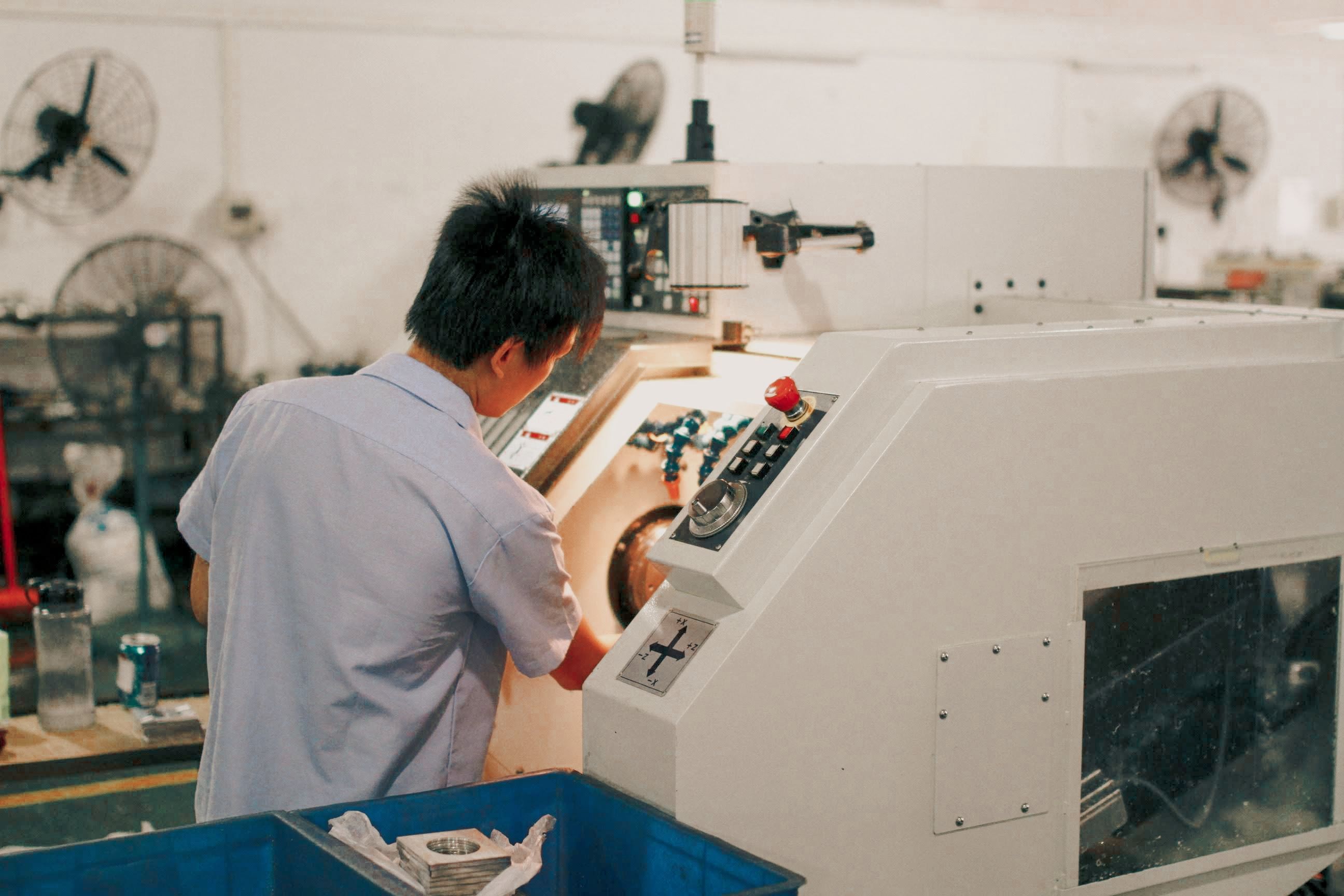
IoT sensors that track temperature, vibration, and weight catch problems early, before a storage issue spoils product or a machine breaks down completely. Predictive maintenance reduces downtime caused by old or poorly maintained equipment. Advanced controls, like servo motors and closed-loop systems, make cutting and portioning more precise, so less product gets wasted from bad cuts or over-portioning.
Traceability software solves a different problem: figuring out what went wrong in the first place. Instead of digging through paperwork, you can trace a defect straight back to the batch of raw material that caused it.
Tie it all together with an ERP system, and quality checks, traceability, and production data all live in one dashboard. That means manufacturers can catch problems and adjust on the spot, not after the fact, once the waste has already happened.
If you’re looking for an ERP tool to help you make a commitment to food manufacturing waste reduction, we recommend you check out Digit.
Reducing Food Manufacturing Waste with Digit
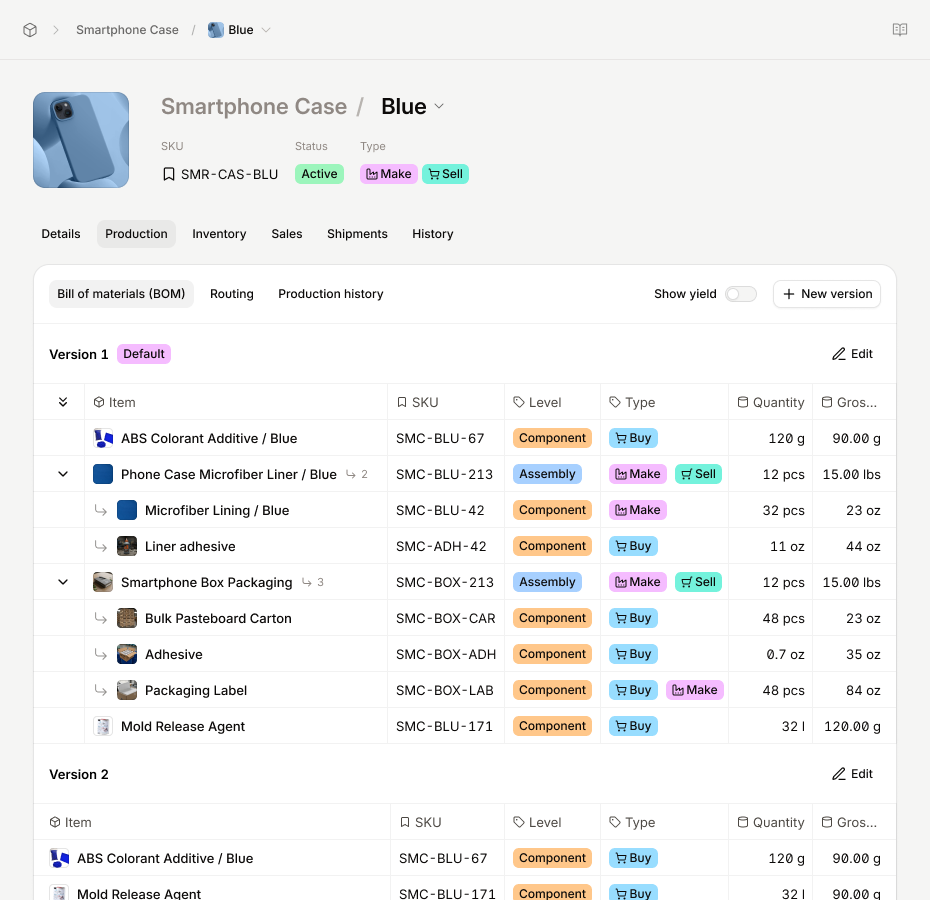
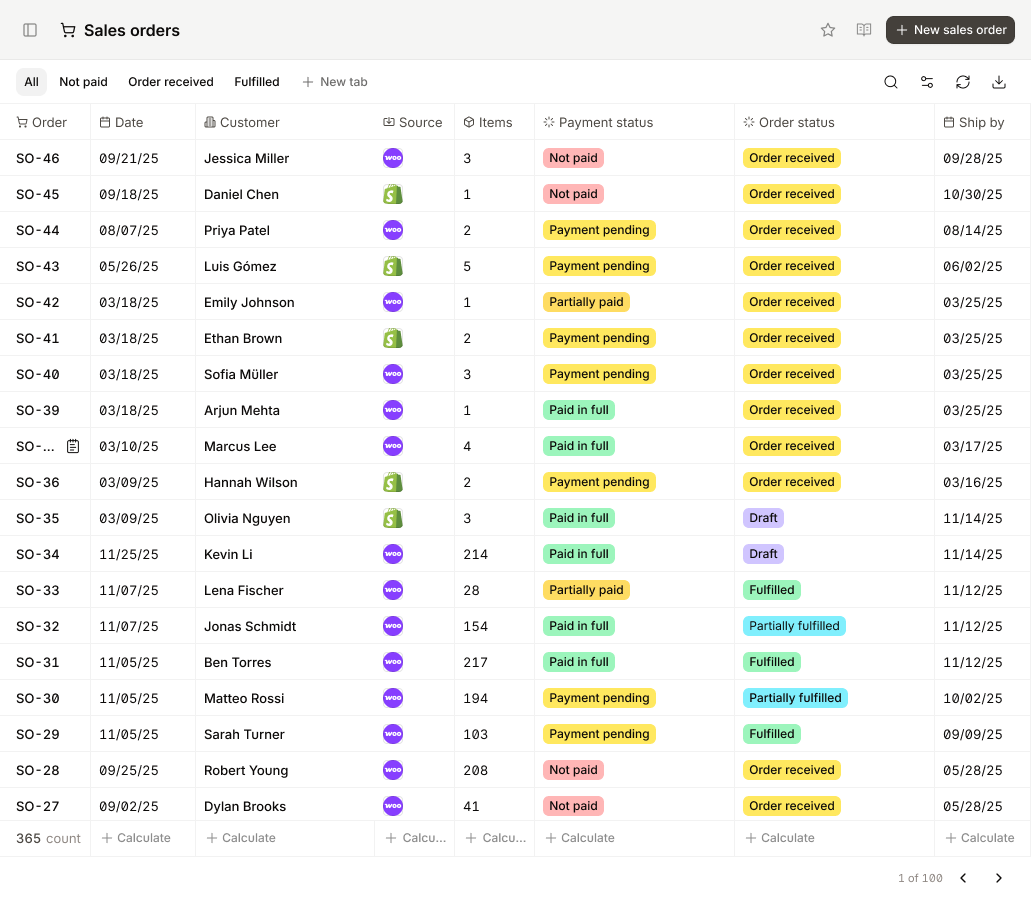
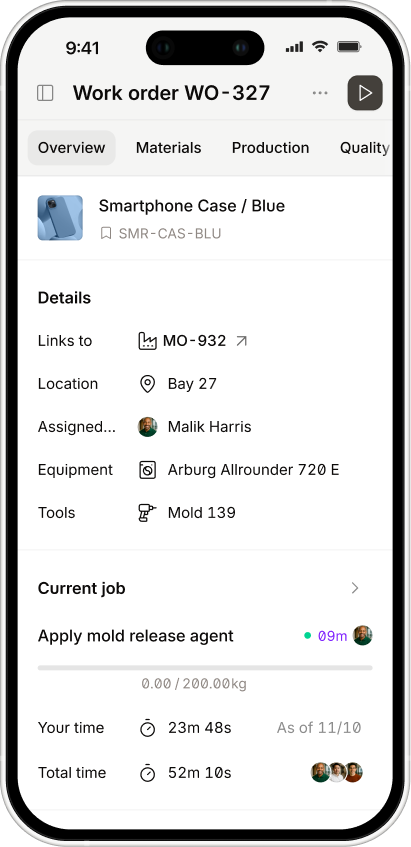
Everything we covered in this article about what you need to do to start waste reduction in food manufacturing will be easier with Digit, a food traceability software that consolidates inventory, production, and purchasing data into one platform, where every batch, movement, and order status is updated in real time.
Instead of manually tracking FEFO rotation, forecasting demand in spreadsheets, and logging waste audits on paper, Digit automates the entire workflow, with automatic calculations of exact ingredient ratios regardless of batch size, eliminating scaling errors and over-pouring that occur when staff manually adjust formulations for different production volumes. Digit also comes equipped with BOM version control for recipes, ensuring a formulation change doesn't quietly create inconsistency across shifts or product runs.
Want to see how Digit can help you get more control over your production and BOM inventory management? Head over to the website and book a demo with our team, and we’d be more than happy to show you how Digit can fit into your food manufacturing waste reduction plans and help you increase your profit margins.


.jpg)
.jpg)