



What Is Centralized Inventory?
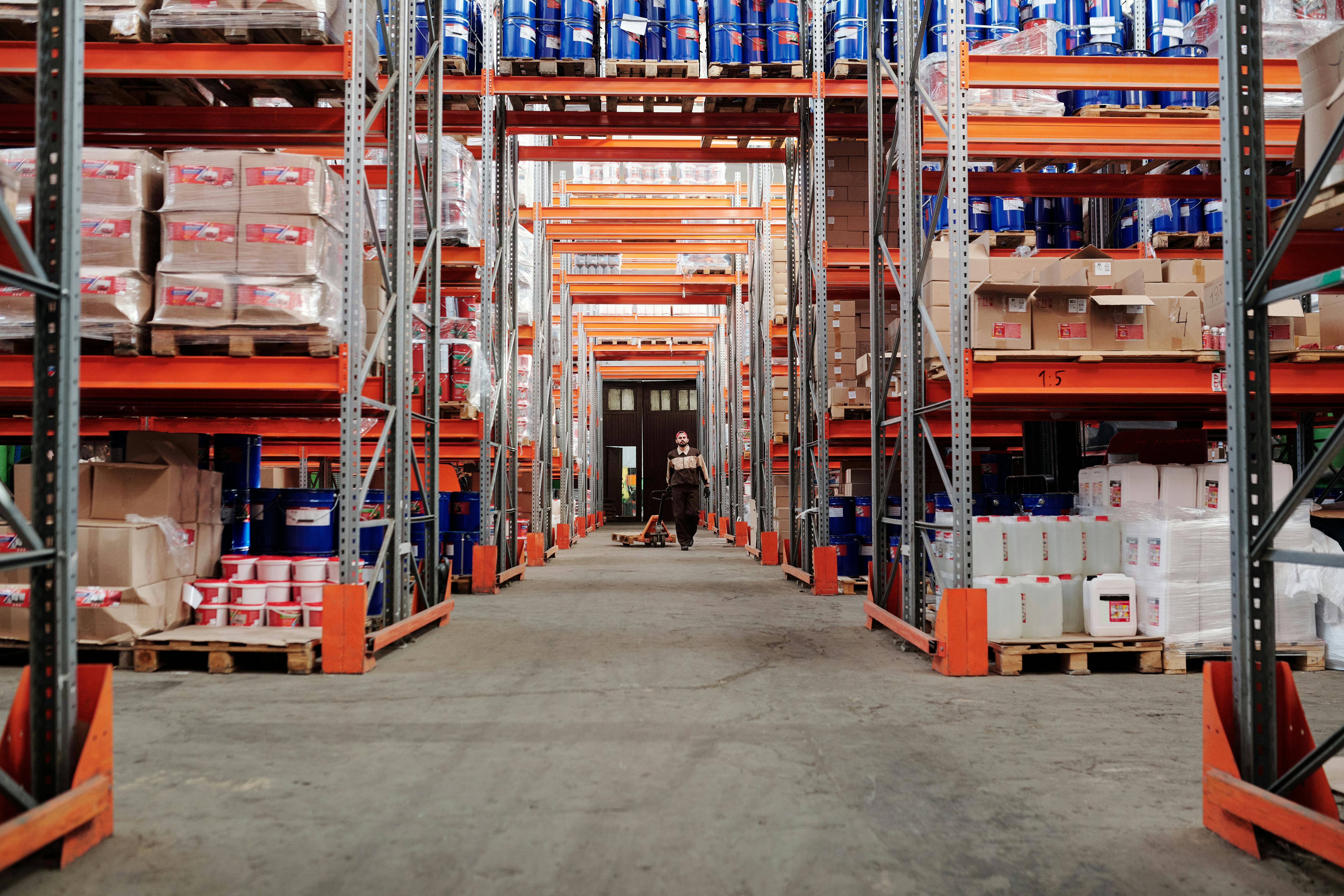
Centralized inventory is the method of storing all of your inventory at one central location, where all your purchasing, order processing, and fulfillment take place, rather than taking a multi-location inventory management approach.
The beauty of this inventory management method is its simplicity. When you have all your inventory stored in a single place, it’s a lot easier to understand your current inventory levels, where everything is stored, and how fast it’s moving off your shelves. Having this level of clarity means it’s easier to understand how much inventory you need to fulfill orders, and because you have a better understanding of this, you (theoretically) can hold less safety stock, reducing your total carrying costs.
And even though it’s always wise to rely on software to manage your inventory, the fact that your inventory is centralized means you can implement manual processes for managing inventory — assuming that your order volumes are low.
But ultimately, by having a central hub for your entire business, you’re going to have a shorter supply chain in which supplies come in and finished goods come out, making it easier to understand where all your inventory is moving.
Centralized Vs Decentralized Inventory Management

So, you understand what centralized inventory is, what about the alternative?
Almost all businesses nowadays operate from multiple locations or collaborate with 3PLs. So, if you’re deciding how to go about managing your inventory, what exactly is the difference between centralized and decentralized inventory? Well, before we delve deeper into the difference, let’s first clarify what decentralized inventory is.
Decentralized inventory is the process of managing inventory across several different locations that are closer to your points of demand, and can include:
- Regional warehouses
- Depots
- Fulfillment points
Here are the differences between the two models:
Location of stock
An operation with centralized inventory will take place from a single facility, while decentralized operations are spread across multiple locations, and each site may serve its own geographic area or customer segment.
Cost structure
With centralized inventory, purchasing supplies in bulk usually leads to discounted prices from vendors, and you get to avoid the overhead costs by having just one location to manage. But, even though a decentralized inventory approach comes with higher costs, it means being able to carry more inventory to fulfill a high volume of orders and reduce the expense of the last-mile delivery, as your inventory will be closer to customers.
Visibility and control
Since all your inventory will be in one place, a centralized model makes it easier to maintain control over it. In a decentralized system, you will need to establish a process for maintaining accurate stock data and ensuring clear communication and coordination across sites.
Delivery speed
Centralized inventory has a massive disadvantage for delivery speed, as the wider the geographical area that needs to be covered, the longer the delivery times. But, in a decentralized inventory set-up, you can better position your inventory closer to customers, reducing delivery times and lowering shipping costs.
Advantages and Disadvantages of Centralized Inventory Management

Centralized inventory management offers a bunch of operational benefits, but it isn't without its limitations.
Understanding both sides of the coin will help you understand if the centralized inventory management method is best for your business.
Centralized Inventory Advantages
- Lower operating costs — If everyone is at one location, you're only going to have to pay for the overhead of that single location. And those savings are passed on to your purchase order efforts also, as you can place cheaper bulk orders to a single location, as opposed to paying for several smaller orders and shipping to different facilities.
- Real-time visibility and accuracy — Stock levels, movements, and order status are visible in one place and updated in real time as activity occurs. That accuracy reduces the risk of overselling, prevents double-ordering, and gives teams the reliable data they need to make sound purchasing and fulfillment decisions.
- Reduced safety stock requirements — Since your inventory is in one place, management of that inventory is a lot easier, and you’ll quickly learn what the ideal amount of inventory to store is, meaning you can take a chance and hold less safety stock.
- Stronger demand forecasting — Unified records are easier to analyze, patterns are easier to spot, and demand forecasting and replenishment decisions can be made with greater confidence. This reduces both stockouts and the accumulation of slow-moving or obsolete inventory.
- Scalability — If you would like to add new sales channels, implement new technology, or increase the quantity you hold for a particular SKU, you only need to build the infrastructure for a single location, without replicating these changes across multiple locations.
- Simplified operations — It’s easier to standardize storage, picking, packing, and shipping, and audit when everything happens in one place. Errors are easier to catch, training is more consistent, and workflows are less likely to diverge across teams.
Centralized Inventory Disadvantages
- Slower delivery times — Unfortunately, the further away a customer is from your fulfillment hub, the more time and money it is going to take you to fulfill an order, and the ease of inventory management you get from a centralized method comes with this pretty significant trade-off and could even put you at a competitive disadvantage.
- Single point of failure risk — If something happens at your central hub, which means items cannot be shipped from your warehouse, this could be a disaster or a clogged toilet, then your entire supply chain breaks down. In a centralized operation, there are no fallback options — you just have to bear the costs until your hub is operational again.
- Storage capacity constraints — Space utilization and capacity are other major problems, and highly diverse product lines with different storage requirements may be difficult to accommodate under one roof without significant complexity.
- Higher downstream shipping costs — If you’re shipping products all over the place to get products to customers, you will quickly erode the cost savings that centralization produces elsewhere, sometimes to the point where a distribution model would have been cheaper overall.
How to Know if Centralized Inventory is Right for You?
So, as you can see from the previous sections, centralized inventory is great in its simplicity, but comes with some very severe trade-offs, from being less competitive to putting all your eggs into one basket and creating a significant chokepoint in your supply chain.
So, why would you use it?
Centralized inventory is a bit like Earth having the right conditions to support life.
Your business can likely thrive in the habitat zone of centralized inventory if your business has:
- A range of SKUs that don’t change often (the smaller your product offerings, the better)
- Your customers are in a manageable geographic area, such as a single city or state
- You have an efficient transportation and logistics infrastructure
- You’re willing to accept and are prepared to deal with the vulnerability of a single-hub location
This should be treated as a multiple-choice list. If you read the list above and your initial instinct is to say, “No, that wouldn’t work for us!” then you’re better off avoiding a centralized inventory management method, as you need to say yes across the board to make it work.
If you answered no, you should explore decentralization or implement a hybrid approach based on the factors your business needs to consider.
Regardless of what you choose, you should look into an inventory management system to automate your processes.
Pro tip: Check out our article on The 7 Best Warehouse Management Software to get started with finding the best for your business.
How Digit Supports Centralized and Decentralized Inventory
.jpeg)
Your centralized inventory management is only going to be as effective as the system you’re trying to keep everything organized with.
And, without accurate, real-time data, trying to maintain visibility and control will make your centralized hub vulnerable and eventually break down due to manual systems not being able to keep up.
Introducing Digit, a cloud-based WMS that gives you and your team the tools to build and manage your operations, either at a single location or across a supply chain that spans multiple markets and countries. When you use Digit, your inventory levels update automatically so every location and team has the same accurate picture of how your inventory is moving every time something is:
- Bought
- Sold
- Produced
- Transferred
- Consumed
If you’ve realized that centralized inventory isn’t going to work for your business, then no worries!
Digit gives you everything you need to manage warehouses and bin-level locations in one system, with serial number and lot tracking for full traceability. If you’re looking for software to implement in your business, then why not give Digit a try? You can chat with Digit's AI demo for free and test it out by asking questions on your workflows. SAee how Digit can help you get complete and total control over your inventory, including:
- Access to all features
- Unlimited users and integrations
- Live chat support by real humans
- Free live setup and coaching call
And there you have it! Everything you need to know about centralized inventory, and if you have any questions about your own inventory woes, feel free to book a call with us.

%20(2).jpg)