

When Production Leaves Your Building
You own the inventory at every step. You're just not the one touching it.
Maybe one vendor builds the part and another paints it. Maybe a co-packer handles the whole run. Either way, by the time finished goods get back to you, you've been managing the job across text messages, separate POs, and a mental tab that doesn't close cleanly.
Take a part that gets built by one vendor and painted by another. You know roughly what each one charged. What you don't have is a single place that ties the two together. When the finished part comes back, you're doing the math yourself to figure out what the whole job actually cost.
This becomes a bigger problem at month end, when you're reconciling by hand and hoping it closes.
What Tracking Outsourced Production Actually Looks Like
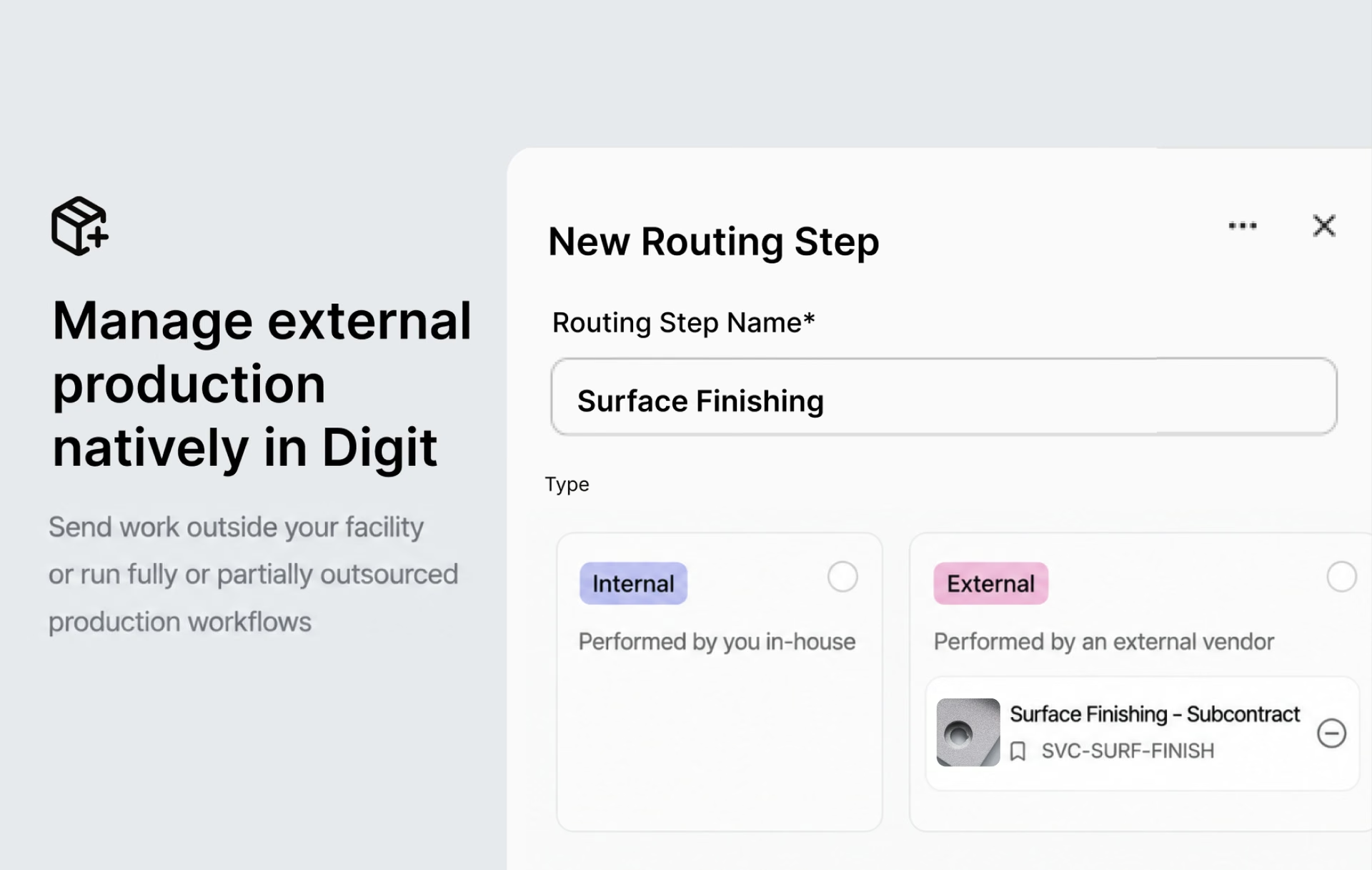
When you create a manufacturing order in Digit, you can mark any step as external and assigned to a specific vendor. A purchase order for that service generates automatically, linked directly to the order: No separate document to create, no manual connection to maintain.
For each material on the job, you note who's supplying it, whether it's you or them. That controls what your team picks and ships versus what stays on the vendor's side. When finished goods come back, they land in the right location in your system. The vendor's fee rolls into your actual cost of goods.
If the whole job goes out, not just one step, it works the same way at the order level.
Every material flagged.
One PO.
One place to see what the job cost.
The Co-packer PO Connects Directly to the Order
Most manufacturing software assumes everything happens under your roof. When it doesn't, you end up managing the gap yourself, whether it's a workaround here, a spreadsheet there, a number you'll sort out later.
A lot of businesses own the formula, own the inventory, and own the finished goods, but they just don't own the facility where the work gets done. That's a real operating model, and it deserves real software support.
When your co-packer PO lives inside the same order as everything else, you stop losing things between systems. The cost lands where it should. The materials are accounted for. The job has a clear start and a clear end. That's what it looks like when the gap is closed. If some of your production goes out to a vendor and you want to see it in practice, book a time with our team.