

What is Batch Manufacturing
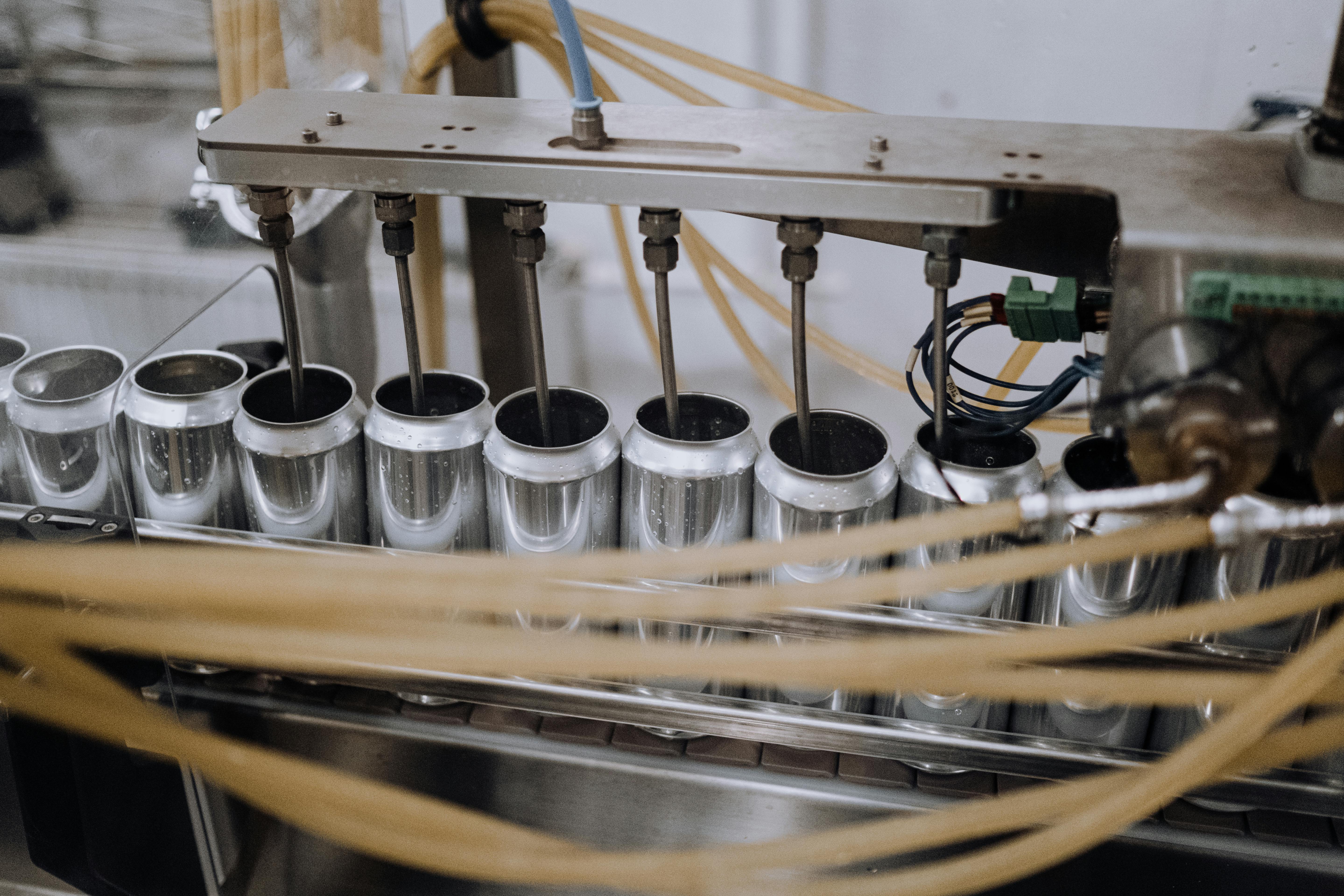
Batch manufacturing is a production method where a specific quantity of product, a batch, is made as a group, moving through each stage of production together before moving to the next. The entire batch finishes one process step before any of it advances to the next.
It sits between job shop production (one-off custom work) and continuous manufacturing (product flows without stopping). A brewery making 500 gallons of IPA runs batch manufacturing. So does a pharmaceutical company compounding 10,000 tablets, or a cosmetics brand filling 2,000 units of moisturizer in a single run.
The defining characteristic: you produce a defined quantity under defined conditions, then stop. The batch is documented, tested, and released, or held, before the next one starts.
How Batch Manufacturing Works: Step by Step
%2520(2).jpeg)
You've just gotten a large order. You pull together your raw materials, set up the line, run the production, clean down, and start all over again for the next product. That's batch manufacturing in practice, and for most food, beverage, chemical, cosmetic, and pharmaceutical operations, it's the only model that actually fits how they work.
But how it works in theory and how it runs in your facility are two different things. Setup time, WIP piling up between stages, scheduling that falls apart when one order shifts. These are the daily realities. This guide covers what batch manufacturing is, where it fits, what makes it hard, and how the right systems keep it from breaking you.
Before production starts, every batch follows a structured workflow designed to control quality, track materials, and keep operations moving efficiently from one stage to the next.
Batch Manufacturing vs. Continuous Manufacturing vs. Discrete Manufacturing
These three production models serve different needs. Understanding the differences helps you know which one applies and why batch is often the right answer.
Batch manufacturing produces a defined quantity of product in grouped runs. Production stops between batches for changeover, cleaning, or quality review. Best fit: products that require specific formulations, regulated documentation, or frequent changeovers between SKUs.
Continuous manufacturing runs without stopping. Raw materials go in one end, finished product comes out the other, around the clock. Think oil refining, cement production, or high-volume commodity chemicals. The economics work when you're making large volumes of a single product. Changeovers are expensive or impossible, and variation between runs is minimal by design.
Discrete manufacturing produces individual, countable units: cars, electronics, furniture. Products have distinct parts that are assembled into a finished good. The focus is on assembly sequences and component traceability, not formulation or process conditions.
If you're making a product from a recipe or formula, if your output is measured in liters, kilograms, or units filled rather than units assembled, you're almost certainly in batch or process territory. If your finished product is consumed or chemically transformed during production (not just assembled), batch manufacturing is your model.
Industries and Examples of Batch Manufacturing
Food and Beverage: A hot sauce manufacturer making three different heat levels can't run continuous production. The line needs to be cleaned between formulations. Each batch is made, tested, bottled, and labeled before the next run begins. Lot tracking here is critical: if a batch tests out of spec for pH or microbial content, you need to know exactly which units shipped and where. Digit works with food and beverage manufacturers who run exactly this model.
Chemicals and Specialty Chemicals: Adhesive manufacturers, cleaning product companies, and specialty chemical producers often run dozens of different SKUs on the same equipment. Batch sizes vary by order. Documentation requirements, including hazardous material records and customer-specific COAs, make batch record management non-negotiable. Digit's chemicals manufacturing workflows address this directly.
Pharmaceuticals and Nutraceuticals: This is where batch manufacturing is most formalized. FDA 21 CFR Part 211 for pharma and similar frameworks require complete batch records, in-process testing documentation, and full traceability for every batch. A supplement company making 50,000 softgels per run needs to know exactly what went in, who handled it, and when, and be able to pull that information in a recall scenario within hours, not days.
Cosmetics and Personal Care: Lotions, serums, and shampoos are all formulated in batch. The complexity comes from raw material variability, especially with natural ingredients, and the need to run multiple SKUs on shared equipment. Cleaning validation between batches and lot-level traceability are standard requirements.
Packaging and Contract Manufacturers: Contract manufacturers serving any of the above industries face the added complexity of tracking batches across multiple customer formulations, often with customer-supplied materials. Packaging operations add their own lot tracking layer on top.
Advantages of Batch Manufacturing
Batch manufacturing remains the preferred production model for many process manufacturers because it balances flexibility, quality control, and operational efficiency. While it comes with its own challenges, it also gives manufacturers a level of control and adaptability that continuous production often can't match.
Flexibility across SKUs
You can run Product A on Monday, clean the line, and run Product B on Tuesday. Continuous manufacturing can't do that. For manufacturers with 10, 50, or 200 SKUs, batch is the only practical model.
Lower upfront capital
You don't need a dedicated line per product. The same equipment handles multiple formulations. That capital efficiency matters for small and mid-size operations.
Quality control between runs
The stop between batches is actually a feature. It's when you inspect, test, and make a go/no-go decision before the next run. In a continuous process, a quality problem can contaminate thousands of units before it's caught.
Regulated compliance
In food, pharma, and chemicals, batch manufacturing aligns naturally with how regulators think about production. Lot-level traceability, batch records, and in-process testing are all built into how batch manufacturing works. Regulatory frameworks were written for this model.
Easier root cause analysis
When something goes wrong, you can isolate it to a specific batch. You know the inputs, the conditions, the timing. That containment is harder in continuous production.
Disadvantages and Challenges
Batch manufacturing gives manufacturers flexibility, but that flexibility comes with operational tradeoffs. As product lines grow and production becomes more complex, challenges around scheduling, inventory, changeovers, and traceability can quickly turn into bottlenecks without the right processes and systems in place.
Setup and changeover time
Every time you switch products, you lose production time. Cleaning, equipment adjustment, first-article inspection, changeover is the tax you pay for flexibility. For manufacturers with frequent SKU changes, this can be 20–30% of available production time.
WIP inventory accumulates between stages
Because the whole batch waits before moving to the next stage, work-in-progress builds up. That WIP has cost: it ties up materials and floor space, and if quality issues surface downstream, you may have to rework or scrap the entire batch.
Batch size optimization is hard
Too small and you're paying changeover costs too often. Too large and you're holding inventory longer than necessary, with more exposure if the batch fails. Finding the right batch size requires data most manufacturers don't have organized in one place.
Scheduling complexity
One large order can knock your whole schedule out of alignment. Batch manufacturing scheduling needs to account for equipment availability, material availability, lead times, and cleaning cycles simultaneously. On a whiteboard, this works until it doesn't.
Traceability burden
You have to know where every lot went. If a raw material supplier issues a recall, you need to identify every batch that used that material and every customer it shipped to, fast. Without the right systems, this is a manual, multi-day investigation.
6 Batch Manufacturing Best Practices
1. Define your standard batch sizes.
Establish baseline batch sizes by product based on equipment capacity, material shelf life, and demand patterns. Review these when demand shifts.
2. Standardize your batch records
If your batch record format changes by product or by operator, your documentation becomes unreliable. Templates, enforced in your production system, make this consistent.
3. Track lots from receiving forward
Lot traceability starts the moment raw materials arrive, not at production. Every incoming material should receive a lot number (or have the supplier lot number recorded) before it goes into storage.
4. Build changeover time into your schedule
Changeover is real production time. Schedulers who ignore it create plans that can't be executed. If your average changeover is two hours, it needs to be in the schedule.
5. Close batch records same-day
Batch records completed days or weeks after production are full of gaps and approximations. The closer to the production event, the more accurate the record.
6. Audit your traceability regularly
Pick a finished lot at random and trace it backward: when did it ship, when was it made, which raw material lots went into it, who supplied them? If this takes more than 30 minutes, your traceability needs work.
How Software Supports Batch Manufacturing
Spreadsheets and disconnected tools work until they don't. The moment you're managing more than a handful of SKUs, more than a few batches per week, or any level of regulatory compliance, manual systems start creating risk.
Lot tracking
Good inventory management for batch manufacturers means tracking inventory at the lot level, not just quantity on hand, but which lot it came from and what its status is. When a batch goes into production, the system records which raw material lots were consumed. When finished goods ship, the system records which finished lot went to which customer. A full trace, from customer order back to supplier receipt, should be available in seconds.
Bill of materials for formulations
Batch manufacturing BOMs are different from assembly BOMs. Quantities are often expressed in weight or volume, not units. Yield factors matter. MRP planning built for batch manufacturing handles these constraints natively, so when you plan a production run, the system calculates raw material needs correctly the first time.
Batch records in the system
In a connected production system, the batch record is built automatically from the data captured during production: which lots were consumed, what quantities, which equipment, which operators, what in-process test results were recorded. You're not assembling the record after the fact from paper logs, it exists in real time. For a regulatory audit or a customer COA request, this is the difference between an hour and a day.
Scheduling with real constraints
Production scheduling that accounts for equipment availability, batch lead times, and material availability prevents the collapse that happens when one big order shifts. The best inventory management software for batch manufacturers connects your inventory position directly to your production plan, so you're not scheduling batches you can't actually run.
Recall readiness
When a supplier calls about a contaminated raw material, you have hours, not days, to identify affected batches and issue customer notifications. Systems with real-time lot tracking answer this question from a single search. Systems without it answer it from a spreadsheet audit that takes two days and carries meaningful risk of missing something.
Batch manufacturing isn't going away. For most process manufacturers, it's the right model. But running it well requires more than good process discipline. It requires systems that track lots automatically, close batch records without manual effort, and surface the information you need when a quality event or a customer inquiry demands it fast.
If your current setup makes traceability feel like detective work, that's a data problem, not a people problem. If your current setup makes traceability feel like detective work, that's a data problem, not a people problem. See how Digit solves it by chatting with our free AI demo.