%201.svg)




What Is The Warehouse Management Process?
.jpg)
The process of warehouse management is all about executing day-to-day operations within a warehouse as efficiently as possible, based on plans, routes, and strategies set in place, with the ultimate goal of keeping productivity high and costs low.
Regardless of whether these operations are tracked using a warehouse management system or manually, warehouse management covers a wide range of functions, including (but not limited to):
- Distribution
- Inventory control
- Capacity planning
- Shipping and receiving
- Quality control
- Equipment inspection and management
- Health and safety documentation
- Environmental protection
Some businesses take ownership of these responsibilities themselves, while others outsource warehousing and logistics to 3PLs. Regardless of who does the work, the whole point is to make a more coordinated and efficient operation so that inventory moves throughout the entire supply chain easily.
What Are the Main Warehouse Management Processes?
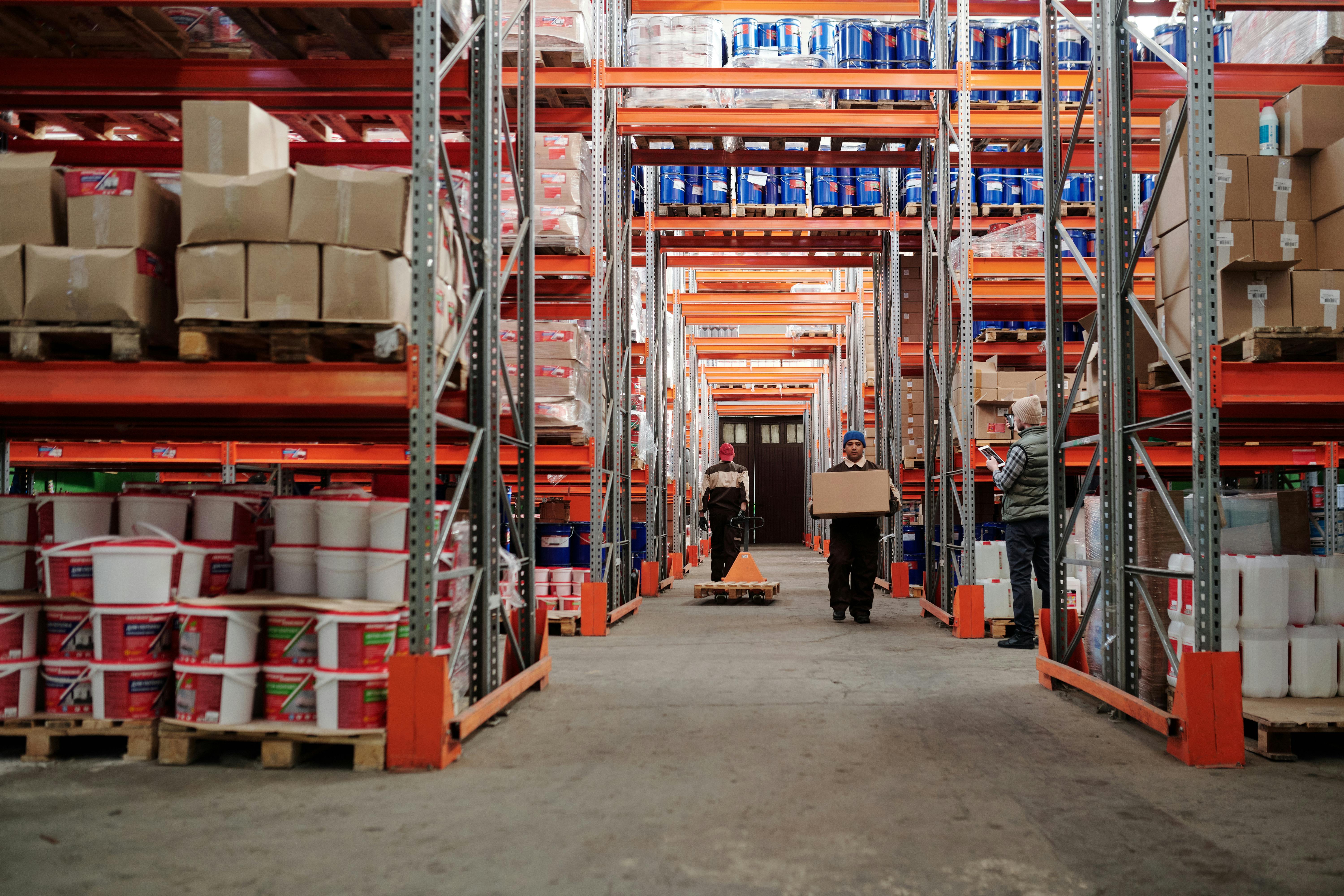
Visual input: A warehouse worker moving goods from a receiving bay to storage racking.
For a warehouse to operate efficiently, regardless of its routes and size, all items need to follow a sequential order.
If an issue arises or a bottleneck occurs at any of these stages, it causes a ripple effect and diminishes the effectiveness of the next stage.
Here are the warehouse management process steps, so you understand what needs to be done and how to potentially optimize each stage.
Receiving
Receiving is the point at which your purchase order arrives at the warehouse, triggering your warehouse management.
Once the goods arrive at your warehouse, they will need to be checked to ensure the delivery contains the correct amount of the supplies or products you ordered, and to identify any damage or discrepancies. If everything looks good, you can go ahead and record them as received.
Inspecting and recording the PO as received is essential at this point, as storing faulty goods or failing to document the arrival of products will cause problems later down the line — from defective products making it to market to incorrect inventory counts.
Putaway
Once inspected and recorded, it’s time to move them from the receiving bay and store them in the warehouse.
This will all depend on the type of inventory that you stock and if you have products of different sizes or items that are more popular with your customers. Determining this based on factors like product demand, weight, size, and accessibility will help you find the best available space to store items, reducing labor and time spent picking them later down the line.
Which brings us to the next stage.
Picking
The items are stored, but now the sales orders are flying in, and it’s time to start the process of sending them to their new home.
This is actually the most labor-intensive stage in the warehouse, where items are either picked individually or in a batch (depending on how you sell and distribute your goods). Orders will come in from all over the place, but they will all be picked together and shipped together, since it will be incredibly expensive and inefficient to fulfill orders individually. This means a warehouse operator will collect multiple items for a bunch of different orders in a single pass.
How this all takes place depends on:
- Order volume
- Product mix
- Warehouse layout
Packing
Your warehouse operator, after grabbing a bunch of items from all over the warehouse for several orders, will bring them to an area set up for the sole purpose of packing these goods and getting them ready for shipping.
At this stage, a worker will be:
- Selecting the right packaging materials
- Securing the contents
- Labeling the package correctly
- Including an accurate packing slip
This stage is essentially where your team will put their Tetris skills to the test, as they need to be mindful when packing the goods.
Shipping
The item has passed through your warehouse and has now been moved from packing to the shipping bay.
If you’re not dealing with many orders, it might be a case of just loading up a van or a truck and making sure the right goods are loaded up. But, if you have multiple bays and vehicles coming and going, it’s even more important to make sure that products are loaded onto the right vehicles with accurate documentation, at the right time.
It would be a shame to be so effective throughout the warehouse management process flow, only to load a package onto the wrong vehicle and damage a customer's trust in you.
Bonus Stage: Supporting Processes
With warehousing, we really just focus on how to get items from the receiving bay to the shipping bay, as quickly and cost-effectively as possible.
But there’s a lot of stuff that happens in between and sometimes even after:
- Cycle counting — Mistakes happen, and it’s not easy to notice until an order comes in and your operators are running around like headless chickens. Inventory audits (without getting in the way of the day-to-day operations) will help you ensure stock levels are accurate.
- Handling returns — Returns happen, so you will need to develop a system for efficiently receiving and reintegrating or disposing of returned goods.
- Quality control checks — A process of performing quality checks, beyond receiving, will help spot problems that either slipped through or occurred over time while in storage.
- Health and safety — It doesn’t take long for a warehouse to get messy, and mess can lead to accidents. And then you have machinery and heavy packages etc. Safety management needs to be continuous with training, signage, and hazard protocols.
There you have it! Everything you need to know about the different stages, as well as the background tasks and responsibilities. But now you need a system to understand if the warehouse routes you have created are doing a good job.
This is where KPIs come into play.
10 Warehouse KPIs You Can Use to Monitor Efficiency

Any manager worth their salt knows how important KPIs are for seeing exactly how well, or not well, your operations are doing.
By having these in place, you’ll be able to identify issues within your warehouse and address them before they become a larger problem for your business. Below, we’ve included different KPIs you can use to analyse just how well your business is doing.
Order Fulfillment KPIs
An order fulfillment KPI is going to help you identify how well your order fulfillment process is doing, and these are just some of the ones you can use to do this:
1. Order Cycle Time
This KPI helps you measure the total amount of time it takes for an order to be shipped out to the customer. The shorter the time, the more agile the operations are. By using this KPI, you can see if the time to fulfill an order is meeting expectations, and if it takes longer, start investigating bottlenecks along your warehouse routing.
The formula:
Order cycle time = (X hours * 60 minutes * 60 seconds) / Order volume
2. Perfect Order Rate
A perfect order is defined as an order that has been delivered on time without any errors occurring at any point. The closer you can get this to 100%, the more it indicates that your inventory management, fulfillment, and logistics are aligned. As a rule of thumb, anything above 90% is considered good.
The formula:
Perfect Order Rate = (Count of Perfect Orders / Total Number of Orders) x 100
3. On-Time Delivery Rate
Unlike perfect order that considers damage and errors, on-time deliveries are a little easier to track as it’s the percentage of orders that were delivered by the agreed-upon date. The higher the percentage, the more efficient your processes are before the order is delivered.
The formula:
On-Time Delivery rate = (Count of On-Time Deliveries / Total Number of Deliveries) x 100
Labor Productivity KPIs
If you want to figure out how well you and your team are doing, you’re going to need to implement labor productivity KPIs.
4. Picks Per Hour
It identifies how many items are picked for packaging and shipping, and how long it takes to pick these items. Calculating this can help you determine benchmarks, develop tactics to improve the pick rate, identify if the rate is decreasing over time, and figure out what is causing the problem.
The formula:
Pick Rate = Total Items Picked / Total Hours Spent Picking
5. Labor Utilization Rate
This is the KPI to use to understand your warehouse operators' capacity. You do this by calculating the productive hours and comparing them to the total hours available. If the rate is high, this means all your work time is spent on tasks which are adding value to the business. If it’s low, it’s going to help you better understand your downtime and look for issues with scheduling, demand planning, or bottlenecks that are leaving workers idling.
The formula:
Labor Utilization Rate = (Direct Labor Hours / Total Available Hours) x 100
Inventory and Storage KPIs
Another thing you’re going to want to understand is your main asset, inventory. Using the following inventory KPIs will help you determine if you’re properly utilizing your warehouses and getting the most out of the inventory that you carry.
6. Inventory Turnover
Using this will help you calculate how often your products are sold and restocked within a chosen period of analysis. If your turnover rate is high, it means your supply and demand analysis is spot on. But a low one indicates that capital is being tied up somewhere in your inventory, either from overstocking or lack of sales.
The formula:
Inventory Turnover = COGS / Average Value of Inventory
7. Carrying Costs
To keep something in your warehouse costs money:
- Storage
- Insurance
- Depreciation
- Capital tied up in unsold goods
The longer something sits there, the more it absorbs your profit margins. Calculating your carrying costs will help you uncover the items that are silently killing your business and deal with them.
The formula:
Carrying Costs = (Total Inventory Carrying Costs / Average Inventory Value) × 100
8. Warehouse Capacity Utilization
We’ve mentioned that inventory is the main asset for businesses with items in their warehouse. But another valuable and less tangible asset is storage space. This KPI will help you calculate the occupied space and the total available space. A high utilization rate isn’t necessarily a good thing either. The name of the game here is to get the most use out of your space while keeping space available for flexibility.
The formula:
Capacity Utilization Rate = Used Space Total Storage Capacity × 100
9. Missed Profit
We were torn between going with dead stock or missed profit for number 9, but decided to go with missed profits instead. The reason for this decision is that even though it's good to know your dead stock, knowing the amount of value you’re losing is even better. The longer dead stock sits in your inventory, the more money you’re losing from:
- Lost customer opportunities
- unsold inventory
- excessive discounts to move inventory
The formula:
Missed Profit = (Total Units × Selling Price) – (Total Units × Cost Per Unit)
10. Dock-to-Stock Time
Finally, and a less scary KPI than the previous, this KPI helps you determine how long it takes to get a PO unpacked, inspected, and properly stored. Reducing this time will help you improve your order fulfillment by making items available for sale as soon as possible.
The formula:
Dock-to-Stock Cycle Time = Time Goods are Ready for Picking − Time of Goods Arrival at Dock
And there you have it! 10 KPIs to help you optimize warehouse operations. However, if you really want to take your warehouse management to the next level, you will need to consider ditching your manual processes and implementing automation.
How Technology and WMS Software Transform Warehouse Operations
.jpg)
For most warehouses, the move from manual processes to a warehouse management system represents the single biggest operational shift they will make.
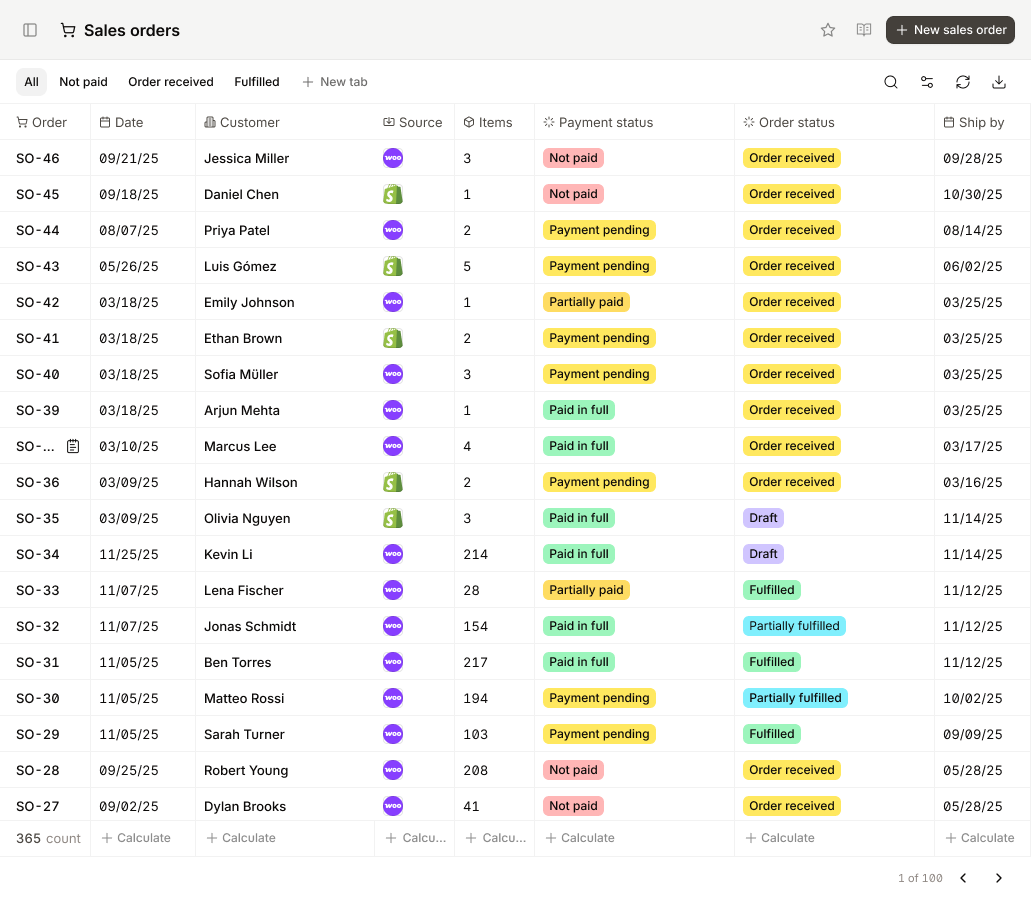
Spreadsheets and paper-based workflows can support a warehouse up to a point. But as order volumes grow, product ranges expand, and fulfillment expectations tighten, the limitations of manual systems become increasingly costly. A WMS addresses those limitations by connecting every part of the operation into a single, continuously updated platform.
What a WMS Does
A WMS gives managers a precise, real-time view of stock levels across every location, bin, and storage site, including:
- Items in transit
- Partially received orders
- Goods awaiting putaway
Purchase orders can be received in full or partially, with stock levels and costs updating immediately. When unexpected items arrive, the best warehouse management systems can generate retroactive purchase orders, keeping procurement and warehouse records aligned without manual reconciliation.
Automated picking guidance is one of the highest-impact features in a warehouse management system's process flow.
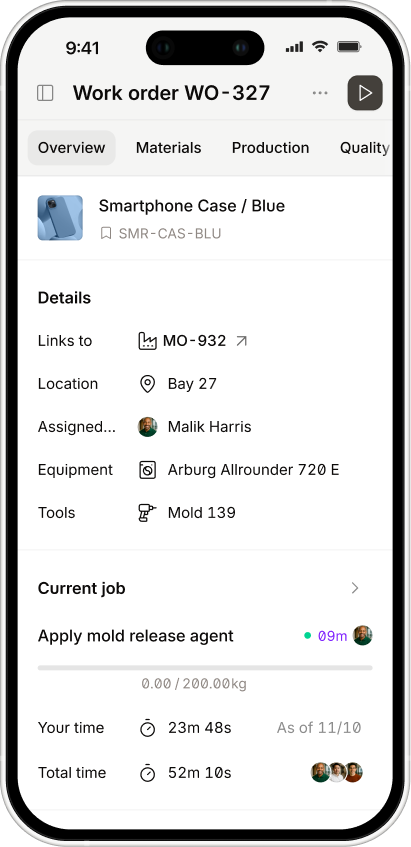
Rather than relying on workers to navigate the warehouse from memory or paper lists, the system generates optimized routes that minimize travel distance and reduce the chance of mispicks. Barcode scanning at each pick confirms accuracy in real time, catching errors before they reach the packing stage.
On the outbound side, a WMS can create packing slips, bills of lading, and shipping labels, and can sync order status with customer-facing portals so buyers have live visibility into their shipments. For operations handling multiple units of measure, complex packaging configurations, or multi-location fulfillment, this automation removes a significant source of manual error and delay.
Want to optimize your warehouse management process with WMS? Try chatting with Digit's free AI demo and see how you can automate your inventory or order management.


.jpg)

.jpg)