%201.svg)




Wholesaler vs Distributor: What's the Difference?

A distributor is a business that orders and resells products purchased directly from manufacturers, and markets those products B2B or B2C, usually tied to some form of geography like a state or country.
Genco Pura Olive Oil Company, from the Godfather, is a completely legitimate business that imports olive oil from Italy to the United States, amongst other financially advantageous activities.
A distributor takes ownership of the inventory that is purchased, unlike a broker or sales agent, who just manages transactions, meaning that the distributor assumes responsibility for all the risks that come with the purchase:
- Storage costs
- Inventory management
- Losses from slow-moving inventory and dead stock
Manufacturers have a lot on their plates, but by partnering with a distributor, they have a way of alleviating some pressures, as a distributor will handle the logistical and financial burden that would otherwise fall on the manufacturer if they attempted to sell inventory themselves. A distributor will take their products and store them in their own warehouses, managing stock levels, and fulfilling orders faster than a manufacturer could, shipping products directly from a central facility.
As distributors usually sell goods in high volumes, either in massive bundles to other companies or individually to consumers, they tend to partner with multiple manufacturers. They also maintain relationships with retailers and other buyers. Without these connections, a manufacturer would have difficulty selling because they would have to run their production plants while trying to establish relationships with these businesses directly.
It’s for that reason that, if a manufacturer wants to break into a new market or start selling internationally, a distributor will be a far easier option, since they have connections and better understand the audience and culture.
And it’s not just logistics and middleman services that they offer, as distributors also manage the customer service side of things too:
- Sales support
- Marketing assistance
- Product training
- Technical service
If you want to distinguish a distributor from a wholesaler, a distributor is a manufacturer's best friend — and the services they offer, well, they simply cannot be refused.
What Is a Wholesaler?
.jpg)
A wholesaler buys products in bulk from manufacturers and distributors, and resells those products in smaller bundles to retailers, businesses, or other buyers.
We’re not sure what the Godfather equivalent of Costco would be… CosanostraCo?
An exporter sells olive oil and other loose items to Genco Pura Olive Oil Company. The Genco Pura Olive Oil Company sells the olive oil to CosanostraCo, who sells to whoever else — it’s none of our business.
The difference between a wholesaler and a distributor is that a wholesaler is more of a free agent. They will purchase from competing manufacturers, and all the purchasing is based purely on price and demand, with no obligation to benefit the business they are buying from. The name of the game with wholesaling is volume arbitrage, buying large quantities of product in exchange for low per-unit pricing, and then selling them in smaller bundles with very small margins. Because of how small these margins are, they need to move things at a high volume to stay profitable, and they tend to specialize by product category or industry to do this.
Wholesalers tend to be more favorable partners for retailers.
Retailers can’t afford to purchase directly from manufacturers, so by purchasing products from wholesalers, they avoid the cash flow burden of buying in bulk and getting the inventory they need, when they need it.
Distributor vs Wholesaler vs Manufacturer
So, let’s break down all the players and keep it short and sweet. If you’re still confused, starting from the tippy top of the product stream:
- The Manufacturer — they produce finished goods from raw materials and determine everything about the product itself, from ingredients and components to packaging and pricing. They do not typically sell directly to retailers or consumers at scale and typically rely on distributors and wholesalers.
- The Distributor — Distributors have a direct, often contractual relationship with the manufacturer, frequently operating under exclusivity agreements, and are actively involved in promoting that manufacturer's products.
- The Wholesaler — Wholesalers have no such formal ties, and they buy where the price is right, carry competing brands, and focus on supplying retailers efficiently rather than representing any particular manufacturer's interests.
So, there you have it — the wholesaler vs distributor difference. But there’s a fourth player in this stream (and fifth if you consider consumers, but let’s not).
What Is a Retailer?
A retailer is the final link in the supply chain.
Retailers are businesses that sell products to individual consumers, whether through a physical store, an online shop, or both.
The products are sold by the individual unit or very small bundles to consumers. Retailers tend to have more curated selections rather than broad inventories, pricing their goods for individual sales rather than volume, and try to entice sales with heavy investments into branding and experience, like:
- Store design
- Online experience
- Customer service
- Marketing
As already mentioned, retailers don’t typically purchase directly from manufacturers as they can’t risk the storage costs because they don’t move inventory so fast, and out of all the business types, they earn the highest per-unit margin when compared to manufacturers, distributors, and wholesalers.
Managing Inventory as a Distributor or Wholesaler
.jpg)
Now you know all about the differences, let’s get to the nitty-gritty and discuss how both business types manage their biggest assets — inventory.
Inventory brings in the money, but it also creates the biggest risk for them, given the size of the purchases that they make.
Having too much in storage raises carrying costs. Having too few results in missed sales and fulfillment issues. Just like any business holding inventory, you need to find the balance, but unlike others, your profit margins may be so thin that you almost can’t afford to miscalculate your stock levels at any point.
Demand Forecasting and Reorder Points
Forecasting is the first thing you need to do before placing an order for inventory, as this will help you understand how much inventory you actually need.
You’ll do this by analyzing:
- Historical sales data
- Seasonal patterns
- Real-time market signals
Demand forecasting and planning, particularly when using machine learning on a platform, can identify demand patterns that manual analysis might otherwise miss and adapt as new data arrives, rather than relying on static projections.
But, whether you’re forecasting with AI or humans with decades of experience, your forecasts will at some point fall short, because anything can happen that'll drive up sales.
This is where your reorder point will come to the rescue. Setting and establishing reorder points is going to help you ensure that when sales spike and inventory is flying off the shelves, you have a notification or an automatic purchase order system set up to place an order with your supplier before a stockout occurs.
The formula for calculating your reorder point is:
(average daily unit sales × delivery lead time) + safety stock
SKU Prioritization
Not all inventory should be treated as equal.
There’s a rule in the universe, known as The Pareto Principle (more commonly known as the 80/20 rule), that holds to be true, even in distribution and wholesale:
Roughly 20% of SKUs typically generate 80% of revenue
By using ABC analysis, you can categorize your inventory into three tiers:
- High-value or high-demand items that need close monitoring
- Moderate performers that require standard management
- Slow-moving or low-value items that warrant minimal overhead
Focusing your resources on the items that actually drive the business and create revenue prevents you from spreading your inventory management efforts across your entire catalog, keeping focus where most of the value is concentrated.
Supplier Relationships and Supply Chain Risk
Inventory management and reliable stock replenishment go beyond your warehouse and extend back to the supplier through your relationship with them.
Diversifying your supplier base reduces exposure to single-supplier mishaps, such as:
- Production disruptions
- Shipping delays
- Geopolitical instability
Setting up and tracking supplier performance against agreed terms (like fill rates, lead times, order accuracy) gives distributors early warning when a supplier relationship is deteriorating before it causes fulfillment problems.
Another tactic that can be employed to avoid risk for handling slow-moving products is a consignment arrangement.
Under a consignment model, goods are held at the distributor's facility, but payment is only triggered when items sell, reducing the financial commitment to inventory that may not move quickly.
Returns and Reverse Logistics
Returns happen — so the only thing a distributor or a wholesaler can do is be prepared for them.
Getting your returns process documented and setting up a system for tracking returned goods is going to help you figure out if they can go back into your inventory or be sold off to other markets to avoid returned stock from becoming a write-off by default. This means creating:
- Defined inspection criteria
- Explicit resale guides
- Disposal policies
The faster a returned item can be assessed and either restocked or redirected, the less it costs the operation.
How Inventory Management Software Works for Distribution and Wholesale
.jpg)
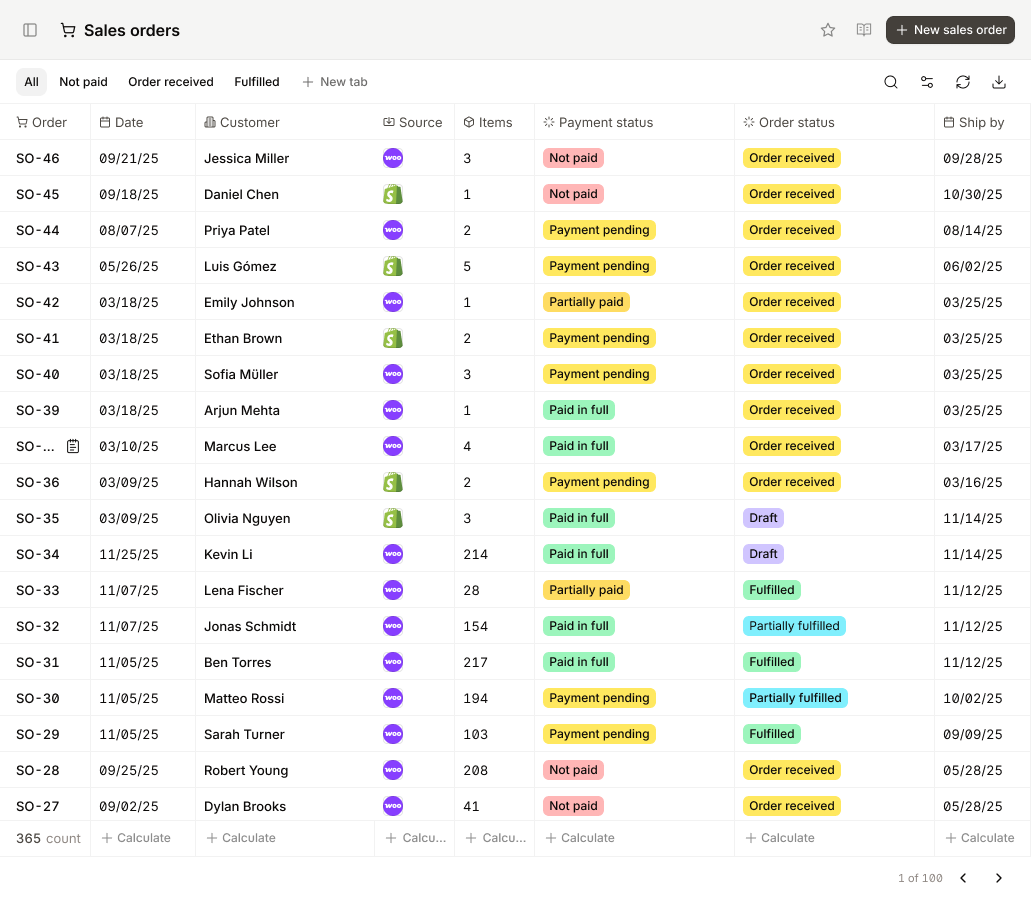
Inventory management software (IMS), like Digit, gives businesses like distributors and wholesalers the tools they need to create and manage:
- Purchase orders
- Sales orders
- Shipping orders
Basically, it achieves this by automating a lot of your inventory-related processes. So, when a PO is received, your IMS will update inventory levels and help you assign those products to specific:
- Warehouses
- Bins
- Storage locations
Then, as SOs are created, the IMS automatically sees if inventory is available and commits it to the order, helping your teams easily see and fulfill demand without having to worry about constantly changing stock levels.
Nowadays, most inventory management systems automate most fulfillment workflows, such as:
- Order entry
- Picking
- Packing
- Shipping
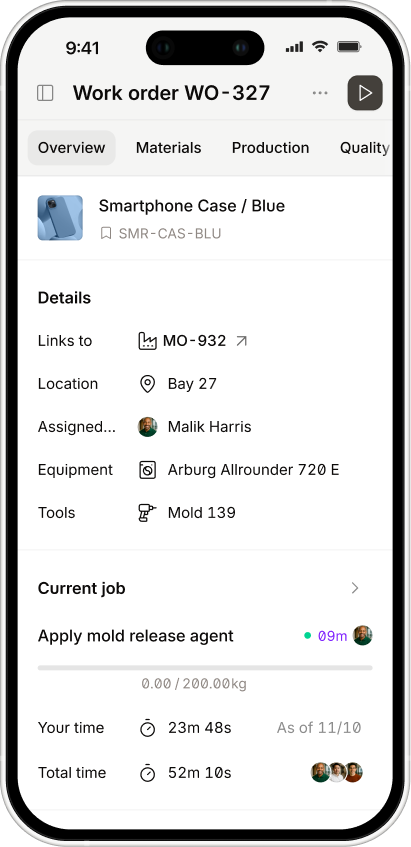
What this means is that they help distributors and wholesalers reduce the need for manual data entries, minimizing the risk of mistakes that can occur when information is handled across multiple unconnected systems or spreadsheets. Within the warehouse, staff can easily update inventory using barcode scanning tech (be that handheld scanners or mobile phones), to update stock movements with a point and a click.
Having your procurement, sales, and inventory all centralized, software like Digit gives you the tools you need to check and understand real-time information, so distributors and wholesalers can easily coordinate their workflows more efficiently and scale their distribution processes.
Want to see for yourself? Try chatting with Digit's free AI demo and see how it can help you get your inventory under control and help you scale your operations efficiently.


.jpg)

.jpg)