%201.svg)


What Is B2B Wholesale Warehousing and Fulfillment?
B2B warehousing and fulfillment covers everything and anything that is related to the process of storing, managing, and shipping products from one business (the seller) to another business (the client).
The number of items that are sold to a company can vary depending on the type of products that a company sells. For example, a plane manufacturer may sell just one jet to a client or an entire fleet. But typically, B2B involves wholesale or bulk orders for resale or internal use by another business, like:
- Retailers
- Distributors
- Manufacturers
- Any other commercial partners
So, to reiterate, B2B wholesale warehousing encompasses the end-to-end process of sourcing and selling products to clients, including all the different stages of that, such as receiving material or component shipments, warehouse storage, order management, and shipping the finished products.
How Does B2B Wholesale Warehousing Differ from B2C Operations?
Really, there aren’t that many differences between B2B and B2C fulfillment, as both follow the same processes as both:
- Receive supplies and materials
- Store products
- Process orders
- Ship goods
The biggest differentiations come from the types of customers these modalities serve, their business goals (and even this depends on business type and industry), and the scale in which they ship out products.
Let’s look at the differences in more detail.
Order Type and Volume
Wholesale warehousing may handle fewer orders, but each order typically includes a large quantity of finished goods.
For example, a retailer or distributor may place replenishment orders only a few times per year, but those orders are often palletized and shipped in bulk to them. As opposed to B2C orders, which will focus instead on a high volume of small orders shipped directly to an individual customer.
Let’s use selling toothbrushes as an example to illustrate the difference:
- B2B — Sells 1000 toothbrushes to another business, like a retailer
B2C — That same retailer sells a single toothbrush from that batch of 1000 to a single customer at a physical store location
Shipping
Going on from the toothbrush example, you can already imagine the difference here, which is the number of items that will be sent.
B2B orders are larger, heavier, and are usually shipped via freight (trucks, trains, planes, ships, etc.) Comparing that to B2C orders, which are typically smaller parcel shipments delivered directly to residential addresses or whatever drop-off method has been pre-agreed. A B2C order can be dropped off by a courier and does not require a complex process or specialized machinery.
However, that doesn’t mean that just because you ordered a toothbrush, it didn’t arrive via freight. Some businesses use a distribution fulfillment center and can group multiple orders or orders from other companies into a single shipment to save on costs.
Compliance and Operational Complexity
Wholesale warehousing can often require adherence to vendor contracts, electronic data interchange (EDI) standards, and industry-specific regulations if they’re handling perishable inventory or hazardous materials.
And if a B2B company fails to meet any of these requirements, either listed within a contract or regulation, that company can end up facing financial and possibly legal consequences.
But, comparing this against a business with a B2C model, they might just lose some brand reputation if they drop the ball on a customer's order. Again, it goes without saying that this depends on the particular type of business, but the point is that generally B2C involves fewer contractual obligations and more straightforward shipping rules.
Cost Structure and Fulfillment Priorities
B2B shipments cost more per order due to their:
- Size
- Labor requirements
- Use of specialized equipment to handle pallets
- Heavy goods
While fast shipping is critical in B2C ecommerce, wholesale warehousing places greater emphasis on accuracy and guaranteed delivery dates, as businesses rely on these shipments to maintain stable inventory levels.
As already mentioned, this is all generalized and isn’t the case across the board, but these are the easiest ways to understand the difference between B2B and B2C fulfillment processes. And now that we have gotten that out of the way, we can look into why the key areas that make B2B warehousing and fulfillment.
Core Components of B2B Warehousing and Fulfillment

For wholesale warehousing to be a successful strategy the goal of the company should be all about supporting and maintaining a long-term relationship between:
- Suppliers
- Retailers
- Distributors
- E-commerce
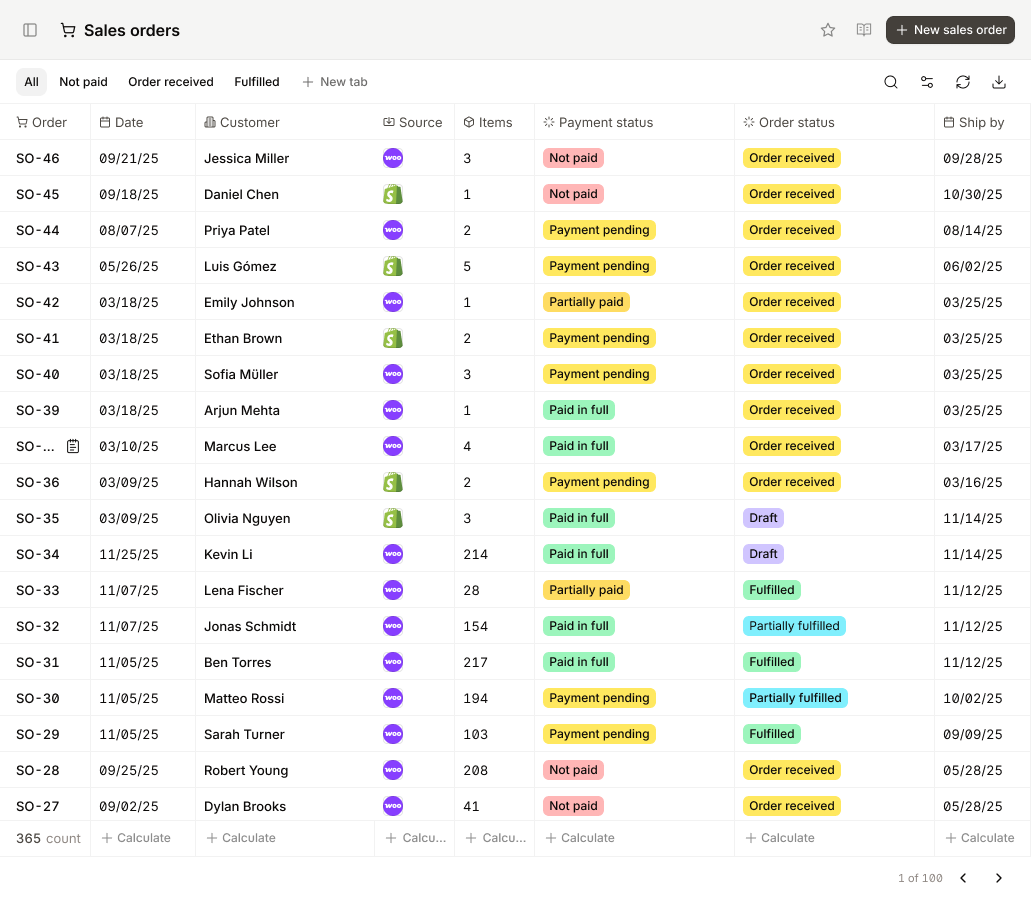
Keeping a good and healthy relationship with these businesses is essential as they will be placing high-value, recurring orders through your business. So, you’ll want to figure out a system for making the placement of these orders as painless as possible, via the use of electronic data interchange (EDI) or Customer Portal Software to share real-time information on:
- Inventory
- Orders
- Shipments
Because B2B orders carry greater financial and operational risk, fulfillment requires careful planning, precise execution, and detailed documentation, and below are the components you need to consider to ensure that you’re not putting your business at risk.
The Role of 3PLs in B2B Fulfillment
To be able to move massive quantities of products and to ensure that everything is above board, many businesses partner or outsource the responsibilities of storing and shipping orders to other companies.
These businesses are known as 3PLs, short for third-party logistics, and these entities will manage logistical and supply chain functions such as:
- Warehousing
- Transportation
- Order fulfillment
It’s a common practice in B2B fulfillment, and the specific roles a 3PL may fill can be different. A partner can act as a distributor moving bulk freight between facilities, serve as a wholesale fulfillment partner shipping directly to clients, or even provide services that help improve the efficiency and scalability of business operations and supply chain.
Why do businesses outsource? It’s because, as a business grows and starts to become the supplier to more and more clients, who might be scattered across the globe, businesses need to rely on a combination of B2B fulfillment services rather than a single fulfillment approach to help manage an increasingly complex supply chain.
Inventory Receiving and Storage
The wholesale warehousing process starts when inventory arrives from manufacturers or suppliers.
Each item is checked, counted, and inspected to ensure everything is correct and in good condition. After the inspection, SKUs and barcodes are added to the items to help track them, so nothing is lost and every product is easy to find.
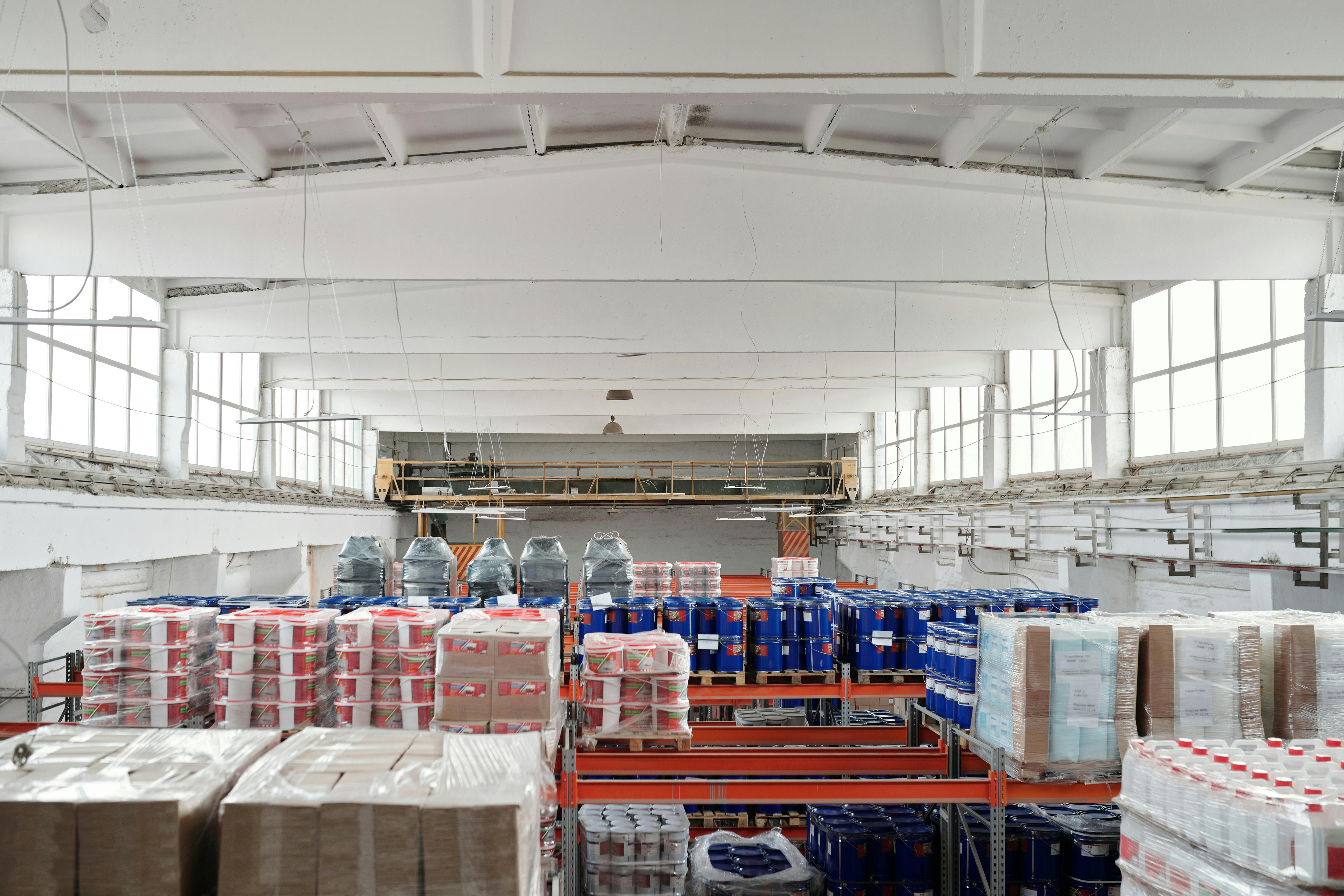
From here, a business stores its inventory, preferably in a warehouse or storage facility with bins arranged in the quickest, most efficient spaces to fulfill orders. When it comes to inventory and receiving, the name of the game is to ensure that products are always available to meet demand, costs remain reasonable, and warehouse space is utilized efficiently.
Order Processing and Management
In a B2C setting, you (for the most part) advertise a price, and the customer either accepts or doesn’t and moves on.
However, order processing in wholesale warehousing involves:
- Contract validation
- Negotiated pricing
- Invoicing
- Coordination between your sales, finance, and warehouse teams
For a B2B model to successfully operate, a lot of stakeholders need to communicate and work together, so it requires them to figure out a system where information can be shared and understood between different departments.
If you’ve worked for a large company, you have likely seen this in the form of an ERP system, a tool that links every business function into one place.
Picking and Packing for Bulk Orders
Picking and packing is a task and responsibility that any business with a warehouse needs to manage, but for wholesale warehousing, the scale of this job is a lot larger and more complex due to:
- The size and volume of orders
- Fulfillment requiring completion in stages
- Partial shipments are being moved while the remainder of an order is prepared
Again, because of the scale of orders, during the picking and packing stage, operators in wholesale warehousing need to prepare documentation for their orders, such as packing slips, commercial invoices, and bills of lading, to ensure compliance and smooth handoffs to carriers.
Shipping and Delivery Coordination
Because of the risks of noncompliance or deliveries not being made within the specified timeline, you’re going to need to find and select the appropriate transportation methods that keep costs low, are reliable, and meet any delivery requirements if necessary.
Orders can be shipped via less-than-truckload (LTL), full truckload (FTL), air, sea, or hybrid transportation methods that combine multiple carriers, just as long as you are able to monitor shipments to ensure deliveries will be safe and on time.
Reverse Logistics and Returns Management
The last component, and one that is often overlooked by businesses, is reversing the process if something should happen.
Because during the wholesale warehousing process:
- The wrong goods are sent
- An accident led to items getting damaged in transit
- A batch of items is faulty
Whatever the case, returns can happen, and the only thing you can do at this point to maintain good relationships with your clients is to handle them as soon as possible. Any goods that are returned need to be inspected so you can determine if:
- You can restock them
- You can repair them
- You can recycle them
- They need to be written off entirely
However, it is important to analyze return data to see if there is a recurring issue that could be addressed to stop this from happening again in the future, or if there’s any way to streamline processes to improve fulfillment accuracy over time.
Together, these components form the foundation of an effective B2B wholesale warehousing operation. If you’re a business with wholesale warehousing, you now have the information you need to start figuring out where you can optimize your processes. However, we can provide guidance on what you can do now to take your business to the next level.
4 Quick Tips for Streamlining Wholesale Warehousing
If you’re looking to streamline the components listed above, here are four tips that you can follow and implement to reduce the complexity of this setup, improve accuracy, and have the foundation in place to scale your operations.
Starting with:
Tip #1: Choose the Right Software to Manage Fulfillment
Finding the right tool for managing wholesale warehousing and supporting future growth is all about understanding the needs of your business, the complexity of your orders, and where you want to take your business in the future.
You could try settling with a WMS, but they come in all different types and sizes. It might be tempting to go for the one that seems most popular, and that tactic might work, but only if you make sure that the software aligns with your operational requirements. First, it should support purchase and sales order management, as well as manufacturing order management, if you produce goods yourself. Then you need to determine the reason for implementing software. Do you want to:
- Manage carriers?
- Improve shipping methods?
- Improve customer segmentation?
- Better anticipate demand?
- Overhaul inventory management?
Answering these questions will help you clarify your expectations for a tool.
As mentioned earlier, B2B operations are typically large and complex, requiring multiple people and departments to fulfill an order, so focusing solely on warehouse optimization isn’t enough. You’re going to need an ERP or a Warehouse Management Software that integrates easily with other solutions, so it fits into your tech stack with your tech stack.
Tip #2: Partner with Reliable Logistics Providers
Unless you’re in the Fortune 500 and have the capital and resources to manage every single vertical you can think of when it comes to fulfilling orders, you’re likely going to have to team up with a logistics provider.
In wholesale warehousing, on-time deliveries (as well as quality products) are your lifeline. So, whether you’re shipping in-house or outsourcing the process, working with dependable logistics partners is critical to your success. Reliable carriers and courier services help ensure consistent transit times and minimize disruptions to deliveries.
When it comes to the questions to ask yourself when evaluating a fulfillment partner, you can start with the following:
- What is their experience?
- Are they known for providing a reliable service?
- How much will they cost?
- Can they support your specific operational requirements?
Tip #3: Ensure EDI Compliance Across the Supply Chain
What is Electronic Data Interchange (EDI)? It is the automated, computer-to-computer exchange of business documents such as:
- Purchase orders
- Invoices
- Shipping notices
So, when you’re on the hunt for software to implement in your business, ensure that you find one that includes a B2B client portal to enable real-time information sharing between you and your clients.
Tip #4: Track Performance with Quantifiable Metrics
Final tip we would like to impart to you is to make sure that you find a tool that easily helps you monitor and track KPIs, so you can:
- Identify bottlenecks
- Set more realistic delivery expectations with clients
- Refine your inventory strategies and methods
Some tools will be able to track and monitor KPIs for you. However, most simply collect data, and it’s what you do with that data that makes a difference. If you’re unsure what KPIs you should be tracking, we recommend researching and starting with the following:
- Order fulfillment cycle time
- Perfect order rate
- Inventory turnover rate
Just by using these three, you will be able to measure how long it takes for you to fulfill an order, see how long it takes for a client to get an order, how many of your deliveries are making it to the client without any complications, and if your inventory is moving efficiently through your supply chain.
And there you go, everything you need to know about wholesale warehousing operations to help you provide a better and more reliable service to your clients. The next step is to start testing out software to see which is best for you.
How Digit Supports B2B Warehousing and Fulfillment
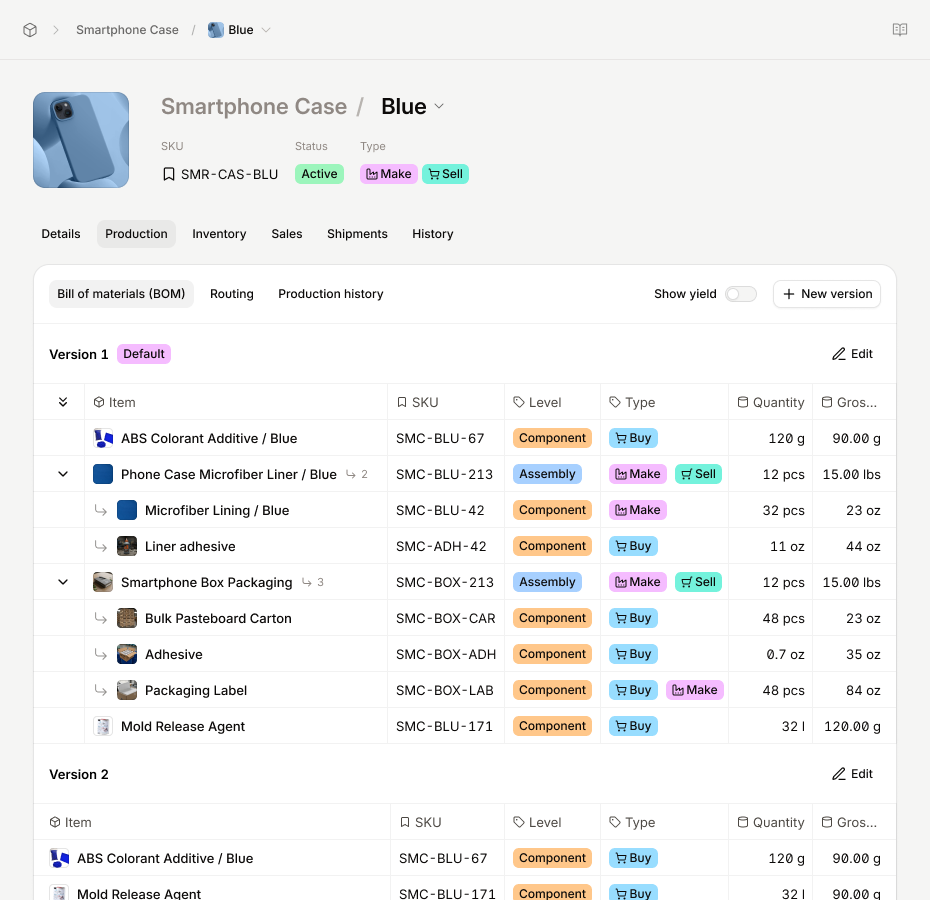
Digit improves warehouse management by giving you and your teams a clear, real-time view of inventory across your:
- Warehouses
- Storage zones
- Bin locations
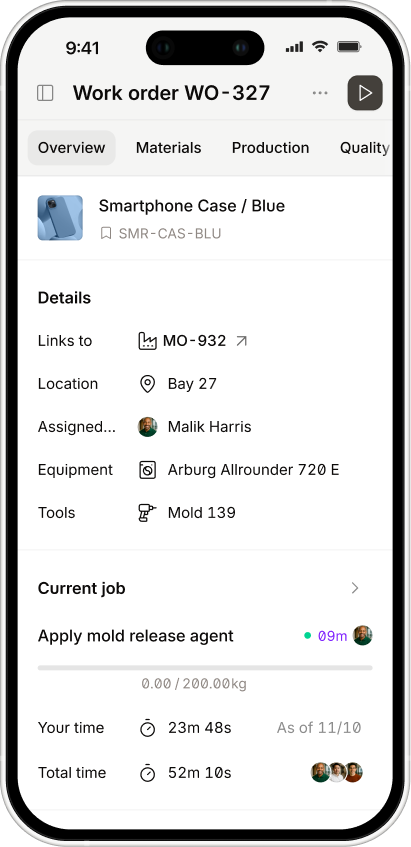
You can do this by logging in and defining where you keep your specific items, and then use Digit to automatically generate barcodes and QR codes so your team can easily scan inventory to log its movement, so you know exactly when things are being received, produced, transferred, and shipped.
Digit also supports batch, lot, and serial number tracking, allowing your teams to trace raw materials and components from supplier to shipment, in case you need to find out the history of a product's movement and manufacturing. And just like an ERP, Digit connects your warehouse operations directly to purchasing, sales, and accounting, helping you unify all your teams and departments while keeping your inventory levels accurate and operations running without any hitches.
And, for when you have clients who need access to order information, you can send them a link to the customer portal, so they can access and make updates to orders themselves, creating transparency and boosting their confidence. Want to see for yourself? Book a demo today start optimizing your wholesale warehousing today.



.jpg)
.jpg)