%201.svg)


.png)

What Is a Food Production Line?
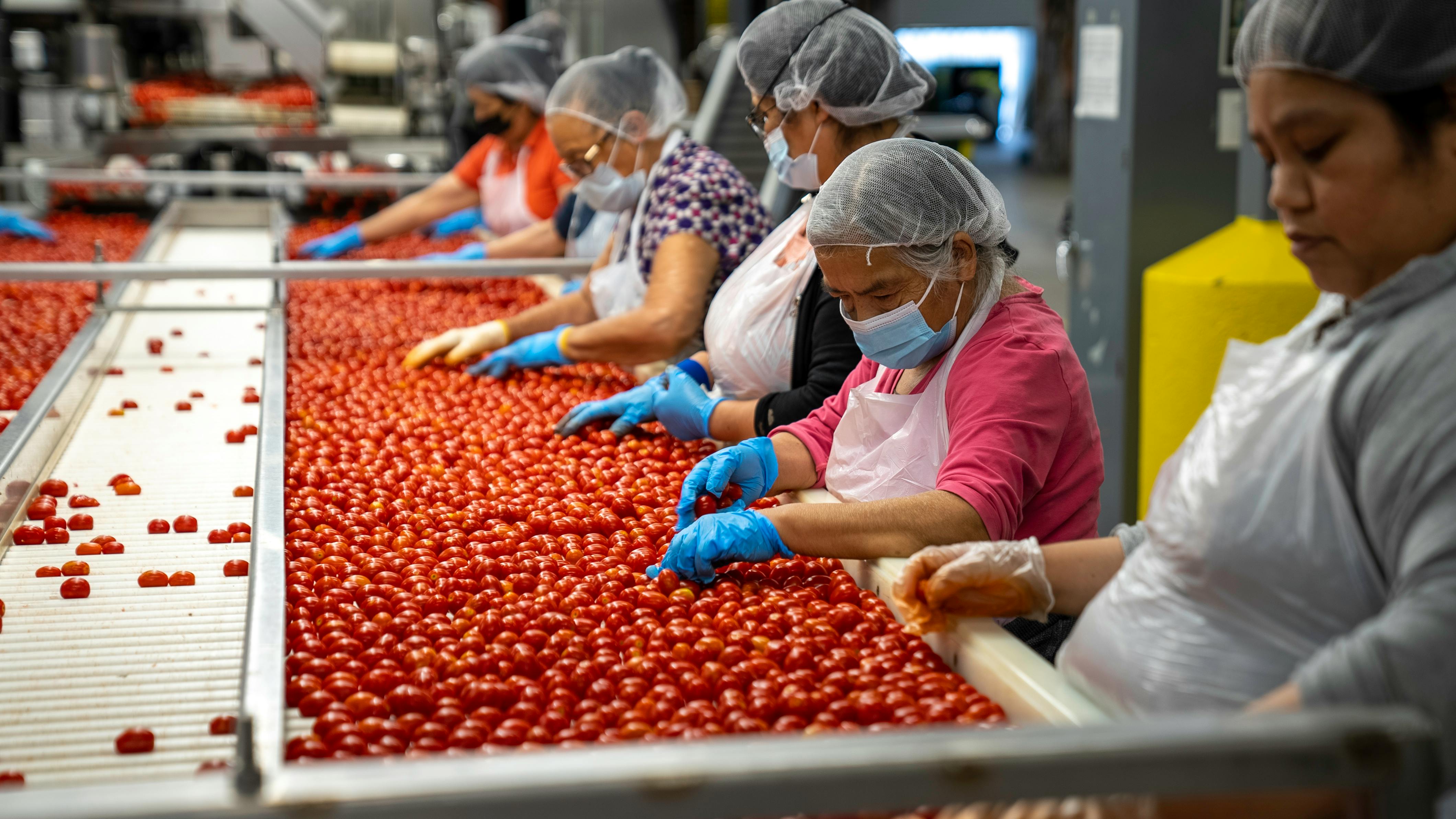
A food production line is a sequenced series of processing steps, equipment, and material flows. It transforms raw ingredients into a finished, packaged food product at a defined and repeatable output rate. Each station in the line has a specific function: mixing, cooking, portioning, filling, sealing, labeling, or inspection. The efficiency of the overall system depends on how well those stations are balanced and connected.
In the food and beverage industry, a production line is not just a physical arrangement of machines. It is a system that must simultaneously meet output targets, maintain product consistency, satisfy food safety regulations, and remain flexible enough to handle ingredient variation, demand shifts, and regulatory audits.
Food and beverage manufacturers face a uniquely complex version of this challenge because the raw materials are perishable, the tolerance for contamination is zero, and the documentation burden is high. The distinction between a production line and a production process matters. A process describes what happens to your product. A line describes how that process is physically executed, resourced, and managed. Getting both aligned is the foundation of a scalable food manufacturing operation.
4 Types of Food Production Lines
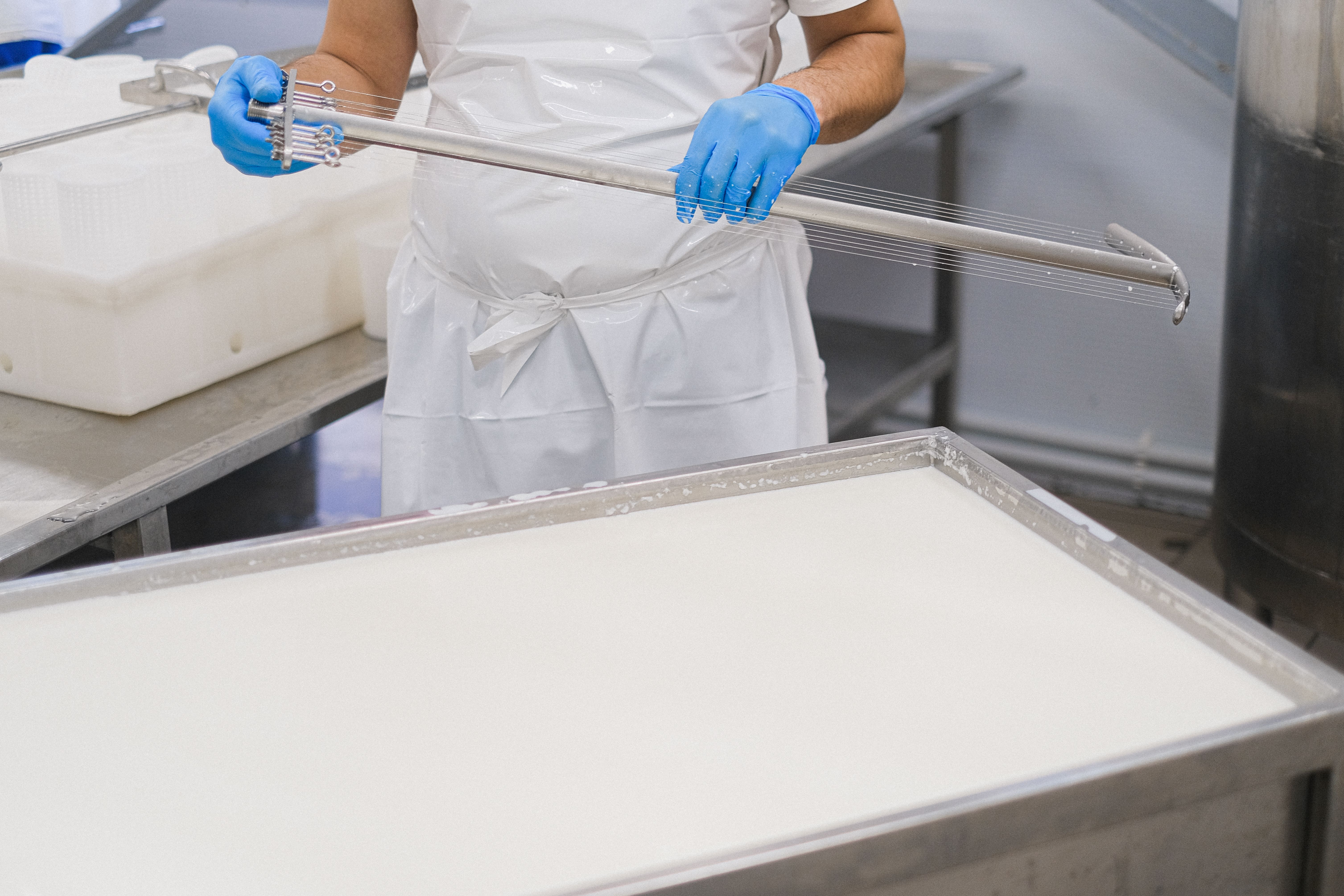
Choosing the right production model is the first real decision in food production line design, and it determines almost everything downstream: your equipment selection, floor layout, labor model, scheduling logic, and inventory management approach.
Batch production processes a defined quantity of product through all stages before the next batch begins. A bakery producing twelve SKUs in weekly runs is a batch operation. Batch is the right choice when you have high product variety, perishable or sensitive ingredients that cannot sit in an open line, or regulatory requirements for lot-level traceability. The tradeoff is lower throughput per labor hour and more changeover time.
Continuous production runs ingredients through a line in a steady, uninterrupted flow. Beverage filling lines, dairy processing, and snack extrusion often use continuous models. Throughput is high and labor efficiency is strong, but the system requires consistent raw material supply, tight in-process controls, and significant upfront capital. Changeovers are disruptive and costly.
Mass production refers to high-volume, low-variety output where the same product runs for extended periods. This model maximizes equipment utilization and minimizes unit cost but requires predictable demand and a product with sufficient volume to justify dedicated line time.
For most food entrepreneurs scaling up for the first time, batch production is the right starting point. It preserves flexibility, keeps lot traceability manageable, and aligns with the reality of early-stage demand variability. As volume grows and SKU rationalization happens, a shift toward semi-continuous or fully continuous models becomes viable.
Step 1: Define Your Product and Production Volume
Every food production line setup decision flows from two inputs: what you are making and how much of it you need to make.
Product definition means documenting your formulation in a formal bill of materials: every ingredient, its grade and specification, the quantity per unit of output, and any approved substitutions. Understanding how BOM and inventory management connect is worth doing at this stage, because a well-structured BOM drives purchasing, equipment specifications, allergen controls, and labeling downstream. Keeping your formulation in a spreadsheet that only one person can read creates problems that are expensive to unwind later.
Volume definition means establishing your design capacity, the output rate the line needs to achieve at full operation, and your near-term production plan. These are different numbers, and conflating them leads to either over-specified equipment you cannot fill or under-built lines you immediately outgrow. Volume also determines your raw material consumption rates, storage requirements, and batch frequency, all of which feed your production scheduling logic.
Step 2: Design Your Production Line Layout
Layout design translates your process flow into a physical footprint. The goal is a line where materials move in one direction, cross-contamination risks are minimized by design, and bottlenecks are visible and manageable.
Start with a process flow diagram that maps every transformation step from receiving through shipping. Then translate that into a spatial layout, accounting for equipment dimensions, maintenance access, personnel flow, sanitation stations, and inspection points. Regulatory requirements will constrain your layout. FDA Current Good Manufacturing Practices (CGMPs) require that facility design prevent contamination and allow for effective cleaning, so your layout is not purely a logistics problem.
Zone separation is a critical layout principle in food manufacturing. Raw and finished product zones should not share personnel or equipment pathways. Allergen-containing lines should be physically separated from allergen-free lines where cross-contact cannot be controlled by procedure alone. Cold storage, ambient staging, and packaging materials storage each have different environmental requirements that must be built into the floor plan rather than solved operationally.
Effective inventory management starts at the layout stage. Knowing where materials are staged, how they move through the line, and where finished goods accumulate requires both a physical design and a tracking system that mirrors it.
Step 3: Select Equipment and Technology
Equipment selection in a food manufacturing production line is a capital decision with a long tail. Choose equipment that is over-specified for your current volume and you carry excess depreciation and cleaning burden. Choose equipment that is under-specified and you hit a ceiling before you have recovered the investment.
The criteria for equipment selection should include throughput at rated capacity, sanitary design (hygienic fabrication, drainable surfaces, accessible cleaning points), compatibility with your product's physical properties, and total cost of ownership including spare parts availability and service support. For equipment that contacts food directly, NSF/3-A certification is a practical baseline.
Technology integration matters more than most first-time manufacturers anticipate. Equipment that produces output data, such as weights, temperatures, fill volumes, and line speeds, can feed into your quality and process control systems, reducing manual inspection labor and improving traceability.
What equipment is needed for a food production line varies by product category, but common categories include receiving and storage equipment, size reduction and mixing systems, heat treatment equipment (cooking, pasteurization, retort), forming or filling systems, packaging and sealing equipment, labeling systems, and metal detection or X-ray inspection.
Step 4: Establish Food Safety and GMP Requirements
Food safety is a design constraint, not an operational afterthought. This is the point where many food production line setups go wrong: compliance requirements are treated as a final checklist rather than inputs that shape facility design, equipment specification, and process engineering from the beginning.
FDA CGMPs (21 CFR Part 117 for human food) set baseline requirements for facility design, equipment, personnel practices, sanitation, and process controls. For manufacturers selling into retail or operating at any meaningful scale, FSMA Preventive Controls for Human Food requires a formal food safety plan that includes hazard analysis, preventive controls, monitoring procedures, and corrective action records.
HACCP (Hazard Analysis and Critical Control Points) provides a systematic framework for identifying and controlling biological, chemical, and physical hazards at specific points in your process. HACCP is not a form you fill out. It is an analysis that should drive your process design, equipment specifications, and monitoring systems. If your heat treatment step is a Critical Control Point, your equipment must achieve and verify the required time-temperature parameters for every run.
Allergen management requires lot-level traceability that links finished goods to specific raw material lots. This is not achievable without both a disciplined receiving and staging protocol and a system that records and maintains those linkages, making it a design requirement, not a software add-on.
Step 5: Plan Your Raw Material and Inventory Flow
Raw material flow management is the operational discipline that separates food manufacturers who scale well from those who hit recurring crises. It is also where most guides on food production line setup fall short: they cover equipment and layout but skip the material management logic that makes the line run.
Lot management begins at receiving. Every ingredient intake event should generate a lot record that captures supplier, delivery date, quantity, specification, and any certificate of analysis data. That lot record should be linked to the purchase order and, ultimately, to every batch of finished product that consumed from it.
Inventory staging requires a system that enforces FEFO (First Expired, First Out) rotation, keeps materials in correct environmental conditions prior to use, and prevents the commingling of lots that creates traceability gaps. Staging areas should be sized to hold the materials needed for scheduled production runs without becoming long-term storage zones that accumulate expired or damaged stock.
Consumption tracking, recording which lots and quantities were used in each production batch, closes the traceability loop. Manual consumption recording is error-prone and labor-intensive. MRP software with BOM-driven consumption logic automates this by calculating expected ingredient usage per batch and prompting operators to confirm or adjust actuals, producing accurate lot linkages without manual data entry.
Step 6: Build Your Production Scheduling Process
Production scheduling for food manufacturing is more constrained than scheduling in most other industries. You are working with perishable inputs, compliance-driven lot sequencing, equipment that requires sanitation and allergen changeovers, and a demand signal that is often imprecise at the SKU level.
Effective scheduling starts with a master production schedule, a forward-looking plan typically four to twelve weeks out, that defines what is being produced, in what quantities, and when. The MPS drives purchasing, labor planning, and equipment scheduling.
Within the MPS, scheduling logic must account for sequence-dependent changeovers. Running an allergen-containing product before a non-allergen product requires a full sanitation event that a same-allergen sequence does not.
Production scheduling software that integrates with your inventory and BOM data allows planners to see material availability, current stock positions, and open purchase orders alongside production demand, enabling scheduling decisions grounded in real operational data rather than assumptions.
Common Mistakes When Setting Up a Food Production Line
Designing for today's volume instead of two years from now. Facility design and equipment installation are expensive to redo. Build in headroom so you are not facing a full re-layout when volume doubles.
Treating compliance documentation as a post-setup task. Your sanitation procedures, HACCP plan, and allergen control program need to exist before you run your first commercial batch. Regulators and retail buyers will ask for them on day one.
Under-investing in material flow design. A well-specified processing line with a chaotic receiving dock and no lot tracking is a liability, not an asset. The line runs as well as the material management system behind it.
Manual scheduling on spreadsheets. Spreadsheet-based scheduling works until it does not. In food manufacturing, the failure mode is a missed allergen changeover, a run using expired material, or an unplanned downtime event that cascades into customer shortfalls.
Skipping the BOM formalization step. A formulation in someone's head or on a recipe card is not a bill of materials. Without a formal BOM, you cannot calculate material requirements, cost runs accurately, or conduct meaningful yield analysis.
How Manufacturing Software Supports Your Production Line
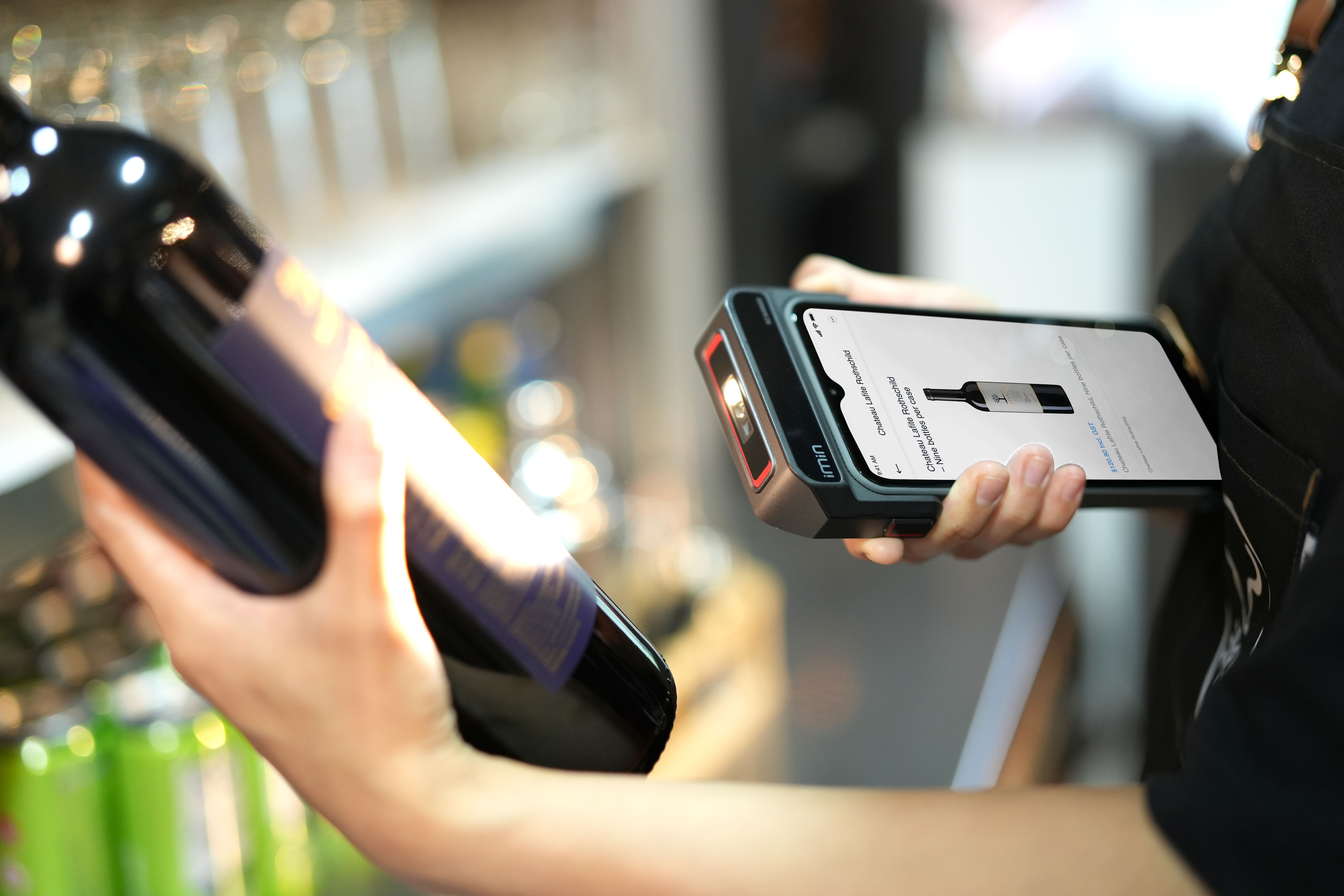
The common thread across every step in this guide is the need to connect information: formulations to purchasing, lot records to production batches, production schedules to inventory positions, finished goods to raw material sources.
Manufacturing software designed for food and beverage production does this systematically, replacing the manual record-keeping, spreadsheet coordination, and verbal handoffs that create compliance gaps and operational fragility.
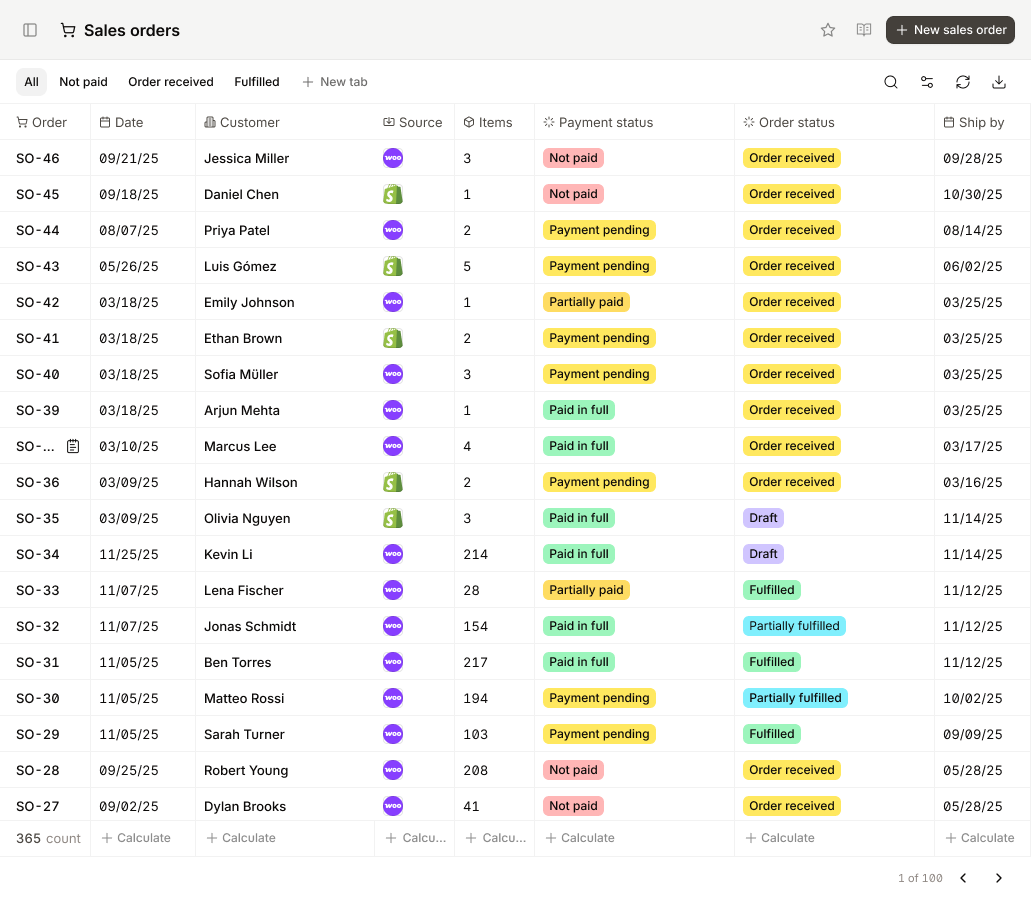
The specific capabilities that matter for a food production line include BOM management that formalizes your formulations and drives material requirements, MRP that translates production plans into purchasing signals and availability checks, inventory management with lot tracking and FEFO enforcement, production scheduling that sequences runs with allergen and changeover rules applied, and lot traceability that links every finished good back to its ingredient lots.
These are not independent features. Their value comes from integration. An MRP that does not talk to your inventory system produces purchasing plans that do not reflect what is actually on hand. A scheduling tool that does not see material availability creates runs that stop when ingredients are missing. A traceability system that relies on manual lot recording will have gaps exactly when you need it most.
Running Your Food Production Line with Digit
Digit is manufacturing software built for food and beverage producers who are moving from artisan or manual operations into structured manufacturing. The platform covers the full operational stack, including production scheduling, BOM management, inventory and lot tracking, MRP, and traceability, in an integrated system designed for the complexity of food production without the implementation overhead of enterprise ERP.
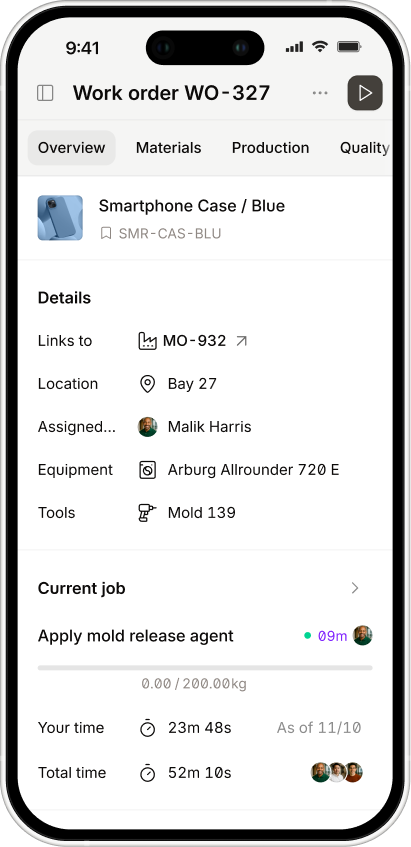
For manufacturers working through the steps in this guide, Digit provides the infrastructure layer that connects design decisions to day-to-day execution. Your formalized BOM drives material requirements planning. Your production schedule reflects actual inventory positions and open purchase orders. Every production run records lot consumption automatically, building the traceability record that supports both food safety compliance and recall readiness.
If you are building a food production line and want a manufacturing platform that grows with your operation from the first structured run, Digit is built for exactly that transition.
.jpg)


.jpg)
.jpg)