


What Is a Warehouse
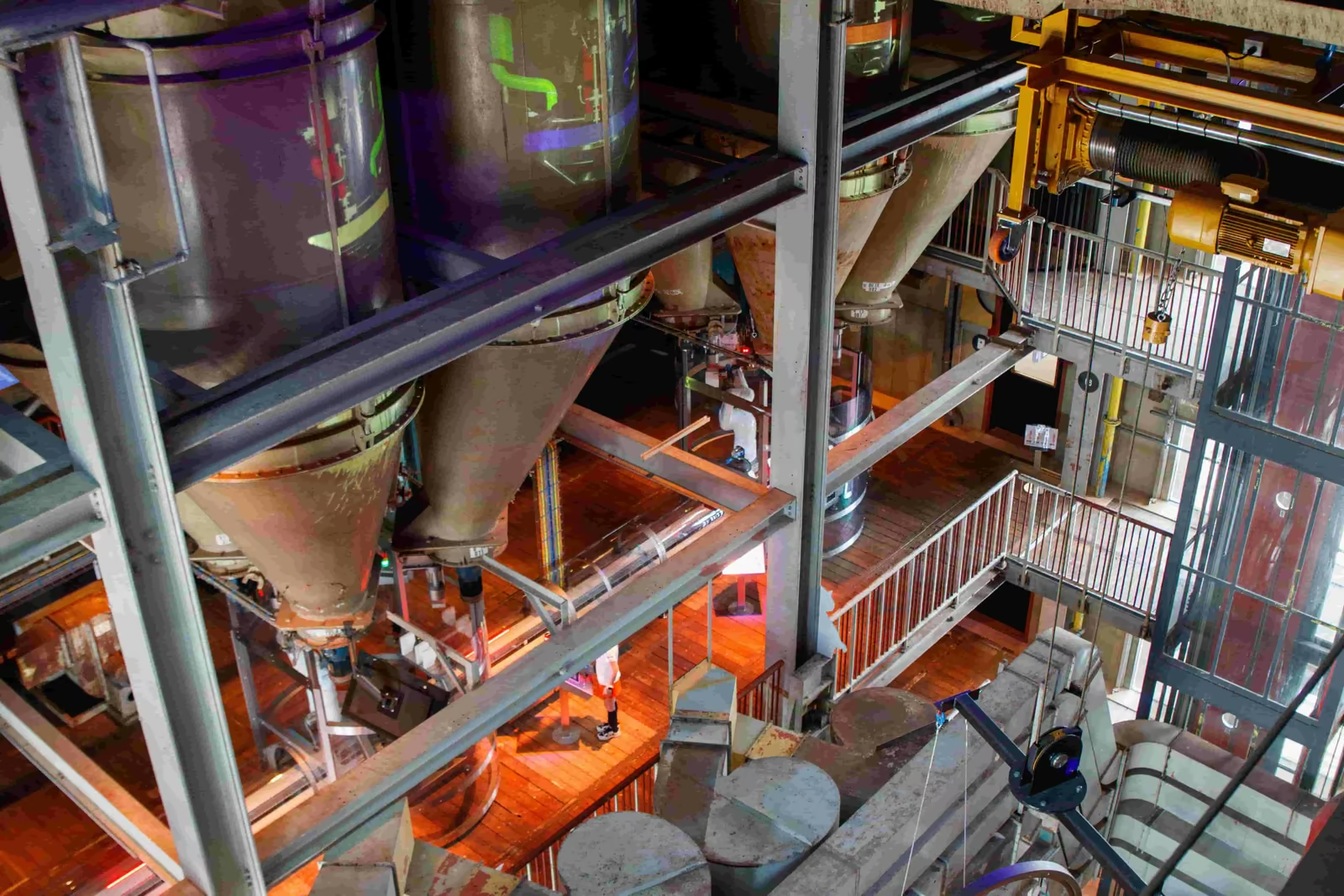
A warehouse is a facility that has been built to store large quantities of items as they move through the supply chain, comprising:
- Raw materials
- Components or sub-assemblies
- Finished products
Warehouses are extremely important for supply chain management (especially in manufacturing) as they are a critical node between purchasing, manufacturing, and sales, as the items that arrive at a warehouse are:
- Received
- Organized
- Prepared for their next destination
In a manufacturing workflow, a warehouse is important for inventory management, as it provides manufacturers with a place to store finished goods before shipping them to distribution partners. Or, in the case of manufacturers who partner with retailers and wholesalers, it gives them a location to keep the goods ready to dispatch when a new order comes in from their partner.
Traditionally speaking, warehouses basically functioned as a part of the inventory management process, but nowadays warehouses have become a strategic operations point where warehouse managers try to:
- Optimize for supply and demand
- Reduce uncertainty
- Ensure products are available where and when they're needed
The Core Functions of a Warehouse
As we already mentioned, a lot goes on in a warehouse, which requires distinct operations to be carried out accurately and efficiently to avoid errors that disrupt the entire supply chain. Warehouse operations include:
- Receiving procurement orders — Goods from the vendor must be inspected to ensure quality and quantity are correct before being marked as received.
- Inventory management — Firstly, items need to be housed safely within the facility to prevent damage or degradation. Secondly, once they are stored, stock levels need to be monitored to avoid stockouts and storing excess inventory.
- Order fulfillment — When a manufacturing or sales order is generated, the items needed to complete it must be picked. And for a sales order, the products need to be checked, packed, and labeled for the individual customer or destination.
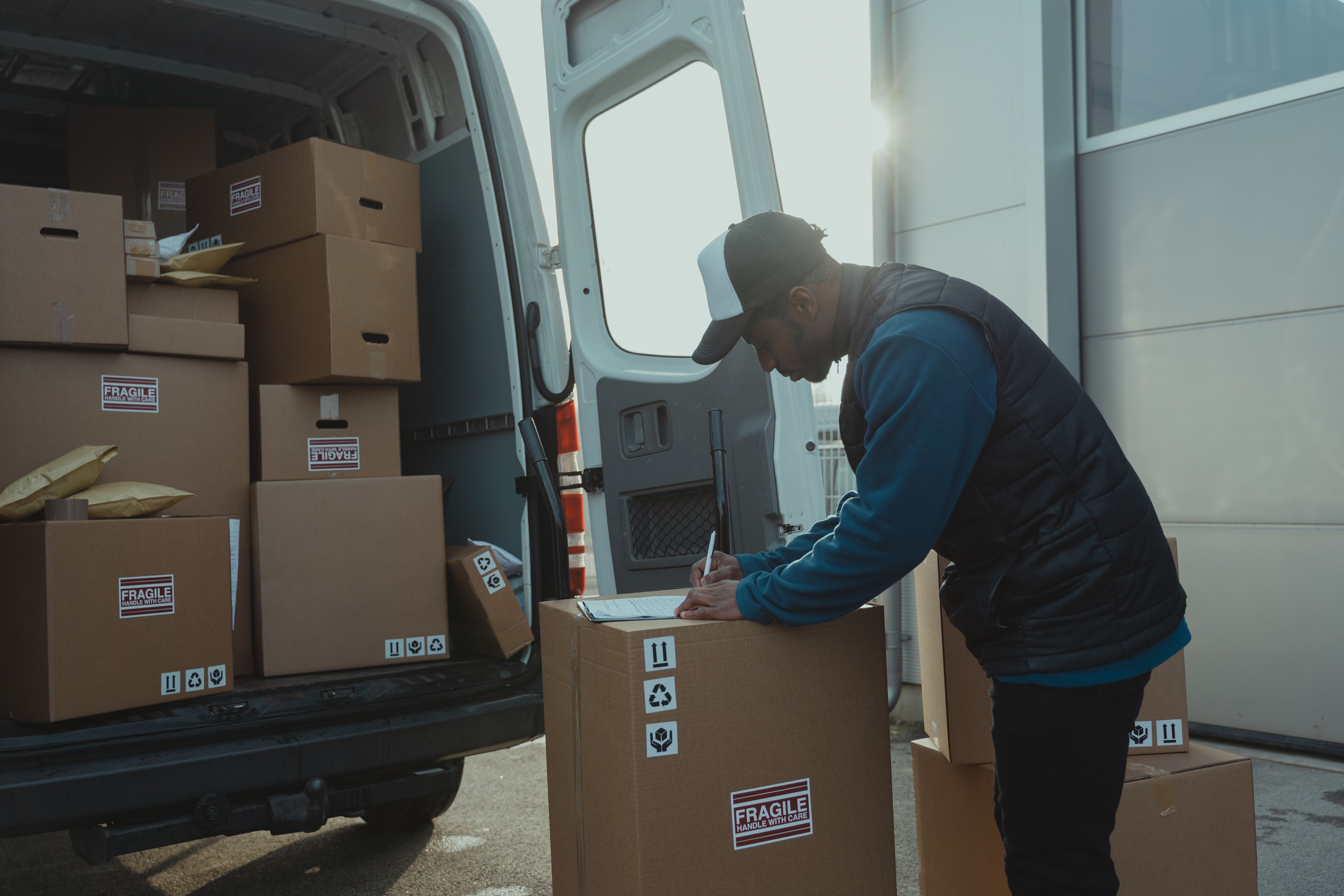
- Shipping — Finally, the products need to be sent to their intended destination and prepared for loading onto vans, trucks, or containers for delivery.
The Different Types of Warehouses
You might be surprised to know that a warehouse isn’t just a giant gutted-out building with a ton of floor space. A warehouse can come in all different shapes and sizes. As businesses have different requirements, there are several specialized warehouse models that manufacturers can use:
- Public warehouses — These are owned by 3PLs who rent out their excess space to multiple clients, making them the best option for businesses that need scalable e-commerce fulfillment solutions or whose storage needs fluctuate with changing demand.
- Private warehouses — A private warehouse is owned by the business that needs the space (be that a single retail chain or manufacturer) and will store only its own inventory at this location.
- Bonded warehouses — A customs-regulated facility where imported goods can be stored without paying duties upfront. Duties are triggered only when goods leave the warehouse for domestic use. If they're re-exported instead, the duty is avoided altogether.
- Smart or automated warehouses — The types of warehouses you saw in sci-fi movies. They are high-tech facilities that use robotics to maximize picking speed and accuracy. However, any warehouse that uses AI or Warehouse Management Systems (WMS) can also be considered automated.
So, now we know what a warehouse is.
In the quest to understand the difference between a warehouse and a distribution center, let’s now explore the world of distribution centers.
What Is a Distribution Center
.jpeg)
Distribution centers are a specific type of warehouse designed to move goods through the supply chain rather than store them for extended periods.
When it comes to distribution centers vs. warehouses, goods arrive from a vendor, wholesaler, or even a manufacturer, and they are quickly processed and redistributed to other partners, like retailers, or shipped directly to the end customer. This is the biggest difference between the two:
How long an item actually spends at the location.
Unlike a warehouse operation, items arrive at a distribution center ready to be dispatched as soon as possible to fulfill an already open order.
This might leave you wondering why a business would adopt a distribution center into its supply chain workflow. The purpose is to reduce shipping costs and delivery times by locating distribution centers as close to the customer base as possible. This is important for businesses that run e-commerce operations, as selling online typically has higher shipping costs than brick-and-mortar retail. That's because e-commerce sellers must ship individual orders to each customer's door, losing the economies of scale of bulk shipping.
Distribution centers also allow businesses to maintain tight control over their inventory planning. Because items pass through without being stored, distribution centers often take on value-added services such as picking, packing, and labeling on behalf of the retailer or manufacturer that owns the goods.
Just like warehousing, who owns the distribution center depends on the business model.
For example, a retailer might build and operate their own distribution center, while a smaller business might outsource this to a 3PL, which will provide the center and manage the operations. For that last reason, it’s not out of the question for the distribution center to be the business itself, to become a distribution hub for multiple clients, or to offer specialized services like the sorting of wholesale food and beverage for supplying local restaurants.
How Distribution Centers Operate
As already mentioned, the distribution center and warehouse differ mainly in how long the inventory stays at the location.
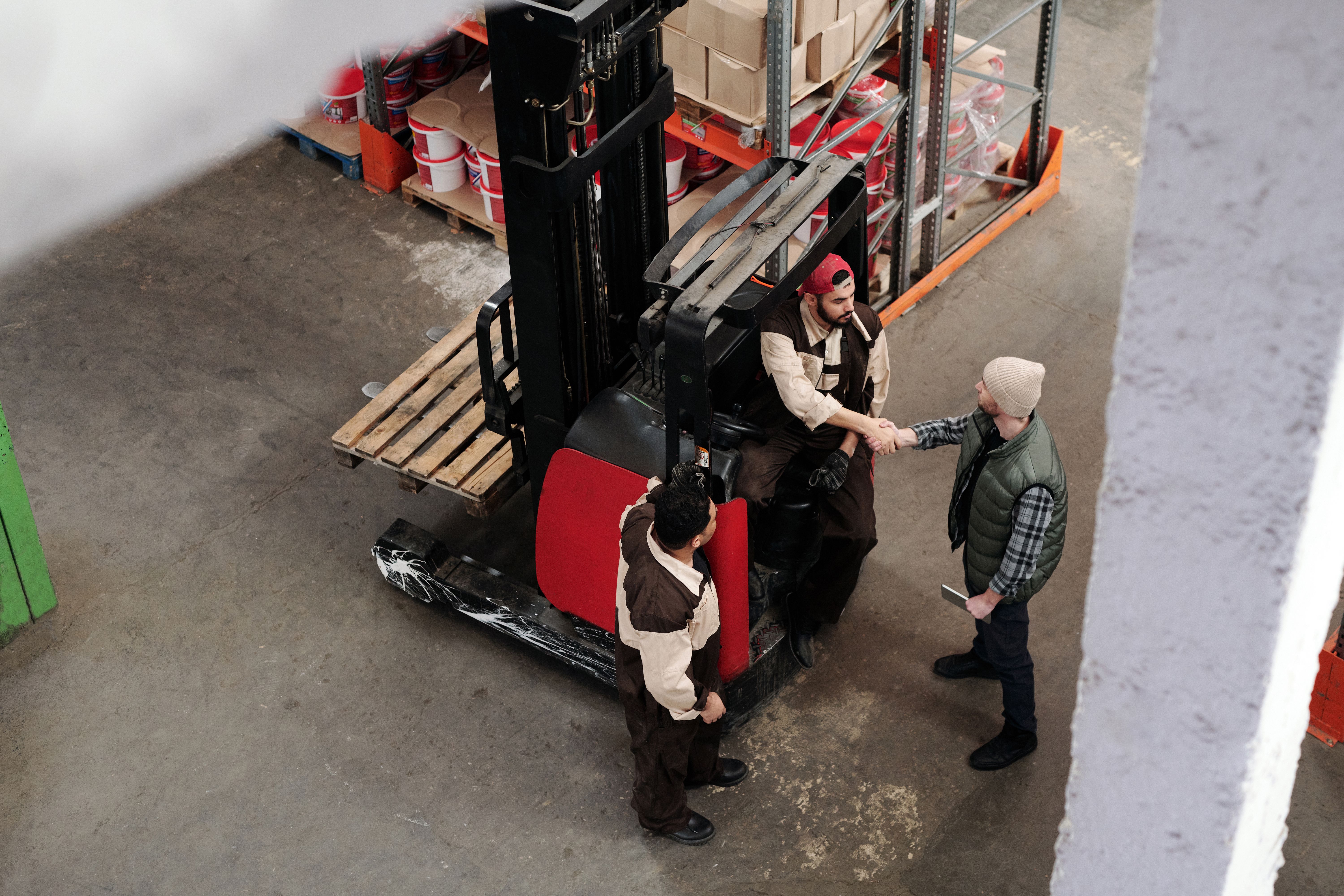
So, in terms of the receiving process, it’s not that different from how it’s done at a warehouse. Purchase orders are inspected, and steps are logged as the item moves from one area of the distribution center to another, and may even be supported by the same kind of heavy equipment and advanced tech a warehouse would use, including:
- Forklifts
- Motor carts
- Mobile barcode scanning technology
All that matters is that proper documentation is done, because items will be moving through the facility, and, as they're not kept anyway, the chance for errors increases and compounds quickly, given the volume and speed of turnover.
Once received, goods are moved to storage locations suited to their characteristics, but that storage period is intentionally brief.
Distribution centers rely on high-turnover racking systems (often organized by FIFO or LIFO principles) that allow direct, immediate access to unit loads rather than the more flexible storage configurations a traditional warehouse might use. Some facilities go further and install automated storage and retrieval systems where volume justifies the investment. Temperature-sensitive goods are monitored throughout this phase in the same way they would be in any warehouse.
Order fulfillment begins when an order management system directs the picking and packing of products for a specific customer or store order. Staff or automated robots retrieve items according to a packing slip, and the packaging team selects materials designed to minimize dimensional weight — a critical cost factor given the limited space on delivery trucks. The completed order then moves into the shipping process for delivery to its next destination.
Some distribution centers use cross-docking, a method in which fast-moving inbound freight is transferred directly to an outbound dock with little or no storage time in between, further accelerating delivery. Distribution centers may also handle product returns, freeing the retailer to focus on other areas of the business.
Types of Distribution Centers
As businesses have different requirements, there are several specialized distribution models that businesses can take advantage of:
- Retail Distribution Centers — Receive bulk shipments and redistribute them across a network of individual store locations.
- Fulfillment Centers — Built around direct-to-consumer e-commerce, focused on picking and packing individual orders for shipment to shoppers' homes.
- Cross-Docking Facilities — Move incoming goods from inbound to outbound trucks with minimal or no storage time in between.
Warehouse vs. Distribution Center

Both facility types store goods, but they're built for different jobs.
A traditional warehouse is optimized for the safe, long-term storage of bulk inventory, while a distribution center (DC) is a high-turnover logistics hub designed for rapid order fulfillment, retail restocking, and shipping directly to end consumers.
Every distribution center technically functions as a warehouse, but not every warehouse is equipped to operate as a distribution center. The distinction matters when deciding which facility type fits a given business, as a warehouse suits businesses that need to stockpile inventory over weeks, months, or seasons, while a distribution center suits businesses (particularly e-commerce operations) that need goods moving in and out on a per-order basis.
Storage and Inventory Turnover
In a warehouse, inventory is stored in bulk and may sit for months or even years, with priority given to capacity and protection rather than speed.
This makes warehouses the better fit for goods with longer supply chains, such as seasonal stock or emergency reserves. In a distribution center, goods are held only briefly (typically days or weeks) because the entire operation is structured around keeping inventory moving rather than accumulating it. This turnover difference is the single biggest factor separating the two facility types, and it shapes nearly every other operational difference below.
Core Operations and Order Fulfillment
Warehouse operations are relatively simple:
- Receiving
- Tagging
- Storing
- Retrieving
- Shipping
Order fulfillment happens, but it's usually limited to bulk or large orders rather than individual customer shipments, and goods are generally kept in their original packaging rather than repackaged.
Distribution centers handle all of the above, plus a much more customer-centric layer of activity:
- Order sorting
- Picking
- Packing
- Labeling
- Kitting
- Returns processing
Products are frequently repackaged or reboxed for individual shipment. Some distribution centers also use cross-docking, transferring inbound goods directly to outbound trucks with little or no storage time in between, further shortening delivery timelines.
Technology and Automation
Warehouses generally rely on basic inventory management systems (IMS) or warehouse management systems (WMS) to track stock levels and optimize space.
Distribution centers invest in more advanced systems to support their faster pace, including automated sorting, robotic picking, conveyor systems, RFID, and real-time tracking, and transportation management systems that integrate directly with carriers. This technology gap continues to widen as e-commerce growth pushes distribution centers toward faster fulfillment.
Shipping and Transportation Integration
Warehouses typically offer storage only — moving inventory out usually requires the business to arrange its own freight.
Distribution centers are built around transportation integration from the start:
- Multiple loading docks suited to different transport types
- Close coordination with carriers
- Strategic placement near highways or transit hubs to speed up last-mile delivery
Staffing and Operating Hours
Warehouses typically run on standard business hours with consistent staffing, adjusted only for predictable busy seasons.
Distribution centers often run extended hours or around the clock, with staffing that flexes based on order volume, seasonal spikes, or promotions, and they tend to require more specialized roles tied to fulfillment, shipping coordination, and returns.
Role in the Supply Chain
Warehouses serve as the backbone of the supply chain, providing businesses with a place to store inventory and stay ahead of demand fluctuations without last-minute shortages.
Distribution centers extend that role:
- Their proximity to customers speeds up delivery
- Techniques like cross-docking can bypass storage almost entirely, enabling faster shipping
- It supports a more efficient omnichannel supply chain
And there you have it! Everything you need to know about warehouses vs. distribution centers. The next step is figuring out how to manage them. And regardless of which method you choose, it’s important to find a tool that is flexible enough to manage both workflows.
Managing Warehouses and Distribution Centers with Digit
Digit is a warehouse and inventory management platform that replaces spreadsheets and disconnected tools with one connected system spanning procurement, warehouse operations, production, and sales.
Digit gives real-time visibility into every SKU and bin location across multiple warehouses, with barcode scanning for stock adjustments and automatic syncing when inventory transfers between sites. Purchasing stays connected to warehouse records, with partial or full receiving, cost updates, and automatically generated retroactive purchase orders for unexpected shipments.
Batch tracking covers weight, quantity, and valuation at the batch level, with a full audit trail showing who moved what, where, and when — supporting both accuracy and compliance.
On the fulfillment side, Digit automates order entry, picking, packing, and shipping, generating packing slips and bills of lading automatically while giving customers order visibility through a live B2B portal.
Built-in demand forecasting uses real-time sales data to guide purchasing and production decisions, with automatic reorder points and unified visibility across SKUs, warehouses, and demand sources — helping teams avoid both stockouts and overstock.
If you would prefer to see Digit in action, feel free to book a demo, and one of our inventory management experts will be more than happy to take you for a tour of the software and show you how it can benefit your operations.
.jpg)