

.jpg)
What Is a Just-in-Time Supply Chain?
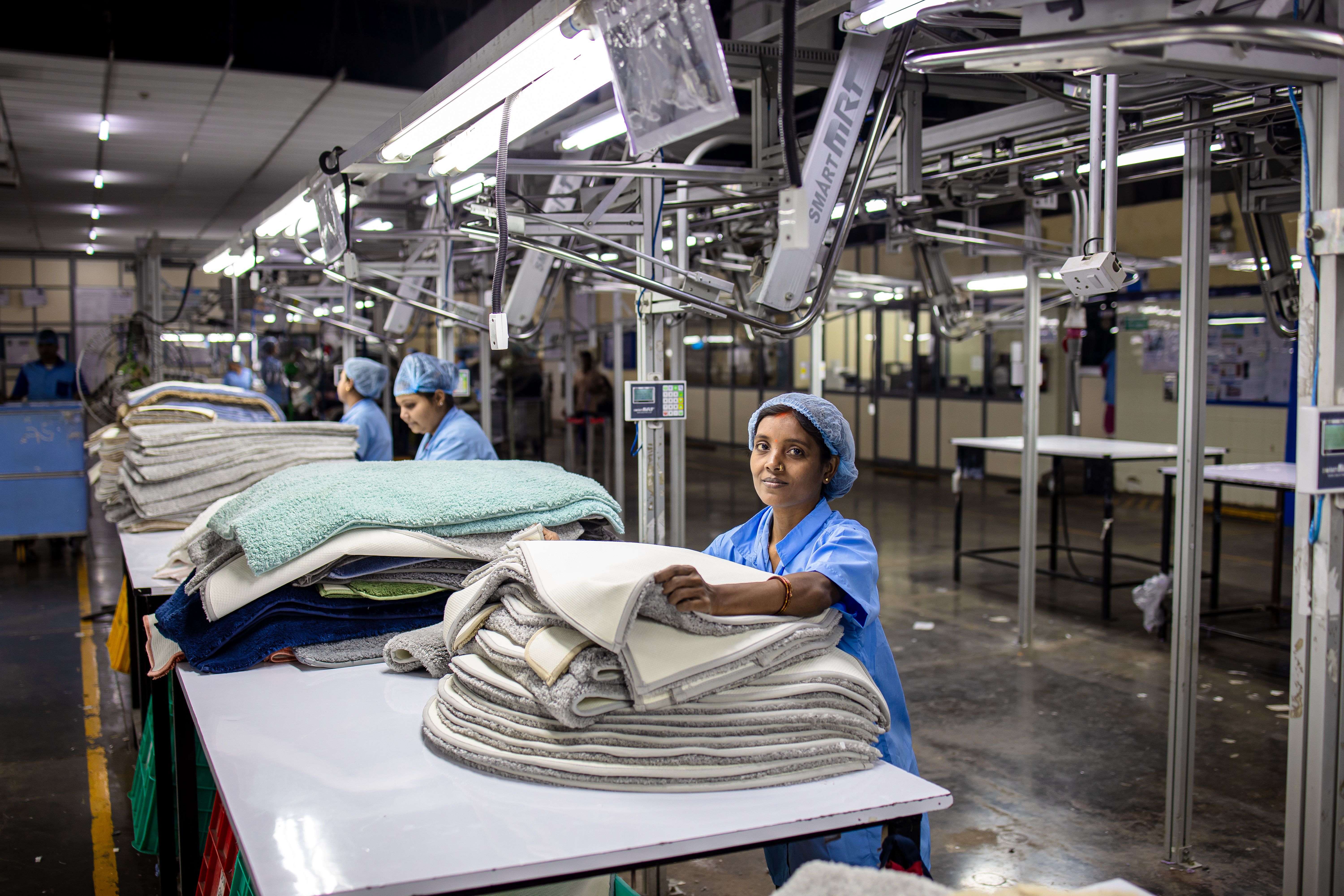
A just-in-time supply chain (JIT, for short) is the process of managing your inventory and production to be in sync, so that when materials arrive at the factory, the pace of manufacturing matches the amount of supplies received.
In theory, a manufacturer with a just-in-time supply chain won’t keep any raw materials, as production begins as soon as a purchase order arrives.
And before we delve deeper into the fundamentals of a just-in-time supply chain, we’ll first take a look at its origins.
The Origins of JIT: Toyota Production System and Kanban
.jpg)
Toyota, the car manufacturer we all know and love today, is where Taiichi Ohno created the just-in-time supply chain.
Following on from Japan's defeat during WW2, Toyota was struggling in a post-war economy, as mass production couldn’t be achieved in the market conditions and without the capital to set up a manufacturing operation that other automotive manufacturers were using, like Ford, which consisted of producing large, uniform batches of vehicles and holding substantial inventory in reserve.
Toyota didn’t have the cash reserves available to take the same approach, so Ohno essentially needed to rethink how to manage production and materials that didn’t require mass production in anticipation of demand (demand that wasn’t there in Japan at the time). He needed a production process that ensured a vehicle was created only when actual demand existed.
Ohno solved this problem by designing a pull-based production system.
Traditionally, car manufacturers would make vehicles regardless of whether the demand for them was there or not. But in a pull-based system, manufacturing orders are created only when there is a need to produce a vehicle. And to operationalize this concept, Ohno created the Kanban system.
The Kanban system is a manufacturing management system that uses signal cards to initiate sequential production flows — meaning that production could begin only after each workstation had completed its task and moved the WIP inventory downstream. So, instead of following a system where there was an abstract goal to produce X cars with workers focused only on their workstations' output, the Kanban system enabled people to follow the pull principle across the entire shop floor, as there was synergy between the operational steps.
So, that’s the brief history of just-in-time supply chain management. How does that compare with just-in-case?
JIT vs. Just-in-Case: Two Opposing Philosophies
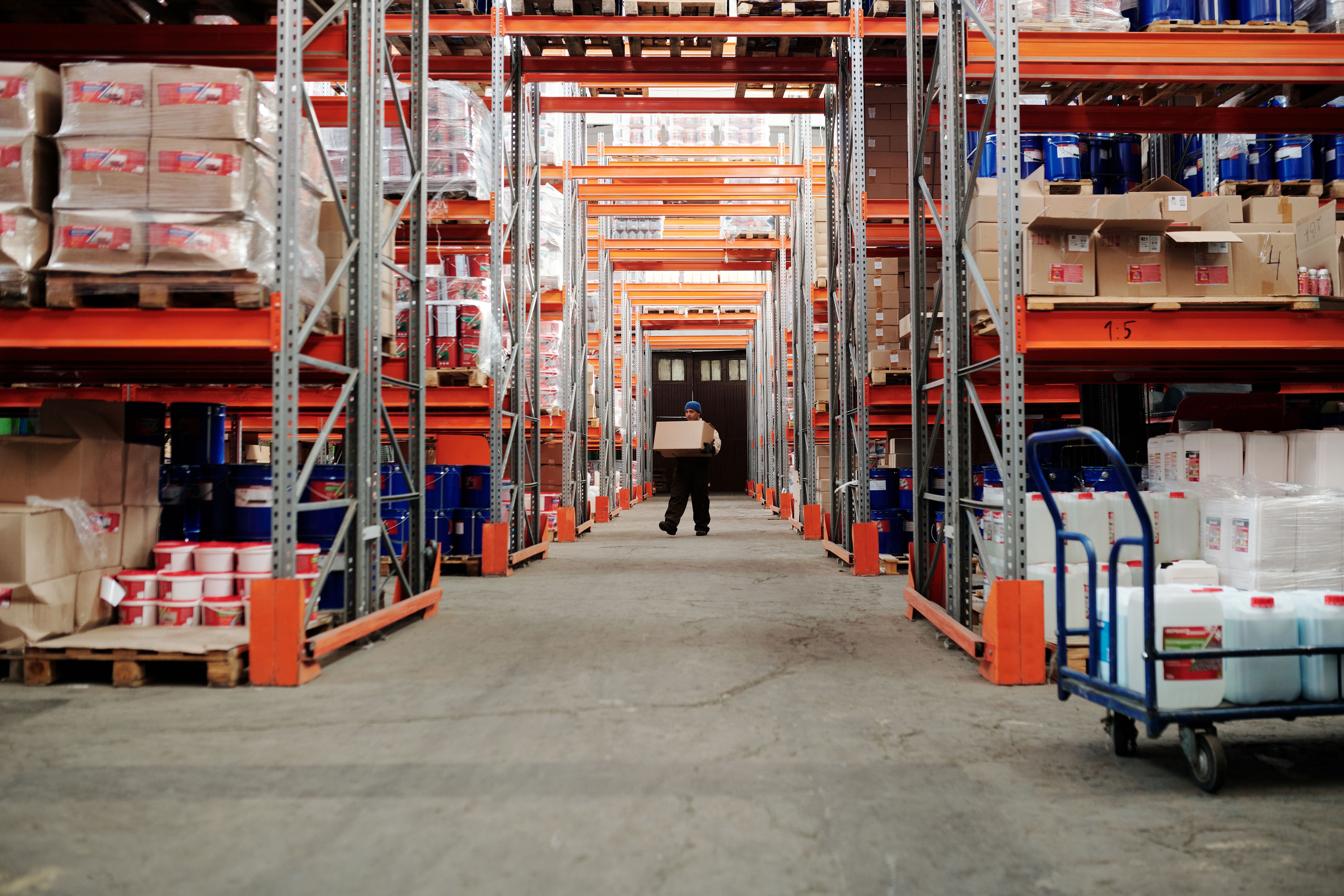
If the just-in-time supply chain is all about producing finished goods only when there’s actual demand for those products, the just-in-case (or JIC) supply chain represents the other answer to the same problem.
That problem being:
How much inventory does a business need to hold, or can it rely on its own production when needed?
If the just-in-time supply chain is all about not keeping inventory by running ultra-precise planning and scheduling, JIC is about how much inventory a business should hold as a buffer to anticipate sales. It might not be a case of choosing one method or the other for your business, since you can use a combination of the two. But the point is that, depending on how predictable your demand and supply are, one will be more suitable than the other.
Just-in-Case Supply Chain
Instead of using the pull method developed by Ohno, the just-in-case supply chain goes the other direction and is a push system — building finished goods based on the demand forecast.
The purpose of this system is to always have something to sell, in the event of any problems arising that can get in the way of fulfilling sales orders, by implementing tactics like:
- Using a buffer to keep production running through supplier delays
- Being able to keep selling and operating after disruptions or disasters
- Keeping orders flowing in the event of a sudden demand spike without waiting for replenishment to catch up
Another benefit of JIC is that it gives you buying leverage with your supplier. Typically, paying for things in bulk costs less per unit, helping you keep vendor costs low and hedging you against rising material costs.
This is unlike JIT, where you're subject to whatever price the vendor sets, since you're immediately against the clock for order fulfillment.
With that said, let’s steer back to the topic at hand — just-in-time supply chain management.
The 3 Benefits of a Just-in-Time Supply Chain
%20(2).jpg)
You might be apprehensive about using this production system because it requires a lot of planning and calculations to be successful.
However, if it can be done properly, your operational costs will be tied directly to actual sales as opposed to guessing if someone will want something before you make it, and it will bring you benefits in:
- Financial health
- Operational efficiency
- Organizational management
1. Improved Financial Health
Ultimately, JIT supply chain management means holding little to no stock on site, which means you can reduce how much you spend on:
- Warehousing
- Insurance
- Inventory management
The more inventory you keep, the more it eats into your profit margins as it takes up space in your warehouse. But, just-in-time supply chain management allows you to free up this capital and reinvest it into your business.
Another benefit of having less inventory on hand is that it reduces the amount you lose to obsolescence or damaged stock.
2. Faster and Responsive Operations
As just-in-time production ties operations to real demand, it allows you to stay agile in the face of shifts in customer orders, rather than creating a batch of goods in the hope that projected sales are correct.
By starting work only when needed, you get more control over your resources when sales orders increase or decrease, letting you streamline workflows and better allocate capacity where it's needed most. What this means for your manufacturing operations is less waiting time and fewer bottlenecks from managing excess or misallocated stock.
Pull-production systems also allow customers to customize their orders, so the finished goods are much closer to their specifications, improving satisfaction rates compared to customers who purchase a pre-built, lowest-common-denominator, standardized product.
3. Workforce and Organizational Demands
Because the just-in-time supply chain system leaves little room for error, your process needs to be lean and your workforce trained to work within sprints, as there’s no buffer stock available to act as a cushion if mistakes do arise.
And this approach to lean manufacturing can be applied across the entire business. By using the same demand-driven principle, you can organize all your departments to reduce inefficiency by having people only perform the tasks that need to be performed. This can be applied to your:
- HR
- Accounting
- Relationship management
It doesn’t have to be isolated either, since you can have your departments operate on the same schedule as production, so departments and tasks are completed when they relate to actual demand and make sense for the time they're needed.
The 4 Risks of a Just-in-Time Supply Chain
.jpg)
As you can already imagine, just-in-time supply chain management relies heavily on lean manufacturing and pitch-perfect planning.
Just one small mistake in planning or one unforeseen problem can affect production, causing the system to quickly collapse. By not having any safety stock inventory on hand as a backup, any disruption along the supply chain has the potential to threaten your production runs, should something happen.
The four main risks you’re exposed to with the JIT model are:
- Supply chain shocks
- Difficulty responding to shifts in demand
- Hidden costs that don't show up until a business has committed to the model
- Organizational strain of running an operation with almost no margin for error
Here are the 4 risks of going with a just-in-time supply chain model:
1. Supply Chain Vulnerability
With no buffer stock on hand, there is nothing to absorb the impact when a delivery is delayed or a shipment stalls, which means even a short disruption can bring a production line to a halt rather than simply drawing down a reserve.
This exposure extends to events entirely outside a company's control (weather events, labor strikes, and transit delays), which can all stop manufacturing immediately, since there's no cushion of extra parts to keep operations running while the disruption is resolved. The risk compounds further when a company sources a critical part from a single vendor. If that vendor experiences any failure, from a factory fire to a bankruptcy, the company has no alternative supply to fall back on, and production can stop entirely.
2. Demand and Forecasting Risk
JIT's reliance on tightly scheduled production also makes it poorly suited to sudden shifts in customer demand.
A production schedule built around a specific, forecasted volume has little flexibility to absorb an unexpected spike in orders, and when sales forecasts turn out to be inaccurate, the result is either a direct product shortage or the need for costly expedited shipping to close the gap. This risk is compounded by limited visibility into shipments already in transit: if a company loses track of incoming materials while they're en route, it has no early warning before local stock runs out completely, leaving it unable to react until the shortage has already begun affecting production.
3. Hidden Financial Costs
Beyond the risk of disruption, JIT carries cost drawbacks that are less visible but still significant.
Ordering in smaller, more frequent batches means a company forfeits the per-unit savings that come with economies of scale, since large wholesale orders typically qualify for quantity-based discounts that smaller JIT orders do not. The more frequent shipping this requires also adds recurring delivery costs that accumulate over time, along with a larger environmental footprint from more frequent transport. These costs can extend into contractual territory as well: some companies build significant penalty clauses into supplier contracts to guard against late delivery, which in practice often just shifts the burden of holding safety stock onto the supplier rather than eliminating the need for a buffer altogether.
4. Organizational and Cultural Challenges
Running a JIT system successfully also demands a level of organizational discipline that isn't always in place when a company adopts the model.
Because there's so little room for error, companies typically need to build formal risk-mitigation practices (diversifying suppliers, implementing real-time shipment monitoring, and developing contingency plans) just to prevent the same vulnerabilities from recurring. Beyond process, JIT also requires a genuine shift in organizational mindset: employees across the company need to operate with continuous coordination and a tolerance for tightly sequenced work, and resistance to that shift is common enough that sustained training and proactive leadership are usually necessary to make the transition stick.
How to Implement a Just-in-Time Supply Chain

Moving to a JIT model isn't a single change but a sequence of operational shifts, each of which has to hold before the next one can work.
The process generally moves through analysis, supplier development, process standardization, and technology adoption, with real businesses seeing measurable results at each stage.
Analyze Your Current Production Process
Before changing anything, map the full production cycle to establish a baseline: current inventory levels by product category, average lead times, defect rates, holding costs, and supplier delivery performance.
Build Supplier Partnerships
JIT collapses without supplier reliability, since there's no buffer stock to cover a late or incomplete delivery.
This usually means consolidating toward fewer, more dependable partners rather than managing a large, inconsistent vendor base, and formalizing expectations through service level agreements that spell out delivery windows, quality standards, and communication protocols. Vendor-managed inventory arrangements, where suppliers monitor consumption directly and replenish automatically, can extend this reliability further by removing manual reorder steps entirely.
Standardize Work and Reduce Changeover Time
Consistency is what keeps a low-inventory system predictable.
Documenting standard procedures for every task reduces output variability and makes lead times more reliable. Alongside standardization, reducing setup and changeover times is what makes smaller batch sizes viable in the first place.
Build In Quality Control and Train the Workforce
Because minimal inventory leaves no room to rework defective output, quality has to be caught at the source rather than downstream.
Giving workers the authority to stop production when something looks wrong, combined with poka-yoke (error-proofing) devices, prevents defects before they happen rather than catching them after the fact. None of this holds, though, without a workforce that understands why the system works the way it does. Cross-training employees across multiple operations gives a company the flexibility to adjust staffing to demand without relying on overtime.
Executing all of this by hand is difficult to sustain once a company moves past a certain size, as it needs to worry about:
- Tracking inventory across categories
- Monitoring supplier delivery performance
- Managing purchase orders
- Keeping production data in sync
This is where dedicated inventory management software like Digit becomes useful — its real-time stock tracking, automated purchase order management, and demand forecasting tools give teams the same visibility into materials and production that this kind of implementation depends on, without needing to rebuild that infrastructure from spreadsheets.
Do you want to upgrade your manufacturing processes with a tool that makes it easy to implement and manage a just-in-time supply chain? Head over to Digit and book a call with one of our team members, and they will show you firsthand how Digit can help you support lean operations.