%201.svg)


.png)

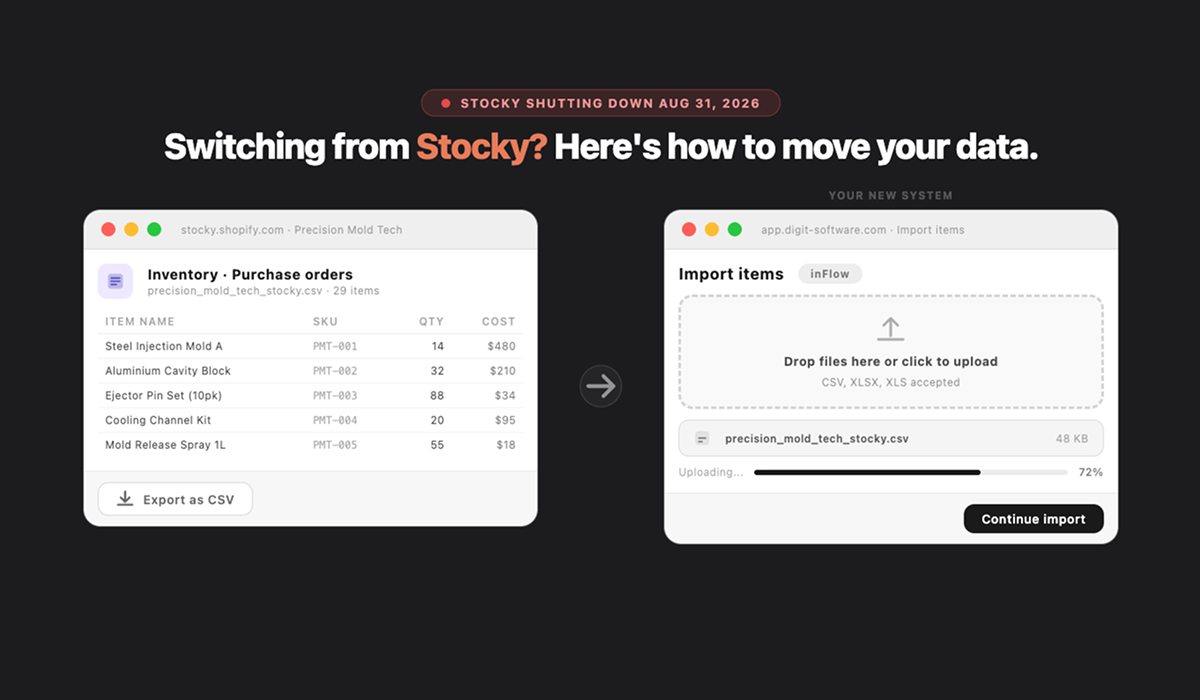
TL;DR: Stocky shuts down August 31, 2026. Shopify native solutions don't replace purchase orders, forecasting, or manufacturing features — you'll need a new solution.
Is Stocky Being Discontinued?
Shopify confirmed that on August 31, 2026, its app Stocky will be fully shut down, which is bad news for businesses running complex workflows and inventory management processes.
Here’s the history and the phased discontinuation of Stocky:
- July 7, 2025: As you already likely know, Stocky stopped supporting inventory transfers between locations, as well as min/max forecasting.
- February 2, 2026: Stocky was removed from the Shopify App Store — this means if you panic and uninstall Stocky from your business now, there will be no way to get the app back (or your data).
- August 31, 2026: The full and complete Stocky shutdown is finished, and the app will stop working, as well as any API connections.
If you're still using Stocky right now, you're essentially on borrowed time with a tool that's already had its most useful features stripped out.
Most businesses have already moved on from Stocky, but if you're a business watching the Stocky sunset get closer and closer to the horizon, then this article is for you, as we will cover what you’re about to lose, where you can migrate, and how to get there.
Why Was Stocky Discontinued?
There hasn’t been any particular reason given by Shopify for discontinuing Stocky, but more than likely, they're consolidating inventory management into Shopify Admin’s built-in features.
Which might be good news for Shopify's team, since it means maintaining fewer apps and simplifying the ecosystem. But for businesses that aren’t dropshippers or have relatively straightforward inventory needs, the problem is that the native inventory solution lacks many features manufacturers and larger distributors need to run their businesses. Manufacturers will be the most affected since Stocky was built to serve them.
What You're Actually Losing When Stocky Shuts Down
To expand upon just exactly what’s being lost, here are some of the big ones that will disappear and make running a manufacturing business next to impossible:
- Purchase orders —You can't generate POs inside Shopify anymore, you can't receive against them to update your stock counts, and you can't make those last-minute cost adjustments when your supplier's invoice doesn't match your original estimate.
- Barcode label printing — If you were printing labels as you received inventory and scanning items into your stockroom, you'll need a different system for that now.
- Reorder points — Stocky flagged raw materials for reorder when stock dipped below that level.
- Demand forecasting — Stocky used your sales history to predict what you'd need to stock for upcoming periods, which Shopify's native tools don't offer.
- Stock Takes — If you were running physical inventory counts through Stocky and reconciling discrepancies, you'll need to rebuild that process elsewhere.
The unfortunate part about Stocky shutting down is that supplier records and historical transfer data cannot be exported. All this information and data will need to be recreated manually in whatever system you move to.
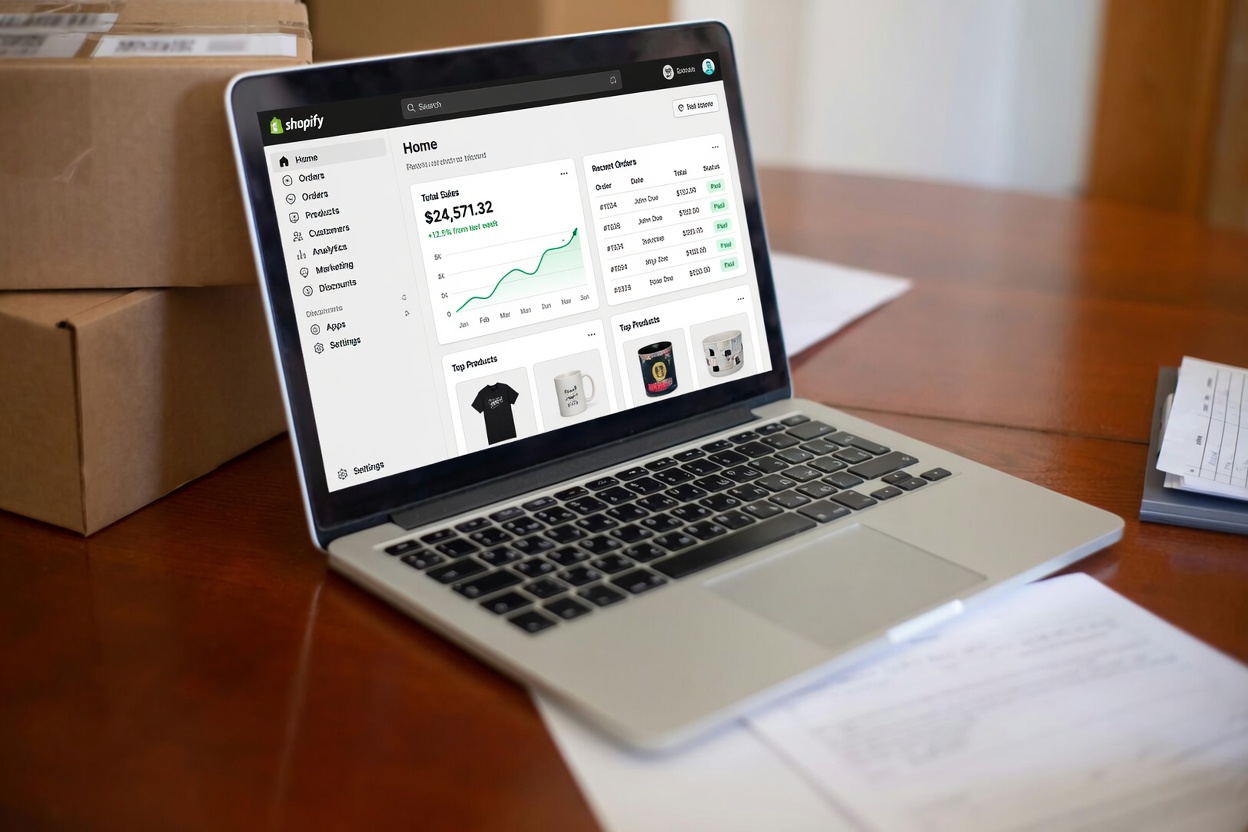
What Can You Do with Shopify Admin?
The previous section might have left your head spinning.
With so much being lost due to the shutdown, why would Shopify even suggest using Shopify Admin? Well, as already touched upon, Shopify Admin isn’t a bad solution by any means, and can easily help you:
- Track stock quantities at multiple locations
- Receive inventory from suppliers
- Adjust stock levels manually
- Create transfer requests between locations
- Sync inventory with Shopify POS
The issue is with its shortcomings, which will cause problems for those who manufacture their own products (regardless of whether that’s in-house or outsourced) since Shopify’s native solutions are missing:
- Raw material tracking
- Bill of materials management
- Batch and lot tracking
- Cost of goods sold (COGS)
- No fill shelves or restock-to-target functionality
- Limited barcode scanning and multi-location inventory management
Feature Comparison
Who Should Do What After Stocky Shuts Down
Stocky’s app discontinuing won’t be a problem for everyone, and migrating to the tools available in Shopify Admin might be enough for your business. Here’s what to take into consideration if you’re wondering if you should migrate to the native tools.
Simple retail or POS stores
As already touched upon earlier in the article, if you’re reselling products (either at a physical location or online), then Shopify’s native inventory tools will likely be enough to support you.
You can easily migrate there and use it to:
- Track stock by location
- Create basic purchase orders
- Receive inventory
- Adjust quantities manually
Multichannel resellers
If you only have a physical location and sell via e-commerce on Shopify exclusively, you'll have an easier time using Shopify's native tool.
But if you're selling and managing inventory across Shopify, Amazon, wholesale channels, or other marketplaces, then the native tools will almost certainly fall short because they don't sync inventory across platforms outside the Shopify ecosystem.
If you decide to stick with Shopify’s built-in functionality, you'll still need to find a multichannel inventory system that keeps stock levels accurate across every location you sell, preventing overselling, and centralizes your purchase orders and fulfillment.
Manufacturers and makers
Manufacturers are the businesses that are hardest hit by Stocky being shut down, since you’ll need a ton of features that are simply not available in the native solution, such as:
- Raw materials conversion
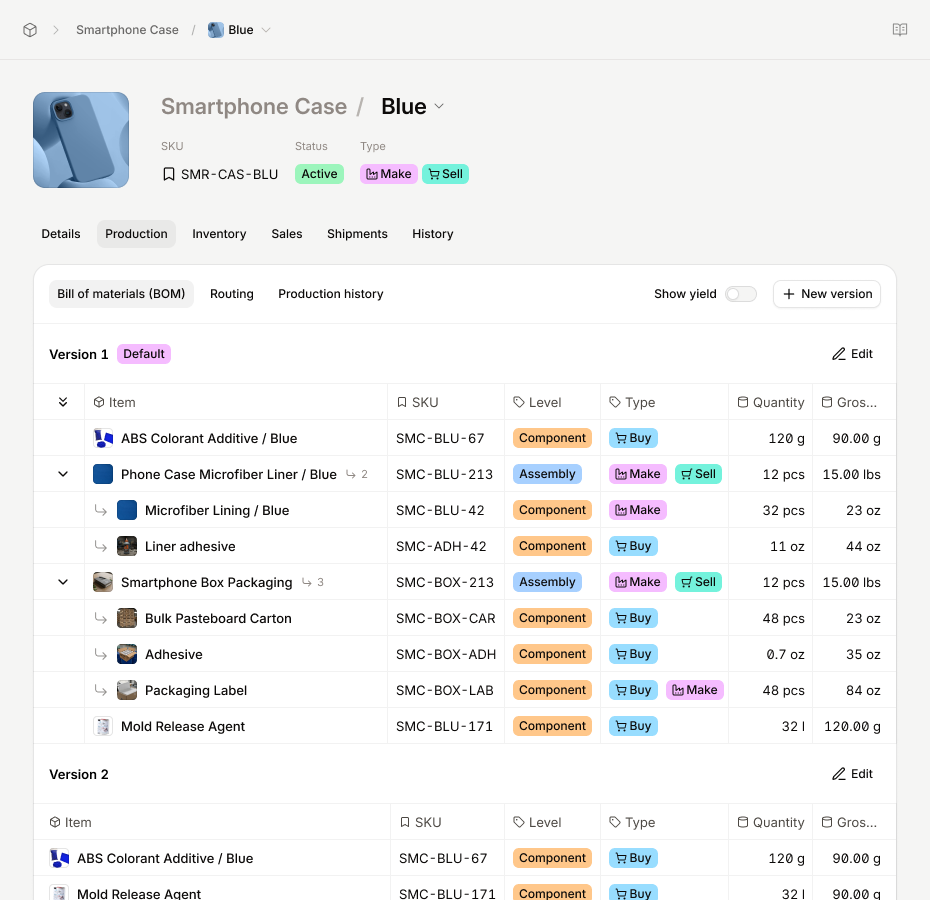
- Single or multi-level BOMs
- Production tracking
- Accurate cost calculations
But to be honest, this is a blessing in disguise, because Stocky struggled to give manufacturers everything they needed, so this is your opportunity to find a replacement that is purpose-built for managing manufacturing operations.
What to Look for in a Stocky Replacement
So, if you’re a manufacturer or a business that needs a little more oomph from what is natively offered by Shopify, then turning to a third-party solution is what you’re going to need to do. Here’s what you should keep in mind as you search:
- Integration quality with Shopify — First and foremost, it needs to have a Shopify integration that updates order, product, and inventory data in real time. Look for something that is capable of preventing overselling across channels and automatically updates inventory levels whenever a purchase, manufacturing, or sales order is marked as complete.
- Implementation timeline and complexity — We’re already in Q2, and August is just around the corner. You cannot afford to get set up with something that will take six months to implement, as you don’t have the luxury of time before Stocky stops working. Find something that gives you free access for testing, self-service, and guided onboarding.
- Fit for your production model — Manufacturers come in all different shapes and sizes, so you need something that can support your specific workflows. Regulated industries need batch tracking, contract manufacturers need tools to manage clients and workflows, and distributors need to monitor a complex supply chain.
Your Migration Checklist Before August 31, 2026
As you search for a solution, it doesn’t hurt to already have a plan in place to figure out exactly how you’re going to get set up with the new solution.
That’s why we put together this checklist for you to use during the process:
And there you have it. You'll be up and running with your new solution without dealing with the headaches of running out of time.
But we will tell you, the next several weeks will be stressful, finding a solution, getting it set up, and getting everyone on board. To help you get started, here’s a Stocky Shopify alternative you can try for free.
Where Digit Fits
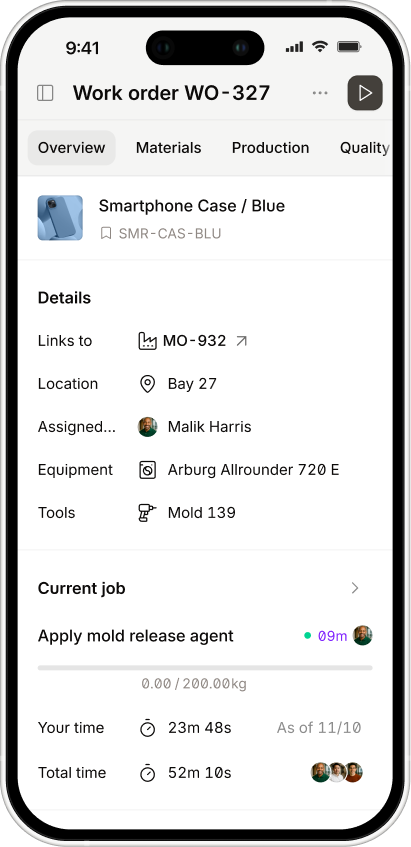
Visual input: Screenshot of Digit or someone using Digit.
Digit is an inventory management solution built for manufacturers and distributors, helping businesses get control over their operations. Here’s how it does it:
Multichannel Selling
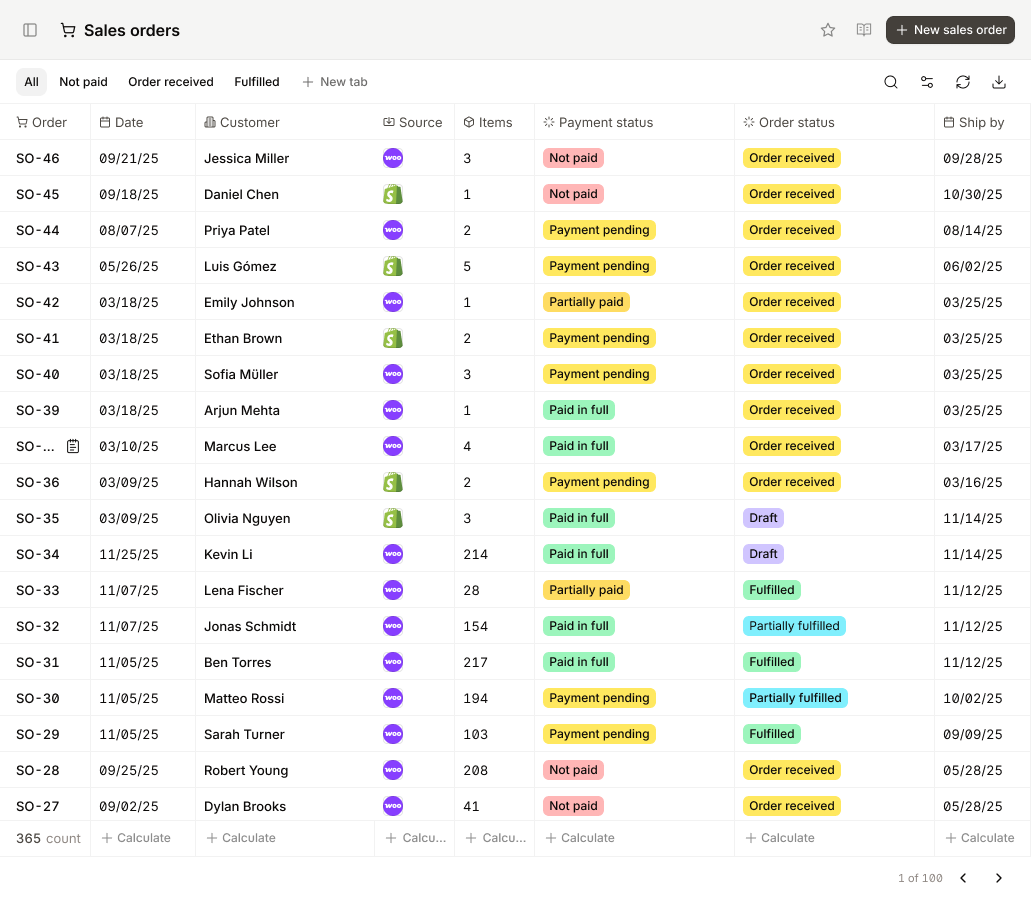
If you're selling across Shopify, Amazon, WooCommerce, or wholesale channels without manufacturing anything yourself, Digit consolidates:
- Inventory management
- Purchase orders
- Multi-channel order management
- CRM
- QuickBooks Online and Desktop two-way sync
The manufacturing features are built into Digit, but they sit idle unless you need them, so you won’t have to worry about them disrupting your business.
Manufacturing
If you're producing what you sell, Digit is a full manufacturing ERP, giving you:
- BOMs
- MRP
- Production planning
- Shop floor control
- Serial numbers and lot tracking
- Multi-location inventory
Digit is designed for businesses that need to track raw materials separately from finished goods, calculate accurate costs as materials move through production, and manage the operational complexity of actually making products at scale.
If you want to beat the clock and start looking for your Stocky alternative for manufacturers, then why not try Digit? You can chat with Digit's free AI demo to see how it can help support you once Stocky has been fully sunsetted.
.jpg)


.jpg)
.jpg)