%201.svg)


.png)

Why NetSuite Falls Short for Mid-Market Manufacturers
If you're a manufacturer evaluating NetSuite or actively trying to find alternatives, you already know the core problem. NetSuite is a powerful system, but it comes with enterprise-level complexity that doesn’t always make sense for mid-market manufacturing businesses.
Implementations routinely run $30,000–$100,000+ before you've shipped a single order in the new system. Timelines stretch for more than six months, and once you're live, you're often paying for modules and functionality you don't actually need.
The good news is that the market has matured significantly. There are now several credible NetSuite alternatives built specifically for manufacturers, systems that give you real MRP, warehouse management, production tracking, and purchasing without requiring a full enterprise IT team to run them.
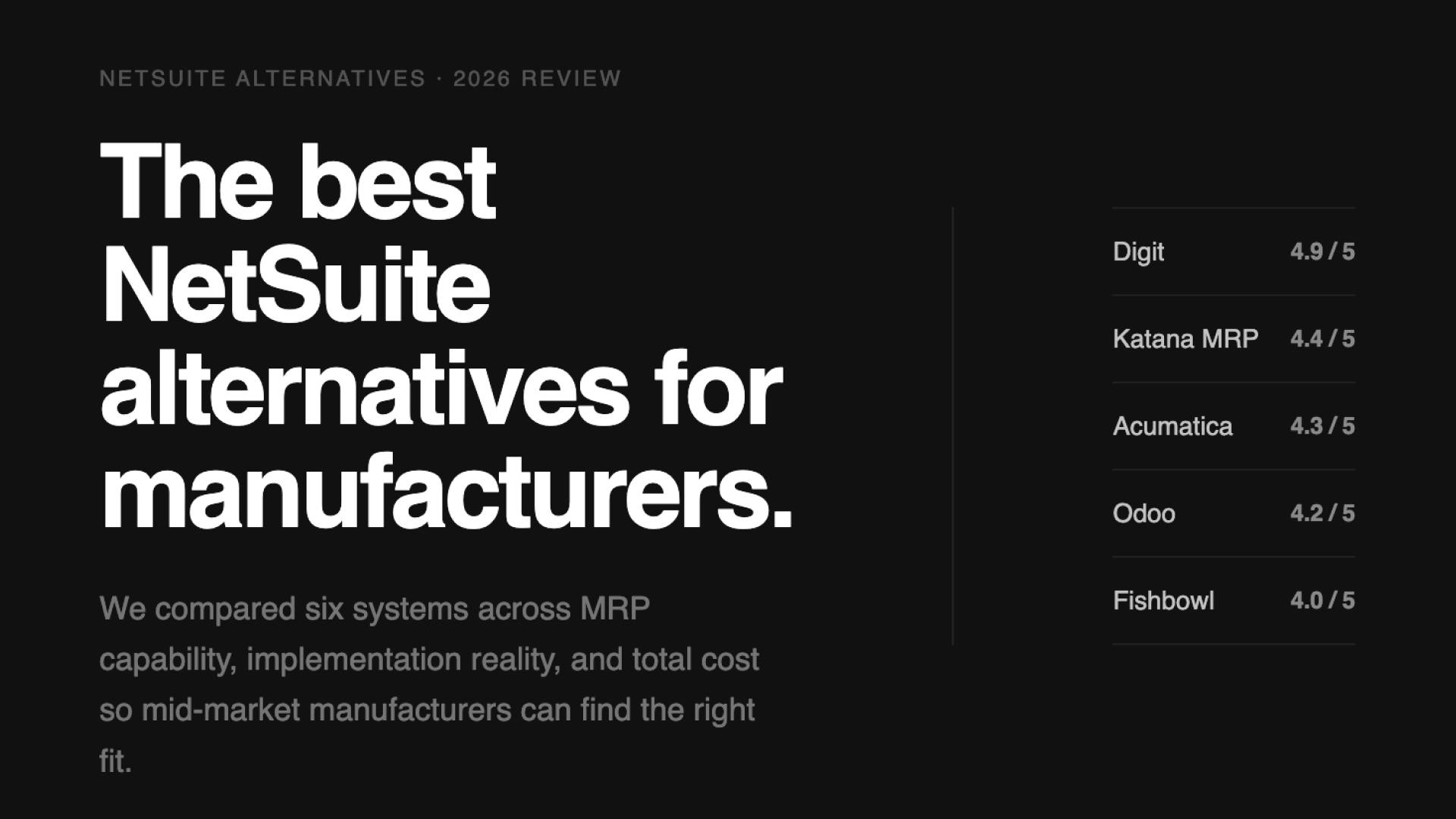
This guide breaks down the best NetSuite alternatives for mid-market manufacturers in 2026, evaluated through a manufacturing-first lens: BOMs, work orders, lot tracking, multi-warehouse inventory, and implementation reality.
Why Manufacturers Look for NetSuite Alternatives
NetSuite is one of the most widely used cloud ERP platforms in the world, and for good reason. It's broad, scalable, and deeply integrated. But broad and scalable don't always mean it’s right for you, and manufacturers in the 50–500 employee range consistently run into the same friction points:
Cost: NetSuite's licensing starts around $999/month for the base platform, but that number climbs fast once you add manufacturing modules, user seats, and the implementation partner fees that are essentially unavoidable. Most mid-market manufacturers end up spending $50,000–$150,000 in year one.
Implementation complexity: NetSuite is not a system you stand up yourself. Most deployments require a certified implementation partner, and timelines of 6–12 months are standard. For a manufacturer that needs to be operational quickly, that's a significant constraint.
Feature mismatch: NetSuite is built to serve a wide range of industries, which means its manufacturing functionality, while functional, isn't purpose-built. Manufacturers often find themselves working around the system rather than with it, particularly for shop floor control, production scheduling, and lot or serial traceability.
Overkill for the stage: Many mid-market manufacturers are too big for QuickBooks but don't actually need what NetSuite offers at the enterprise level. They need a connected system for inventory, purchasing, production, and fulfillment, not a platform designed for Fortune 500 operations.
6 Aspects to Look for in a NetSuite Alternative
Before evaluating any platform, it's worth being clear about what a manufacturer actually needs from a replacement system. Not every business needs every feature, but a credible NetSuite alternative for manufacturing should be able to handle:
1. Multi-level BOMs and work orders: If you're building products from components, you need a system that manages bill of materials structures, including sub-assemblies, and ties those BOMs directly to production orders.
2. Production scheduling and shop floor visibility: Can you see what's being built, by whom, and when? Can you prioritize and reprioritize orders without rebuilding your schedule from scratch?
3. Lot, batch, and serial number tracking: For manufacturers in food, chemicals, cosmetics, electronics, or any regulated industry, end-to-end traceability isn't optional.
4. Multi-warehouse inventory management: If you operate across more than one location or have raw materials, WIP, and finished goods in separate bins, you need real warehouse management, not just an inventory count.
5. Purchasing and receiving: POs tied to vendors and SKUs, partial receiving, and landed cost visibility all matter when you're managing a supply chain.
6. Implementation speed and total cost of ownership: A system that takes 12 months and $100,000 to implement isn't an improvement over NetSuite. It's just a different version of the same problem.
The Best NetSuite Alternatives for Manufacturers in 2026
1. Digit
Digit is the best overall NetSuite alternative for mid-market manufacturers.
Rating: 4.9/5
Pricing: Starts at $320/month
Implementation: Weeks, not months
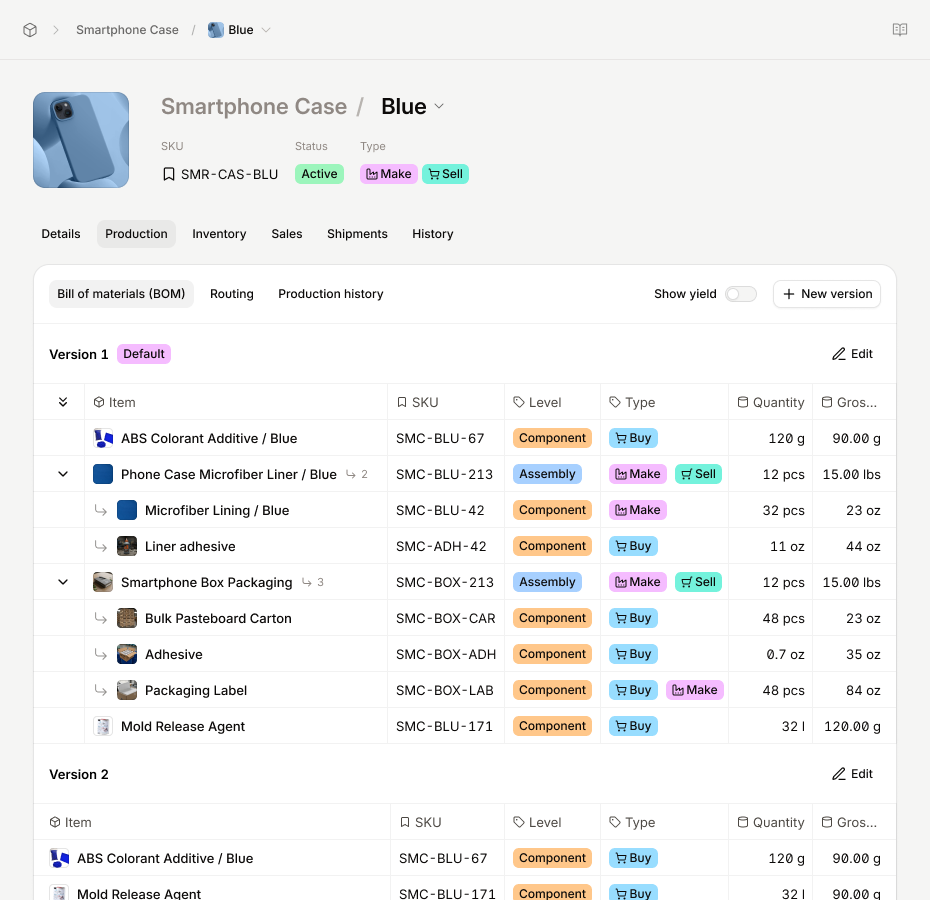
If you're a manufacturer who needs real MRP, warehouse management, production tracking, and purchasing in a single connected system without the enterprise overhead, Digit is the most purpose-built option available today.
Digit is a cloud-based ERP designed specifically for manufacturers and distributors. It was built to replace the combination of Excel spreadsheets, disconnected inventory tools, and legacy on-premise ERPs that most mid-market operations are still running on.
Unlike NetSuite, which serves dozens of industries and requires significant configuration to work well for manufacturing, Digit is built from the ground up for the way manufacturers actually operate.
The fastest way to understand why Digit wins this category is implementation speed: most teams are fully operational within 2-8 weeks, with no external consultants required. That alone separates it from every other option on this list.
Key manufacturing features:
Multi-level BOMs: Single and multi-level bill of materials that guarantee consistent product builds and feed directly into production orders
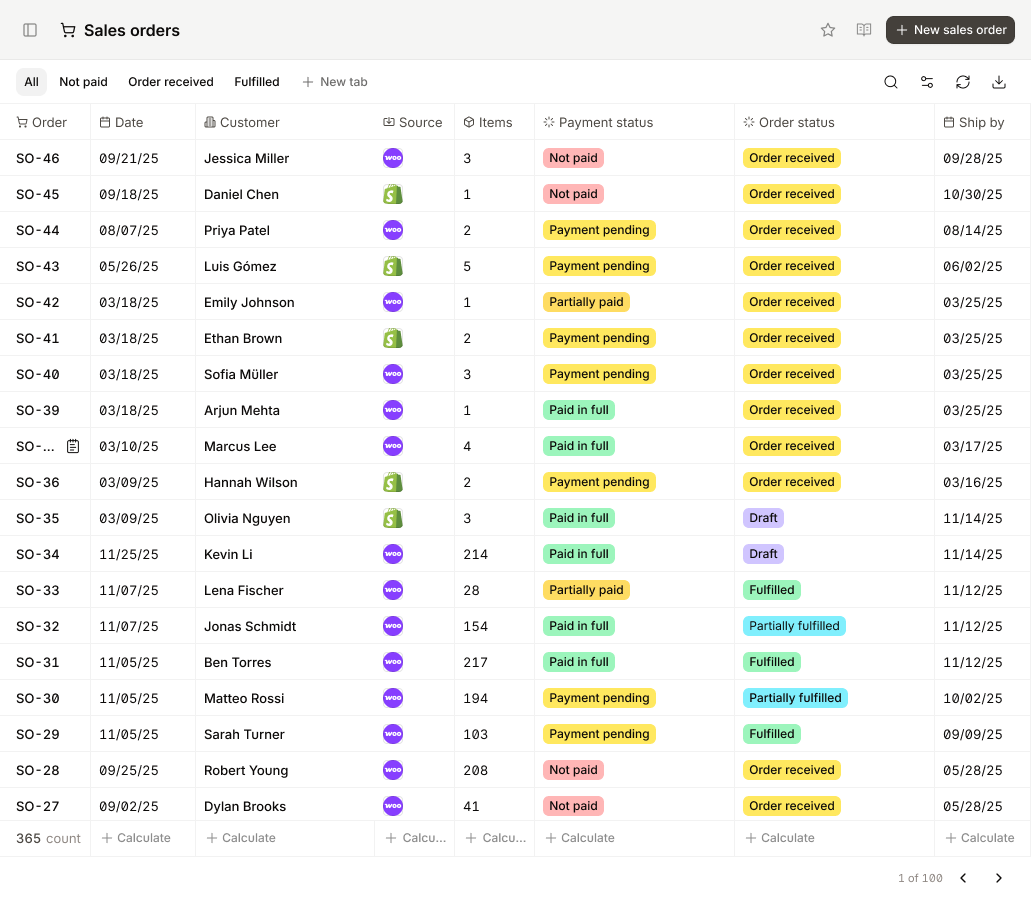
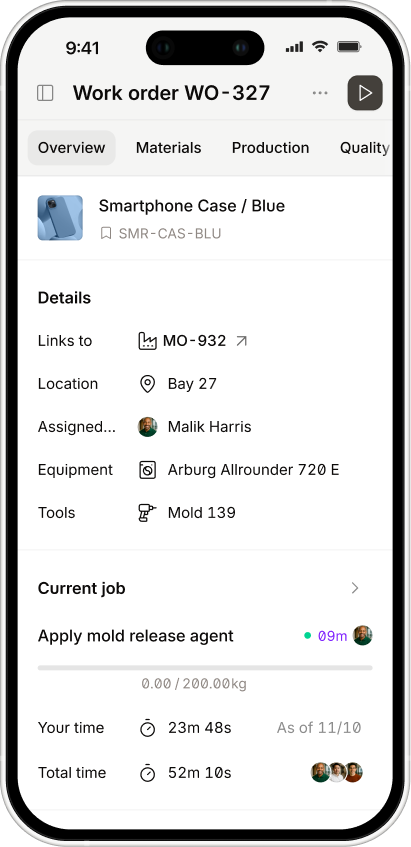
Work orders and production scheduling: Manufacturing orders automatically commit materials and resources. Reprioritization cascades through the schedule automatically.
MRP: Demand-driven material requirements planning that tells you what to buy, build, and when
Lot, batch, and serial number tracking: Full traceability from supplier to shipment, including nested inventory items
Multi-warehouse inventory management: Real-time bin-level visibility across all locations, updated automatically via barcode or QR code scanning
Purchasing and receiving: POs tied directly to vendors and SKUs. Supports full and partial receiving, retroactive POs, and label generation at receiving
Sales and fulfillment: Guided picking and packing workflows, automatic generation of packing slips, bills of lading, and shipping documents
Demand planning and forecasting: Set reorder points, manage safety stock, and get a single view across purchasing, production, and inventory
Digit also integrates natively with QuickBooks Online, Desktop, Xero, NetSuite, Sage Intacct, as well as Shopify, WooCommerce, and Amazon, and offers an open API for custom workflows.
Digit starts at $320/month. There are no hidden module costs to unlock core manufacturing functionality.
Pros
- Purpose-built for manufacturing and distribution, not a generic ERP with manufacturing bolted on
- Real MRP + WMS + production tracking in one connected system
- Fast implementation, most teams live in 30 days or less
- Onboarding included, no implementation partner required
- Modern, intuitive UI that operators and managers can actually use
- Transparent, mid-market pricing
- Outstanding customer support
Cons
- Not suited for very large enterprises or companies looking for heavy accounting, HR, or CRM modules natively
- Some advanced manufacturing features are still in development
- System-wide updates rather than per-customer release cycles
Best for: Mid-market manufacturers and distributors moving off spreadsheets, QuickBooks, or an aging on-premise ERP who need a modern, connected system without enterprise complexity. Particularly strong for industries with traceability requirements: food and beverage, cosmetics, chemicals, electronics, and distribution.
2. Acumatica
Best for Growing Mid-Market Companies Needing a Full ERP
Rating: 4.3/5
Pricing: Contact vendor (consumption-based; typically $25,000–$75,000/year for mid-market)
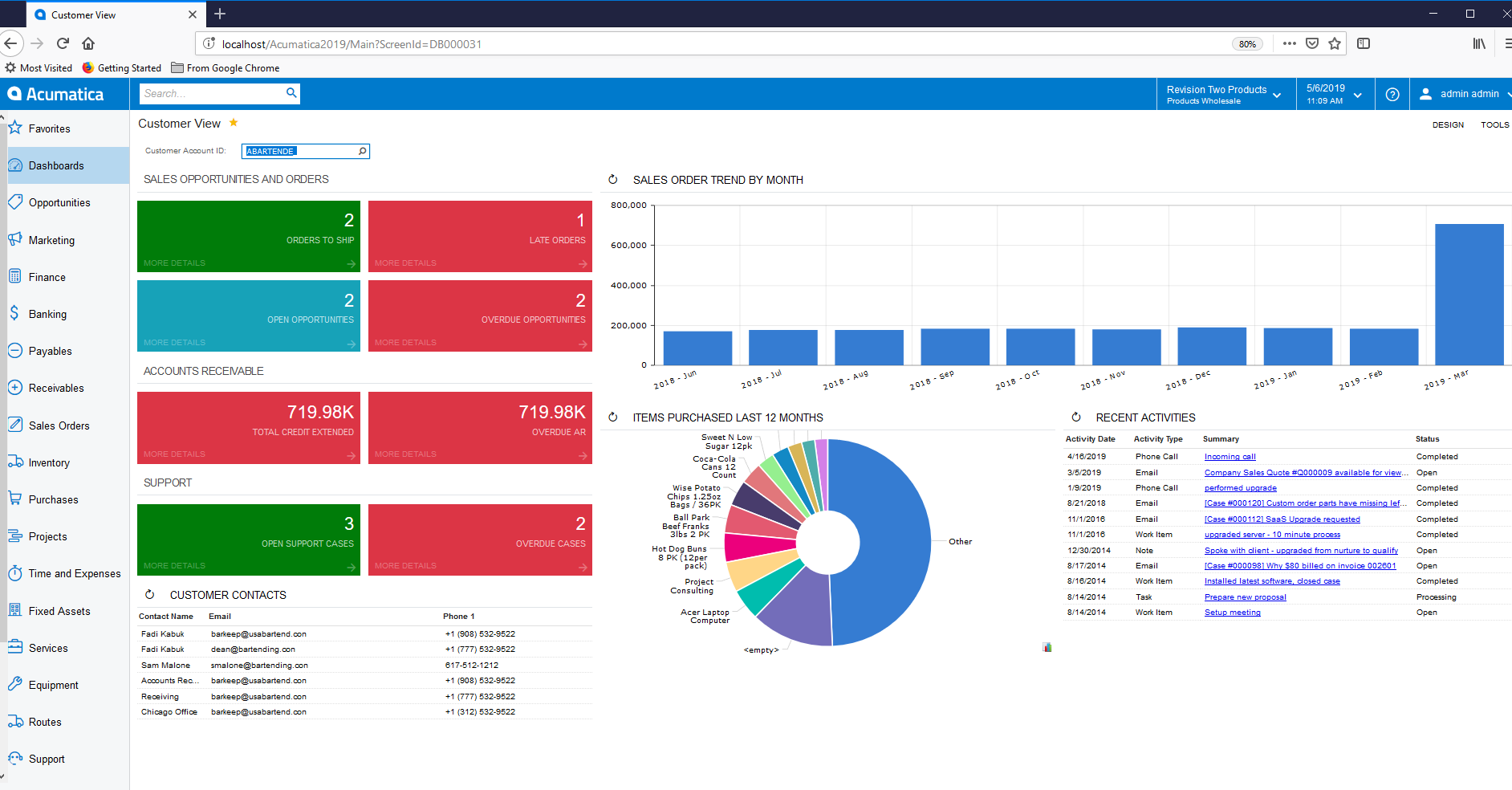
Acumatica is the closest direct competitor to NetSuite in the cloud ERP space, and for manufacturers with the budget and IT resources to execute a full ERP implementation, it's a credible alternative. Where NetSuite charges per user, Acumatica uses consumption-based pricing, which can result in meaningful savings for businesses with larger teams.
The Manufacturing Edition covers BOMs, production orders, material requirements planning, capacity planning, and project manufacturing. It's a more complete manufacturing ERP than NetSuite for some use cases, particularly for businesses doing project-based or engineer-to-order manufacturing.
Key features:
- Cloud ERP with dedicated Manufacturing Edition
- MRP, BOMs, and production order management
- Project accounting and multi-entity support
- CRM, field service, and distribution modules
- Strong partner network for implementation
Pros
- No per-user pricing as cost scales with usage, not headcount
- Strong manufacturing module with solid MRP and production features
- Good partner ecosystem for implementation support
- Scales well as revenue and complexity grow
Cons
- Implementation requires a certified partner, expect 3–9 months and significant professional services costs
- Steeper learning curve than lighter tools
- Total cost at mid-market scale can approach NetSuite levels once implementation is factored in.
Best for: Mid-to-large manufacturers ($10M–$200M revenue) with the budget and internal IT resources to execute a full ERP implementation and a need for broad ERP functionality across finance, manufacturing, and distribution.
3. Odoo
Best Modular / Open-Source Option
Rating: 4.2/5
Pricing: Free community edition; Odoo Online from ~$9.90/user/month + module costs
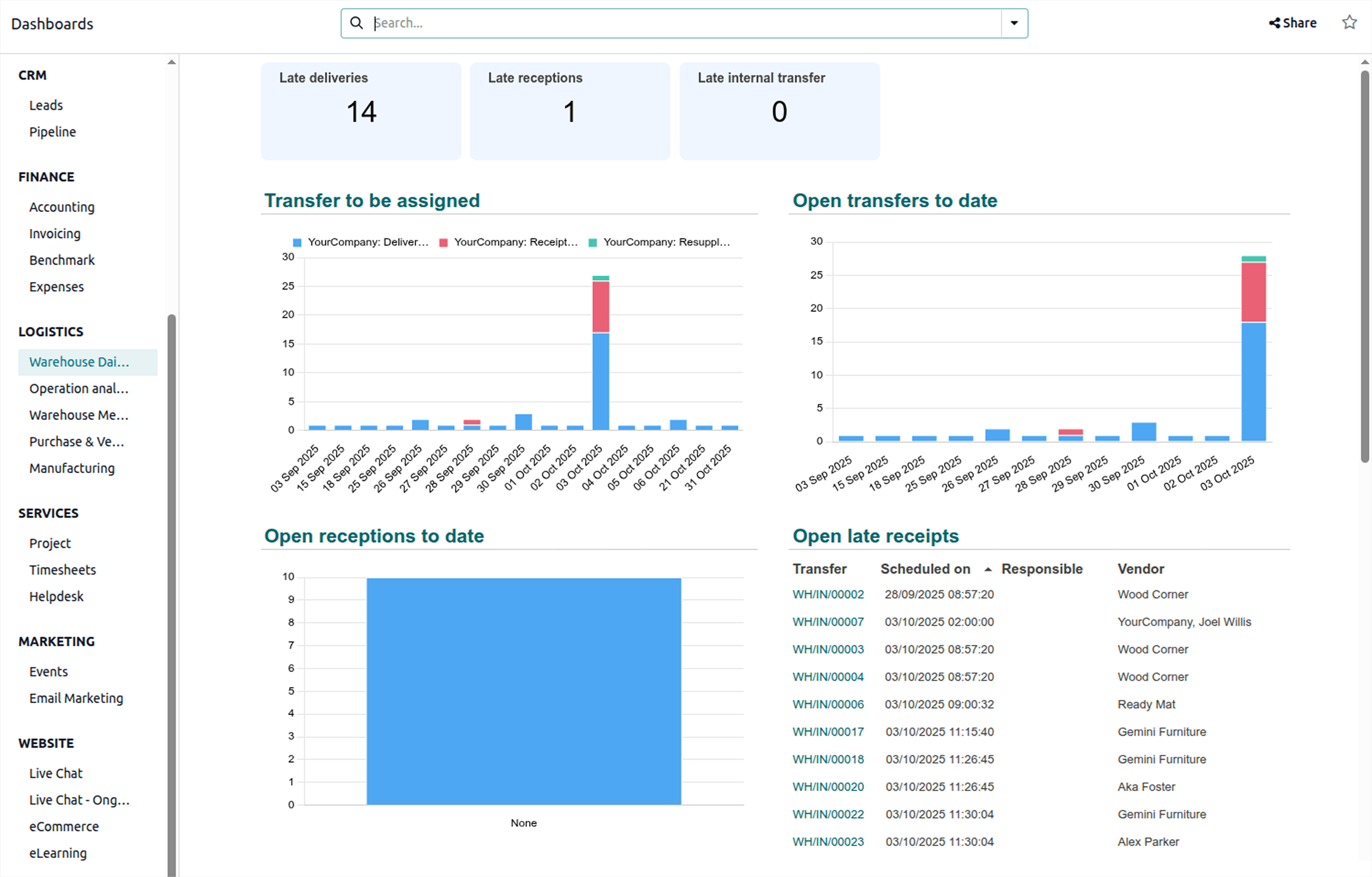
Odoo has grown faster than almost any other ERP alternative in the SMB and mid-market space over the past several years, largely because of its modular structure and low entry price. You can start with just the modules you need, inventory, manufacturing, purchasing, and expand over time.
The open-source community edition is free to self-host, while the cloud-hosted version (Odoo Online) charges per user with additional module fees. For manufacturers who want a broad ERP platform and are comfortable with some technical setup, Odoo offers a level of flexibility that NetSuite simply can't match at the price point.
Key features:
- Modular ERP: manufacturing, inventory, purchasing, accounting, CRM, and more
- MRP module with BOMs, work orders, and routing
- Barcode scanning for warehouse operations
- Large library of third-party modules and integrations
- Self-hosted or cloud-hosted deployment options
Pros
- Very affordable entry point, free community edition available
- Highly customizable with a large developer and partner community
- Broad module library covers most business functions
- Strong and growing user base with good documentation
Cons
- Manufacturing module is less mature than purpose-built tools like Digit
- Meaningful customization requires developer support, not truly self-service at scale
- UI can feel fragmented across different modules
- Implementation and ongoing customization costs can erode the initial price advantage
Best for: Budget-conscious manufacturers comfortable with technical setup who want a broad ERP platform they can grow into over time, and have access to developer support or an Odoo implementation partner.
4. Katana MRP
Best for Small Manufacturers and DTC Brands

Rating: 4.4/5
Pricing: From ~$179/month
Katana is a cloud-based MRP system built specifically for small manufacturers, particularly those selling direct-to-consumer through Shopify or WooCommerce. It's one of the cleanest, most intuitive tools in the manufacturing software space, and for businesses under 30 employees with straightforward production workflows, it's an excellent fit.
Where Katana falls short is in warehouse management depth, lot and serial traceability, and scalability beyond a certain order volume. It's a strong MRP tool, but it's not a WMS replacement, and manufacturers with complex warehouse operations or distribution requirements will outgrow it.
Key features:
- BOM management and production planning
- Real-time inventory tracking
- Shop floor mobile app for operators
- Native Shopify, WooCommerce, and QuickBooks integrations
- Basic purchase order management
Pros
- Extremely easy to use, fast setup and minimal training required
- Strong e-commerce integrations
- Modern, well-designed UI
- Good fit for simple make-to-order workflows
Cons
- Limited warehouse management, no bin-level tracking or advanced putaway
- No advanced lot, batch, or serial number traceability
- Scaling limitations beyond approximately 30–50 employees
- Limited functionality for distributors or businesses with wholesale operations
Best for: Small manufacturers (under 30 employees) with DTC or e-commerce fulfillment who need straightforward MRP and production planning without warehouse complexity.
5. Fishbowl Manufacturing
Best for QuickBooks-Dependent Manufacturers
Rating: 4/5
Pricing: One-time license from ~$4,395+; additional costs for modules and users
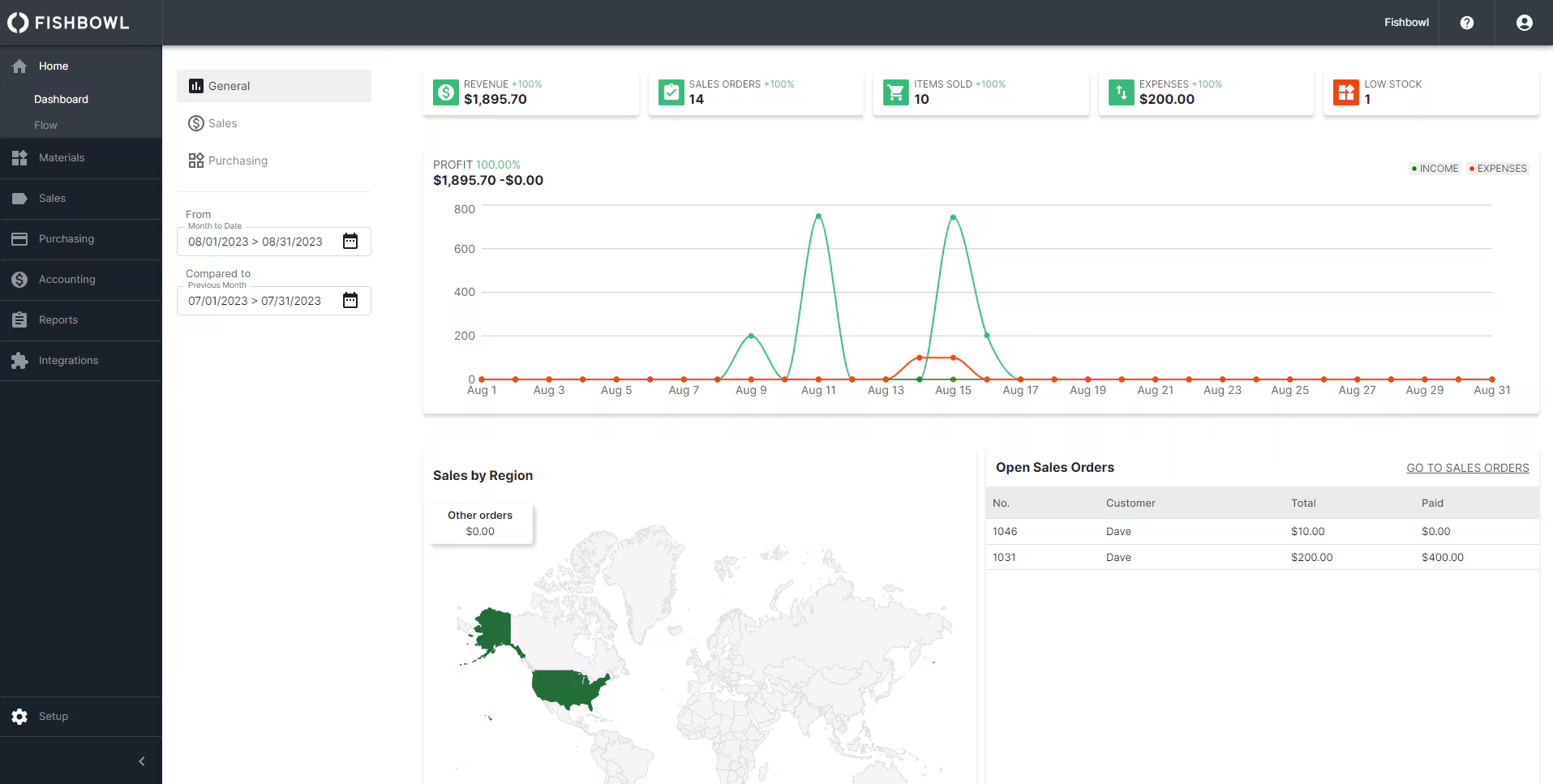
Fishbowl has long been the go-to solution for small manufacturers who are deeply embedded in QuickBooks and need to add manufacturing functionality without switching accounting systems. It integrates directly with QuickBooks Desktop and Online, and covers the basics of BOM management, work orders, inventory tracking, and barcode scanning.
The core trade-off is architecture: Fishbowl is fundamentally an on-premise or hybrid tool with a dated interface. For manufacturers evaluating it as a NetSuite alternative, the main appeal is continuity with QuickBooks, not a step forward in operational capability.
Key features:
- BOM management and basic work order support
- Multi-location inventory tracking
- QuickBooks Desktop and Online integration
- Barcode scanning for warehouse operations
- Serial number tracking and reorder points
Pros
- Tight QuickBooks integration, familiar for existing QB users
- Solid inventory control for small operations
- One-time license model can be cost-effective for stable, simple setups
- Decent BOM and work order support for basic manufacturing
Cons
- Dated interface and on-premise architecture
- No native cloud and requires desktop installation and local IT management
- Additional costs for modules, users, and locations add up
- Limited scalability for growing operations
- Not a credible replacement for a full ERP at mid-market scale
Best for: Small manufacturers firmly committed to QuickBooks Desktop who need basic manufacturing and inventory features without switching accounting systems, and aren't planning significant operational growth in the near term.
Frequently Asked Questions
Here are some of the most frequently asked questions manufacturers ask when evaluating NetSuite alternatives.
How much does NetSuite cost for manufacturers?
NetSuite's base platform starts at around $999/month, but that number is rarely the real cost for manufacturers. Once you add the Manufacturing Premium module, additional user licenses, and the implementation partner fees that are standard for most deployments, mid-market manufacturers typically spend $50,000–$150,000 in year one. Ongoing annual costs of $30,000–$80,000+ are common.
What is the difference between NetSuite and an MRP system?
NetSuite is a full ERP. It covers finance, accounting, HR, CRM, inventory, manufacturing, and more across a broad range of industries. An MRP system (Material Requirements Planning) is more focused: it specifically helps manufacturers manage what materials to buy, when to buy them, and how to schedule production based on demand.
Some businesses need the full breadth of an ERP; others need deep manufacturing capability without all the overhead. Tools like Digit offer both MRP and ERP functionality purpose-built for manufacturing, which is often a better fit than a broad ERP that includes manufacturing as one of many modules.
Is There a Cheaper Alternative to NetSuite For Small Manufacturers?
Yes. Some options like Katana MRP start at ~$179/month and are well-suited for small manufacturers with simple workflows. Odoo offers a free community edition and a low-cost cloud tier. Fishbowl uses a one-time license model that can work for QuickBooks-dependent small manufacturers. For businesses that need more operational depth, real WMS, lot tracking, multi-warehouse visibility, without NetSuite's price tag, Digit offers mid-market ERP and MRP functionality starting at $320/month.
Why do manufacturers switch away from NetSuite?
The most common reasons are cost (both licensing and implementation), implementation complexity and timeline, and feature mismatch, particularly for manufacturers who find NetSuite's manufacturing module less capable than they expected, or who feel they're paying for enterprise functionality they don't use. Manufacturers also frequently cite the dependency on implementation partners and the difficulty of making configuration changes without paid support.
What should I look for when replacing NetSuite?
Focus on the features your operations actually depend on: BOM and work order management, production scheduling, lot and serial tracking, multi-location inventory, and purchasing.
Then evaluate implementation speed and total cost of ownership, a system that takes 9 months and $80,000 to implement doesn't solve the NetSuite problem, it just replicates it. Finally, look at how purpose-built the system is for manufacturing: a tool designed specifically for manufacturers will serve you better than a generic ERP with manufacturing modules added on.
Choosing the right NetSuite alternative comes down to where your business actually sits. If you're running a large, complex enterprise operation with a significant IT budget, Acumatica or a similar full ERP may be the right answer. If you're a small DTC manufacturer, Katana covers the basics cleanly. If you're committed to QuickBooks and just need to add manufacturing features, Fishbowl is a reasonable bridge.
But if you're a mid-market manufacturer, too big for QuickBooks, not big enough to justify enterprise ERP overhead, and you need real MRP, warehouse management, production tracking, and purchasing in one connected system that your team can actually use, Digit is the most purpose-built option available. Fast to implement, built for manufacturing, and priced for the businesses that actually need it.




.jpg)