%201.svg)





Manufacturing errors are probably a lot more expensive than you think.
According to the American Productivity and Quality Center, things such as scrap and quality related waste (such as reworks fixing a problem) cost manufacturers on average 2.2% of their annual revenue. That means if your business has $1 million in revenue, somewhere around $20,000 is lost due to you having to fix manufacturing errors. And the reason for these costs being so high is due to how tricky it is to even identify that an error is occurring.
As with everything in the universe, manufacturing errors follow the Pareto Principle.
20% of direct losses come from wasted materials (scrap and manufacturing mistakes such as an incorrect cut). But a large part of these costs comes from harder-to-see expenses, like:
- Expedited shipping
- Unplanned overtime
- Management time spent firefighting
- Lost production capacity
- The gradual erosion of employee morale
Unplanned downtime is probably one of the most common and significant issues that drive up manufacturing costs, usually resulting from simple human error, especially when operations are run and tracked manually with the likes of spreadsheets.
According to research published by Siemens, unplanned downtime can cost a large-scale manufacturer as much as $253 million per year. And, looking at the world's 500 largest companies, the cumulative impact amounts to $1.4 trillion annually. To put that loss into perspective, this amount is roughly the equivalent to Spain’s entire GDP.
If we look at the cost of manufacturing errors by industry, the hourly cost becomes mindbogglingly high:
- Automotive manufacturers lose $2.3 million per hour
- Heavy industry loses approximately $300,000
- Oil and gas loses around $100,000
So, to help you make sure you’re not hemorrhaging money from your operations, we’ve created this article exploring the most common errors plaguing manufacturers, and how software can help plug these losses.
The 6 Most Common Manufacturing Mistakes

If you want to understand how you can reduce manufacturing errors, first you need to understand how to identify them.
While you may be documenting manufacturing costs, and maybe even using that data to see that there’s an issue occurring somewhere on your shop floor, the majority of mistakes are systematic — and here are 6 common issues to help you take a magnifying glass to your operations.
1. Human Error: The Most Pervasive Source of Failure
As the expression goes, “To err is human”
Human error is the largest (and easiest to fix) contributor to issues, and is a great place to start if you want to start mistake proofing manufacturing. Being human, unfortunately for manufacturers, accounts for 23% of unplanned downtime and is attributed to 80% of product quality failures.
Starting with the intentional human errors.
One of the biggest factors for human error isn’t so much because of mistakes, but it largely comes from complacency. For example, a worker takes a shortcut multiple times, underestimating the risk such as skipping a step in quality control. But, then we have the simple human errors, like a new employee who makes a mistake while learning the ropes, or an older employee who’s grown overconfident.
Then we have the unintentional errors, which occur as the result of something else, which could be stuff like:
- Forgetfulness
- Misperception
- Fatigue
- Excessive workload
- Assumptions based on past experience
This means if a worker misreads something because they are under pressure to fulfill an order, or someone rushing and forgetting an unwritten rule mid-process, this worker isn’t being negligent, they’re just working in an environment that is pushing them beyond the natural limits of human attention and memory.
And speaking of the environment, the space they work in is another factor that can lead to errors in manufacturing, this can include things like:
- Poorly maintained lighting
- Inadequate air conditioning
- Noisy or cluttered workspaces
- Broken equipment
Finally, and this is something for you and your manager to reflect on, what kind of workplace culture have you built?
If something listed above has contributed to a mistake, are your workers comfortable reporting that? Or do you have a workplace culture that punishes mistakes rather than learning from them?
2. Poor Communication and Inadequate Training
Many shop floor errors trace back not to the moment of execution but to the information workers received beforehand.
Vague or ambiguous instructions, unclear technical specifications, and undocumented procedural changes all create the conditions for mistakes that are essentially built into the process before work even begins. When departments operate in silos and updates don't reach the floor in real time, workers are left to fill in gaps with assumptions (which is precisely when errors become likely).
High employee turnover compounds this problem significantly.
When experienced workers leave and institutional knowledge walks out with them, the burden of training falls on documentation and processes that are often inadequate to the task. New workers who lack sufficient onboarding are more likely to make errors of inexperience, while veteran workers adapting to new procedures can struggle to override deeply ingrained habits which can sometimes mean they make errors driven by overconfidence rather than ignorance.
3. Ignoring Preventive Maintenance
There’s nothing worse than a bunch of orders coming in, racing down to the shop floor, and instead of the machines firing up they just end up on fire instead.
A little dramatic we know, but it doesn’t take away from the fact that equipment failure is a very common mistake in manufacturing. It’s a common error for a reason because it happens when a certain pattern becomes the norm:
- Production quotas create pressure to keep machines running
- Maintenance gets pushed back
- Eventually a breakdown occurs that costs far more in emergency repairs and lost production time than the scheduled maintenance would have.
This type of stress accelerates wear, particularly when stop-start cycles caused by schedule disruptions add strain on top of already aging components.
4. Poor Inventory Management
As a manufacturer, inventory is at the heart of your business.
But, if your inventory practices aren’t efficient, it’s only a matter of time before you’re either hoarding too much inventory or your shelves lay barren when you have sales orders to fulfill. Here’s what ends up happening if you’re not on top of your inventory management:
- Excess inventory — Working capital gets tied up, warehousing costs skyrocket, and the risk of damage or obsolescence increases.
- Stockouts — Production schedules get delayed, you have to pay a premium for expedited delivery from suppliers, and assembly lines screech to a halt while components are sourced.
Whether it’s you carrying too much or too little inventory, both are the result of having no real-time visibility into inventory levels combined with demand forecasting that isn't accurate or responsive enough to reflect actual production needs.
Pro tip: You can use MRP software to get better control over your raw material inventory levels.
5. Inefficient Workflows and Shop Floor Layout
We’ve touched on inefficient inventory practices, machines, and people, one of the things that can be a challenge to understand is if your manufacturing lines and warehouse are set up in the most optimal way to increase the turnaround time on an order.
This is known as manufacturing routing, and what this means is whether you have logically thought out the physical layout and operations steps of the shop floor. Let’s say your workstations right now are set up the way they are because you just wanted to get your operations up and running as soon as possible. What this means is that if those stations have been poorly positioned relative to each other (so your 1st process step is followed by your 5th instead of your 2nd) you will end up with a material flow that requires unnecessary movement (which is known as Muda in lean manufacturing) or creating waiting times as items move all across your shop floor.
By not focusing on optimizing your manufacturing route, you’re:
- Increasing lead times
- Reducing throughput
- Making it harder to identify where the real constraints in the system lie
Pro tip: Implementing BOM inventory management will help you and your workers better understand your manufacturing routes.
6. Labor Shortages and Workforce Sustainability
This is one that could be argued as being out of your control, but recognizing this reality and figuring out a plan to deal with this is going to help you avoid this problem later down the line.
The manufacturing industry is facing a labor and talent shortage due to an aging workforce and younger workers not being interested in entering this field. As time progresses, and more skilled workers retire without a protégé to take over, the manufacturing industry will eventually see a reduction in capacity and output quality as businesses become understaffed and place more workloads onto the workers they do have. The longer-term impact is higher labor costs, as manufacturers competing for a shrinking talent pool are forced to offer premium wages and benefits.
To solve this problem, manufacturers themselves will need to take the lead by investing in training, building a supportive workplace culture, and offering competitive compensation.
And there you have it, the 6 most common manufacturing errors occurring on shop floors all across the world. So, now you know what you need to keep an eye out for, how exactly do you track these issues and resolve them?
How Connected Software Reduces Manufacturing Errors
.jpg)
Remember how we explored the following as large contributors to errors in manufacturing plaguing businesses today:
- Human error
- Poor communication
- Deferred maintenance
- Inventory mismanagement
The one thing that these mistakes all have in common is that they usually occur when teams are operating with fragmented information and manually tracking and updating workflows (usually with spreadsheets or tools which are disconnected from the tools other teams are using).
To solve these problems, many manufacturers turn to integrated platforms to bring inventory, production, and fulfillment into a single system, so every operator, manager, and team works from the same data.
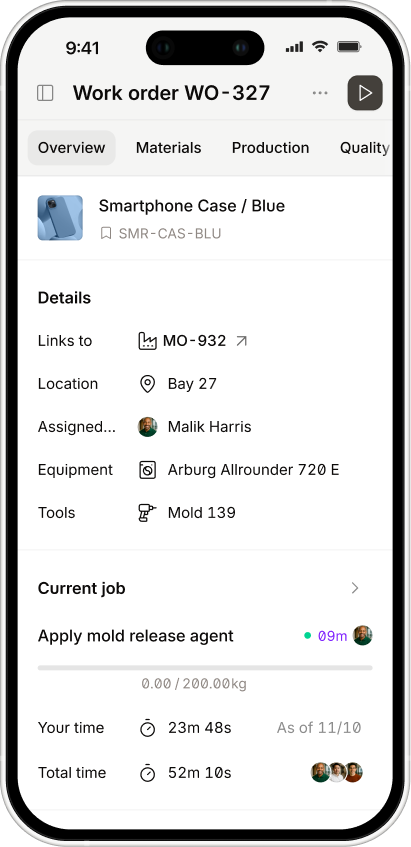
With tools such as Shop Floor Control Software, when something happens, the system captures that and updates information so everyone is operating with the exact same data. For example, when your operators scan, log, and update directly from the floor, error validation flags incorrect materials before they are used.
And when it comes to ensuring that you’re producing the same high-quality output consistently, SFC software gives all your operations the exact operational steps they need to follow, and what materials to use, removing the need for them to memorize how to build your products, or rely on paper documentation which can quickly become outdated.
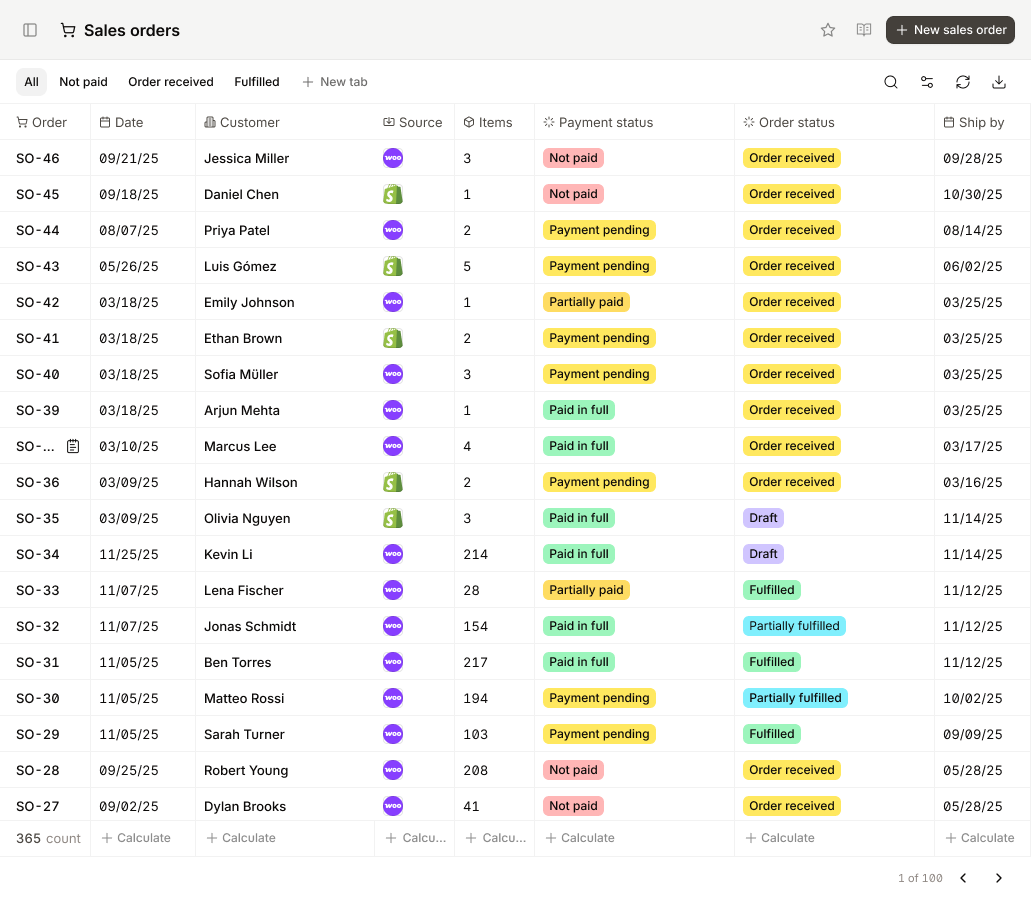
If you’re looking for a tool to try out on your shop floor, then we recommend Digit, a single browser-based platform that connects your shop floor activity, inventory, and order management in real time, with mobile workflows that include barcode scanning, and live management dashboards.
See for yourself! Book a demo and see how easy it is to use it to identify manufacturing errors and quickly address them and improve your profit margins.




.jpg)