%201.svg)


.jpg)


What Is B2B E-commerce for Distributors?
It’s hard to pin it to a specific definition, but ultimately, it’s a digital platform that enables B2B distributors and wholesalers to set up an e-commerce channel to sell goods, manage inventory, and process bulk orders directly for retailers, manufacturers, or other businesses.
You might think that B2B and B2C e-commerce businesses use the same tools, as the method by which they sell inventory is similar. However, unlike B2C, B2B e-commerce requires a more sophisticated platform to help with managing a high volume of orders and shipments, as well as:
- Recurring orders
- Customized pricing
- Approval workflows
- Ongoing client relationships
A B2B e-commerce transaction isn’t usually a simple one-off purchase.
In the B2B model, sellers and buyers usually enter into negotiations (possibly even contracts) to establish order requirements, figure out any tailored catalog management, and how each business operates, as both parties could have entirely different workflows, as each model carries distinct needs around pricing structures, inventory visibility, and customer support:
- Manufacturer to distributor
- Distributor to retailer
- Wholesaler to retailer
- Manufacturer to retailer
The broader B2B e-commerce market reflects the urgency of this shift.
For example, the B2B e-commerce GMV is estimated to reach $36.2 billion in 2026, a 72.3% increase from the 2023 actual figure of $21 billion. The rise of platforms such as Amazon has put pressure on distributors to create and offer better self-service options to match the increasing expectations of buyers, who are essentially spoiled by the luxuries they have as consumers (if they can order some random knick-knack off the internet with next-day delivery, why shouldn’t their companies experience the same flexibility?).
B2B vs. B2C E-commerce: The 4 Main Differences for Distributors

As we have already slightly touched upon before, the major difference between the two is scale and the methods by which a purchase takes place.
To separate the two business models and make it clearer, here are the 4 key areas a distributor needs to understand to differentiate between them.
1. Multi-Stakeholder Decision Making
In B2C, you see something that piques your interest, and you can buy it there and then — either because you genuinely need it or you’re driven by pure impulse like a creature from a George A. Romero flick.
If you’re someone who has worked in procurement, trigger warning. B2B purchases are almost never made by a single decision-maker. It’s more than likely going to be a committee filled with people from all over the business to first even approve the purchase. Then, if the vendor and quote have satisfied several people with different priorities and levels of authority (congratulations), the manager in charge then places the order, while:
- An accountant accesses and manages the invoice
- The job foreman tracks delivery status
- Another approver may need proof of delivery before the order can be closed
According to research, 77% of B2B decisions involve multiple stakeholders, and for 38% of buyers, the purchase process can take an entire business quarter.
Quite the leap from the B2C method, where a purchase can happen in under a minute after seeing an influencer promote something.
2. Payment and Fulfillment Complexity
B2B transactions don’t typically happen at the click of a button, with many businesses choosing to even open discussions with their sales teams before committing to a sale.
Because of this, most B2B transactions are usually:
- Invoice-based
- Processed through purchase orders
- Lines of credit
- Net 30/60 terms rather than point-of-sale payment
And once quotes and invoices have been sent and approved, the delivery process begins.
Fulfillment for B2B e-commerce distributors is convoluted, too. It’s not a matter of just shipping everything directly to the client — you have to figure out:
- Multiple shipping destinations per order
- Multiple billing accounts
- Complex logistics rules around distribution center collections
3. Buyer Behavior and Merchandising
As already pointed out, B2B buyers aren’t the impulsive type — they aren’t usually the type to wait for a sale.
When a purchase needs to happen, it is thoroughly planned, agreed upon internally, and budgeted. However, that doesn’t mean B2B selling doesn’t have a chance to capitalize on merchandising opportunities.
Inventory kitting or bundling allows distributors to package and ship related components together into a single add-to-cart action, which is a way to get rid of inventory while also being useful for the buyer, as depending on what is being purchased, the item may require multiple parts to install or assemble.
For perishable inventory or consumable stock (your nuts and bolts, for example) that get reordered frequently, you can easily reduce the pain of the buyer having to make these orders and build loyalty with things like:
- Quick order pads
- Order history replication
- Subscription-style purchasing
4. The Value of Long-Term Relationships
Quickly cover any Gen Alpha’s eyes nearby who might read this — but it costs 6-7 times more to acquire new customers than to retain them.
For e-commerce distributors who rely on repeat orders from a set of companies, you can see why retention is more important here. A distributor needs to build trust with buyers, giving them the confidence that, as a vendor, you can:
- Honor the agreed pricing
- Deliver reliably
- Be available for post-sale support
That trust, built over time, is often the deciding factor in whether a relationship continues.
Being able to prove this, ideally with action rather than claims, will be the deciding factor in whether a relationship continues.
Why Distributors Are Moving Sales Online

When it comes to the trend of using e-commerce for distribution platforms, it’s not so much that they're trying to catch up with a business trend, but a sign of the times.
70% of B2B buyers would prefer self-service to dealing with a sales rep. Simply put, distributors who avoid modernizing their sales order channels and cannot meet clients' expectations risk being dropped by competitors who can satisfy their needs.
But there are other reasons it’s beneficial to set up e-commerce for distributor channels, beyond the shift in expectations.
Operational Efficiency
Phone and email orders introduce errors that ripple downstream into fulfillment and billing disputes, which digital platforms eliminate:
- Misheard SKUs
- Missed pricing schemes
- Manual data entry mistakes
Digital orders are also significantly cheaper to process than high-touch sales calls, and automation handles routine tasks such as inventory tracking, invoicing, and order confirmation.
That frees sales teams to focus on consultative relationships rather than order-taking, which is where their value actually lies.
Competitive Pressure
Amazon Business and other digital-native platforms have already set the baseline expectation for speed, transparency, and convenience in B2B purchasing.
At the same time, manufacturers increasingly sell direct to end users, compressing the distributor's role. Going online is not only going to help you keep up with your competitors, but it’s going to help you stay relevant within the supply chain as vendors try to circumvent you.
Data and Growth
Digital platforms surface purchasing patterns, enable better demand planning and forecasting when integrated with ERP systems, and create natural opportunities to surface related products at the point of order.
Distributors further along in e-commerce maturity are already using this to grow business with new customers and expand into new geographies — not just serve their existing base more efficiently.
The Generational Shift
As Millennials and Gen Z move into procurement roles, digital convenience isn't a nice-to-have — it's a baseline expectation shaped by years of consumer e-commerce experience.
Distributors who build that capability now are better positioned for a buying population that has never relied on the phone as a primary purchasing channel.
5 Challenges for Distributors Moving Sales Online

Hopefully, this article hasn’t freaked you out too much or made you impulsively sign up for a platform that offers e-commerce for distributors.
If your business hasn’t gone online yet, perhaps this is your wake-up call to start doing so, and to get you started on your evaluations of solutions, we’d like to share with you the challenges others tend to face when making this digital transition.
1. Data Quality and Product Information
As a distributor, you’re already familiar with the fact that you have to manage thousands of SKUs, all across:
- Different pack sizes
- Case quantities
- Product substitutions
If anything is wrong with that data, or it’s siloed in one system, it will eventually break your B2B inventory management (and maybe even online store listings) later down the line, as you and your buyers won’t be able to see:
- Products that are for sale
- Most up-to-date and accurate prices
- Current stock availability
According to research, 85% of B2B buyers report frustration when ordering online due to outdated systems and inaccurate data, and 75% said those annoyances are enough to consider switching suppliers.
2. System Integration
If you take a look at a distributor's digital system for managing their business, there’s no telling what you’ll find:
- ERP
- WMS
- CRM platforms
- Separate inventory databases
Whatever tool you use, it’s essential that your new e-commerce platform integrates smoothly with your current systems, with clear data ownership and reliable syncing. When systems don't cooperate, it leads to all kinds of shenanigans, like inventory counts diverging, pricing conflicts emerging, and teams spending time reconciling data rather than serving clients.
3. Real-Time Inventory Visibility
Real-time visibility into inventory almost goes without saying — but in a B2B e-commerce for distributors, it’s not just you that needs it, but your clients too.
Imagine you’re a procurement manager, you’re running low in business critical inventory, so you attempt to place an order with your vendor, only to find out it’s out of stock at checkout. Not having that visibility from the get-go is going to kill your confidence in that platform. Then, from the distributor's side, they need an e-commerce solution that can help them manage all their inventory headaches, like managing stock across multiple warehouses and fulfillment locations, and routing orders correctly requires systematic rules around proximity, availability, cut-off times, and delivery commitments.
4. Platform Adoption
A platform that buyers find difficult to navigate will push them back to phone and email, defeating the purpose of going digital entirely. Research suggests that up to 80% of e-commerce initiatives underperform because of poor user experience or insufficient onboarding. Field sales reps tend to be among the most effective drivers of platform adoption when properly incentivized — which requires rethinking compensation structures so reps aren't penalized for orders that come through the digital channel.
5. Channel Conflict
Another thing you have to worry about is your existing partners, because your wholesale and retail partners may feel threatened by the transition.
This will require you to come up with a communication strategy to reassure them that the new digital channel will complement rather than compete with existing relationships. Unfortunately, that's an organizational challenge that purely technical solutions can't fix, and will require some elbow grease to maintain good relations.
How Your ERP or Inventory System Connects to Your E-commerce Channel
For distributors, the e-commerce platform is only as reliable as the systems behind it.
A storefront that displays inaccurate stock levels, outdated pricing, or incomplete product data doesn't just create operational problems — it erodes buyer trust at the exact moment a customer is ready to order. That's why integration between your e-commerce channel and your back-office systems isn't a technical nicety — it's the foundation the whole operation depends on.
What Integration Actually Does
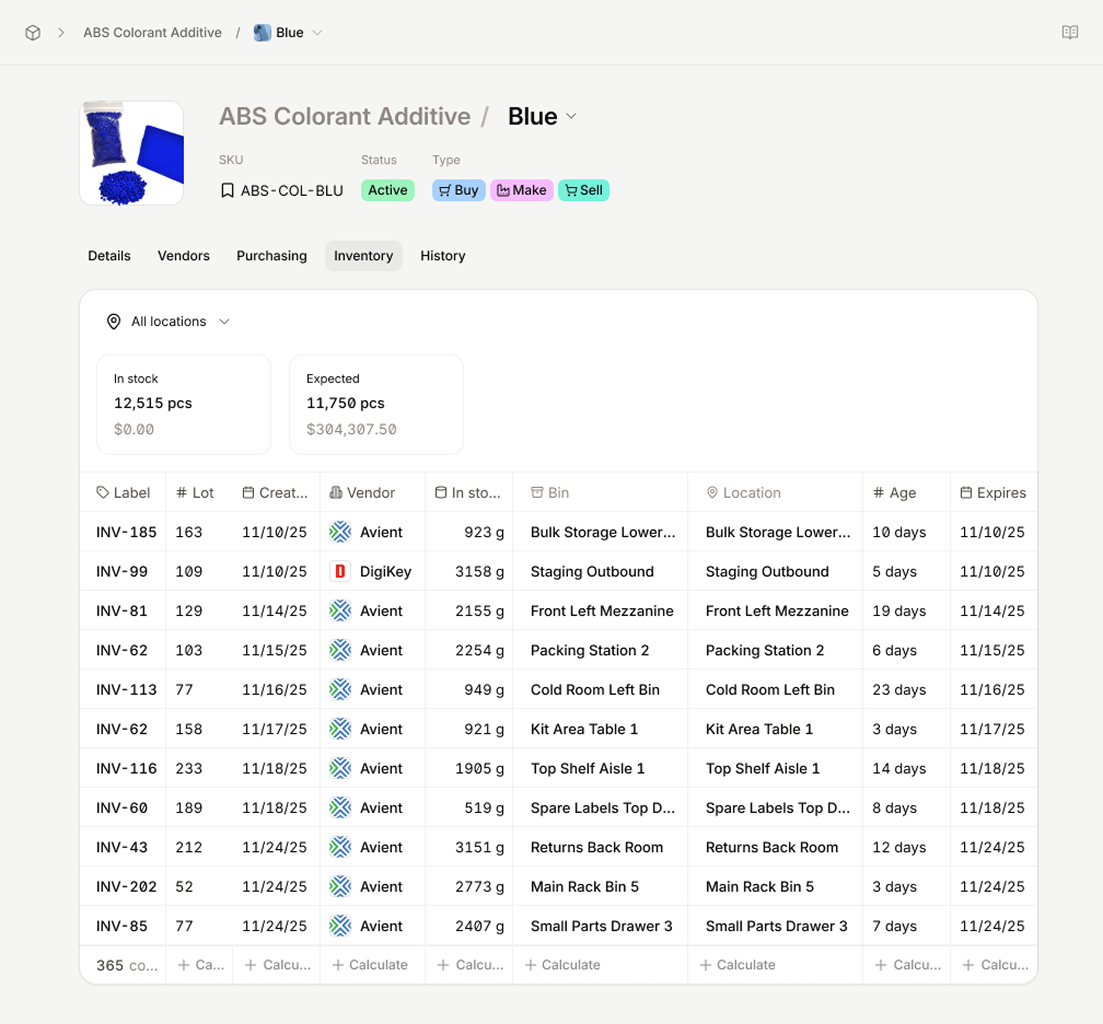
An ERP e-commerce integration creates a single source of truth across inventory, orders, pricing, and customer data.
When a buyer places an order online, that transaction should automatically update inventory counts, trigger fulfillment workflows, generate an invoice, and sync to accounting — without anyone manually transferring data between systems. When stock moves in the warehouse, the storefront should reflect it immediately.
When a customer's negotiated price list changes, it should update at the point of ordering without manual intervention.
Multi-Channel Order Visibility
Distributors rarely sell through a single channel.
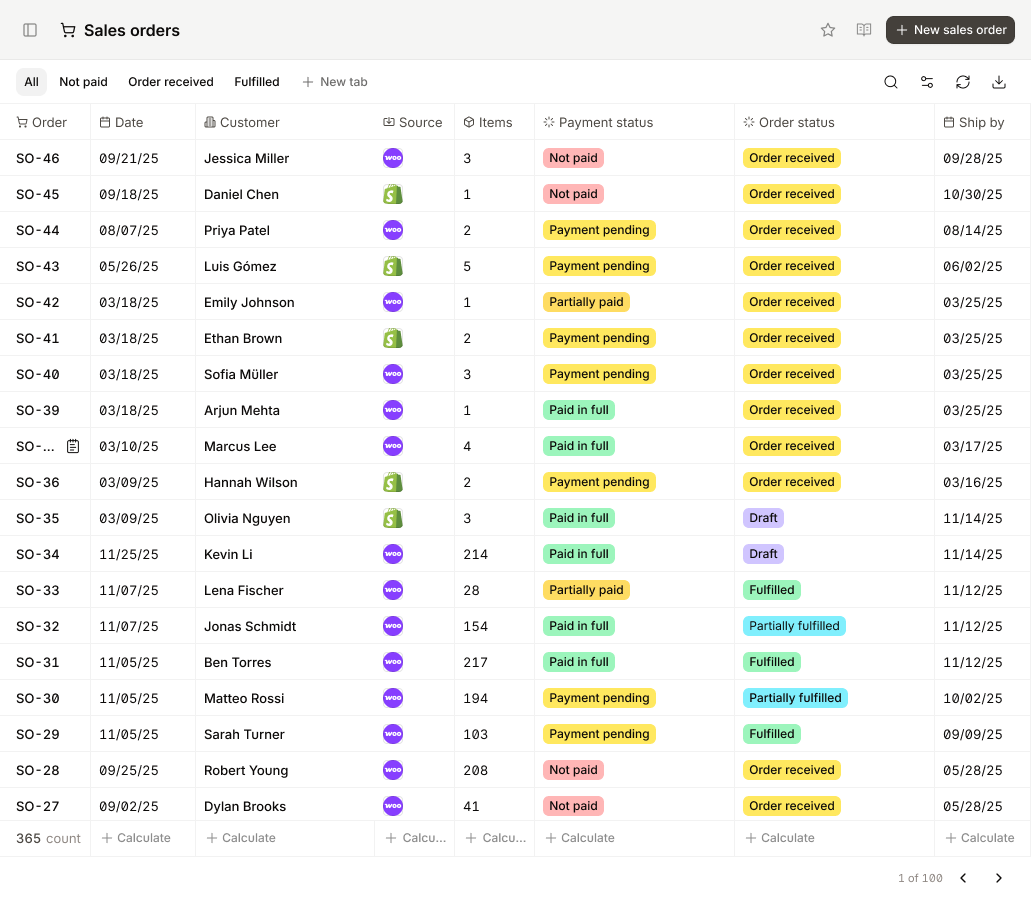
Orders come in through e-commerce, EDI, direct sales reps, and sometimes still by phone. A well-integrated system pulls all of those channels into one central order dashboard, so fulfillment teams aren't working from fragmented queues and sales teams aren't surprised by orders they didn't know existed. Tools like Digit are built around this principle — connecting e-commerce channels like Shopify, Amazon, and WooCommerce into a unified order management view alongside manually entered and wholesale orders.
Pricing, Customer History, and Fulfillment
Integration also enables the kind of account-level personalization that B2B buyers expect.
Customer-specific price lists, order history, and visibility into open invoices should all be accessible in the buying experience, not locked in a separate system that requires a phone call to access. On the fulfillment side, line-item traceability (knowing exactly where each item is in the pick, pack, and ship process) reduces errors and gives both internal teams and customers reliable status updates.
The Accounting Connection
A fully connected system keeps finance in sync without manual reconciliation.
Sales orders push to accounting as invoices, inventory updates automatically as items ship, and COGS reporting reflects what's actually moving. When these connections are clean, distributors spend less time closing the books and more time understanding which products, customers, and channels are actually driving margin.
Want to find an ERP system that can keep up with your e-commerce for distributors platform? Why not try out Digit for free? It’s a tool built specifically for distributors selling online, and comes with a customer portal that you can share with your clients so everyone can track inventory, orders, and delivery progress independently.
.jpg)


.jpg)
.jpg)