


What Is B2B Inventory Management?

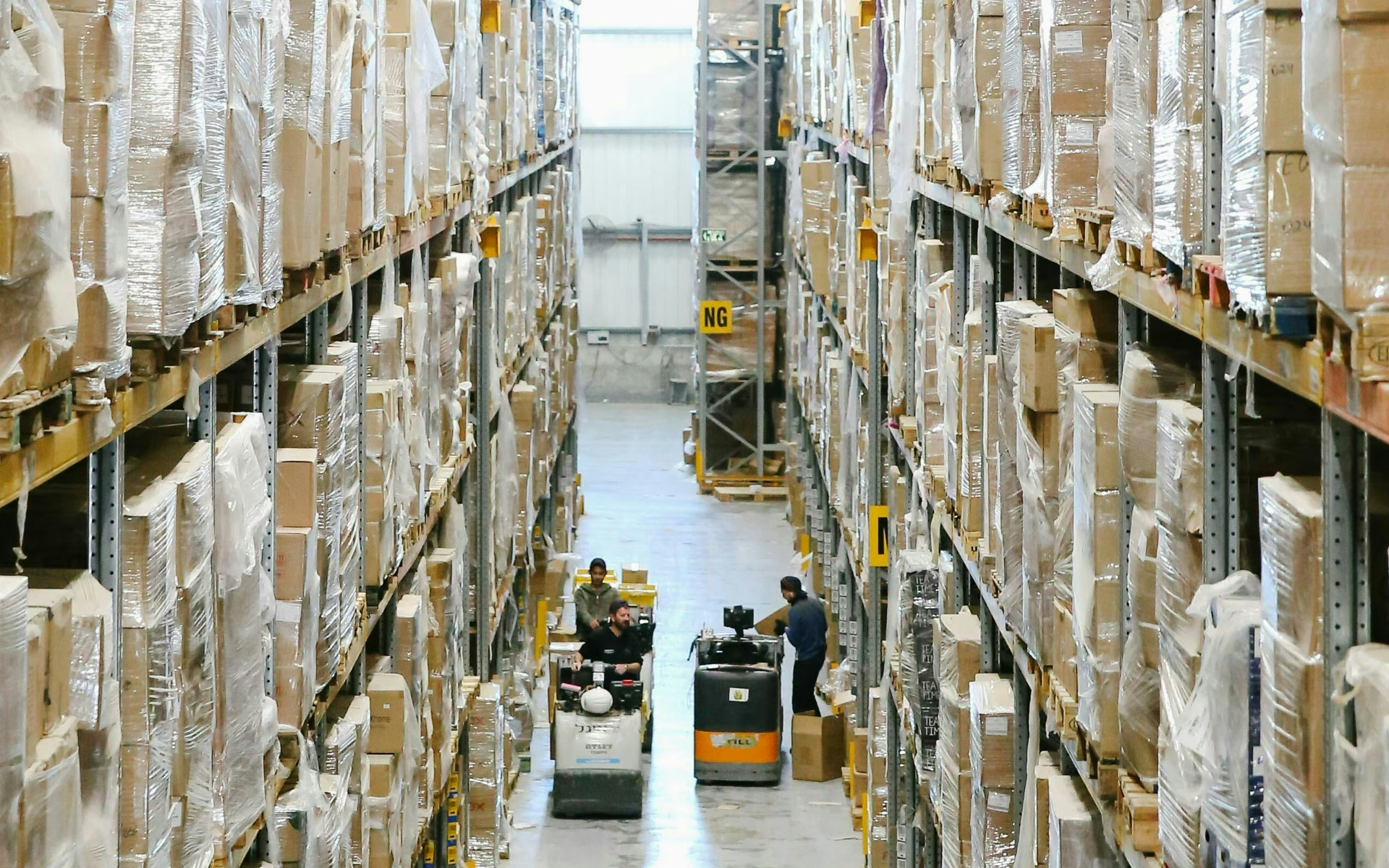
The B2B inventory management process involves storing products intended for sale or for holding for another business.
The reason we have defined it like this is that a business can sell and manage both B2C and B2B inventory, and may need to separate the two, and it will likely be a necessary inventory management tactic for:
- Manufacturers
- Suppliers
- Wholesalers
- Distributors
As with any other inventory management method, B2B inventory management involves overseeing the procurement, storage, tracking, and distribution of finished products. Unlike a typical B2C setup, in B2B inventory management (with exceptions, of course, such as businesses that sell aircraft), the volume of goods sold per order is typically higher and may require negotiated pricing or maintaining relationships for repeat purchases.
What’s the Difference Between B2C and B2B Inventory Management

We've already touched on this a little earlier — the scale at which items are stored, manufactured, and sold is the biggest difference between the two, but this is just a nutshell definition.
At a surface level, both B2B and B2C inventory management are about ensuring products are available to sell when a sales order comes in. But, because of scale and supply chain expectations, B2B inventory management takes a different shape than B2C because it is dependent on different:
- Systems
- Processes
- Priorities
Order Size, Volume, and Complexity
Let’s start by delving deeper into what we mean by scale.
B2B inventory management is mostly focused on fulfilling orders that are:
- Large
- Bulk
- Palletized orders
A single sales order could contain thousands of units, requiring multiple trucks, containers, and other equipment to move a large volume of goods, all subject to contracts and repeat-purchasing agreements. As opposed to B2C, which could sell one product for each sales order. A quicker and easier way of comparing the difference is this:
- B2B — Low volume of larger quantities
- B2C — High volume of lower quantities
Demand Forecasting and Planning
Every business is at the mercy of unpredictable trends and patterns, but for businesses managing B2B inventory, that struggle is a little easier.
This is because B2B demand tends to be easier to forecast, as you’re focused on building and maintaining long-term customer relationships, allowing you to forecast demand weeks or months in advance. However, that isn’t to say that the volatility that plagues B2C doesn’t exist for B2B models either. B2B businesses tend to do business internationally, and a number of factors could arise and change demand unexpectedly, for example:
- Global competition
- Geopolitical tensions
- Stock markets
Shipping and Delivery Expectations
Due to the amount of goods that will be shipped to fulfill a sales order, deliveries need to be planned well in advance.
B2C customers can expect an order the next day if the items are stored in an accessible warehouse. But for B2B, a shipment may require an entire fleet to transport the goods, so lead times are longer. This isn’t a bad thing — in a B2B setup, there are concessions, and it’s understood that a delivery will take a little longer to be made. From the client's perspective, they will be looking for speed and reliability rather than "as soon as possible."
Warehousing and Storage Requirements
Selling more things requires more space.
A warehouse for a B2B inventory management setup must be optimized for bulk storage and efficient outbound logistics. In B2C warehouses, the SKU count is usually much higher, so they need to fit as much inventory as possible. In B2B, space needs to be utilized based on order size and client volume.
Returns and Reverse Logistics
In B2C, when a customer sends something back, the seller receives it and takes appropriate next steps (refunds, repairs, returns, disputes, etc.) — a fairly painless, standard process.
Returns in the B2B model are a different beast entirely. They’re not that common, but when they do occur, it’s a costly and complex inventory management process. Returned goods in a B2B setup require:
- Managing large volumes
- Quality inspections
- Credit reconciliation
- Manual handling
Technology and Systems
Depending on the size of the B2C business, someone selling via an e-commerce platform like Shopify might be able to rely on the inventory management features it provides natively.
But B2B inventory management requires a lot more functionality, with many businesses turning to ERP software to support:
- Forecasting
- Procurement
- Contract pricing
- Multi-location visibility
The 4 Types of Inventory in B2B Operations

In B2B inventory management, the types of inventory you’ll be managing won’t differ from any other type of business managing inventory.
The four types of inventory B2B models will need to focus on managing (especially if they’re manufacturing goods internally or externally) are:
- Raw Materials
- WIP
- Finished Goods
- MRO
1. Raw Materials
Your raw materials are the items (and subassemblies or components) that will be necessary to make a finished product and are typically divided into two subtypes:
Direct Materials
Indirect Materials
Direct materials are the items and ingredients that become part of the final product, such as:
- Steel and metal are used in automotive production
- Flour in baking within a food and beverage setup
- Fabric in apparel and textile manufacturing
Your indirect materials are needed for production, but do not end up in the final product. This will include materials like:
- Lubricants
- Tape
- Glue
- Other consumables
Staying on top of your raw materials levels will help you avoid production stoppages caused by shortages and reduce the risk of tying up excess cash in unused stock.
2. Work-in-Process
Work-in-process (or WIP for short) tracks items currently being used in manufacturing but not yet finished/completed.
Tracking this will be essential for understanding exactly what you have on hand and what you’re expected to have soon (so you don’t panic and place more orders thinking you’re low on stock). But it’s also a useful inventory tool for understanding how your production lines are running. It will help you identify where work is accumulating along your manufacturing route, and help find and resolve:
- Bottlenecks
- Delays
- Inefficiencies
3. Finished Goods
Once your raw materials have left the WIP stage, they are likely now a part of a final product, and can be tracked as a finished good.
Aside from undergoing quality checks, these are now essentially ready to be sold or distributed to other fulfillment hubs. In a B2B setup, there are typically two types of production methods, which will help determine how and when production needs to happen:
- Make-to-order (MTO) — You generate a manufacturing order when a client places an order, great for bespoke or customized jobs
- Make-to-stock (MTS) — You generate a manufacturing order in anticipation of a client's order, great for businesses manufacturing a standardized product
4. MRO Supplies
Finally, we have your MRO supplies, MRO standing for maintenance, repair, and operating items that are essential to keeping facilities, equipment, and operations running.
Basically, anything that you need to complete manufacturing but isn’t a part of the inventory that is sold. For example, this will include:
- PPE
- Spare parts
- Tools
- Cleaning supplies
You won’t want to ignore this inventory type, as a stockout here will prevent production from starting and increase costs due to downtime.
And there you have it, the 4 types of inventory B2B operations need to worry about. However, there are other categories to be aware of if you want to successfully manage your B2B inventory.
Other Inventory Categories You May Track Separately
Now that you know your four inventory types, you’ll want to know about how you can categorize your inventory even further to make your B2B inventory management even more efficient.
Safety Stock
Safety stock is a buffer of items you keep on hand to protect your business against any uncertainty.
The purpose is to ensure you always have some products in inventory while you order or manufacture more products. This comes in handy when suppliers are delayed, demand spikes, or unexpected disruptions occur in your supply chain. It sounds like an easy thing to manage on paper, but it requires finessing, because too little safety stock leads to stockouts, while too much increases carrying costs.
Incoming and In-Transit Inventory
Inventory levels are low, but you know a PO is on the way or some items are moving between facilities.
Incoming and in-transit inventory monitors the items that haven’t been received yet. It’s important to track this inventory, as it will help you better understand your true inventory levels, which is especially important if you have multi-warehouse or long-lead-time supply chains.
Components and Sub-Assemblies
Some products require not only raw materials, but also components and sub-assemblies to be made. It’s always good to distinguish these items because they may be of higher value, used in multiple different finished goods, or even manufactured or installed off-site.
Dead Stock and Obsolete Inventory
Here is where we get into the inventory that is costing you money and needs to be identified and addressed.
Dead stock refers to items that have lost most or all of their demand. Obsolete inventory is inventory that has expired or is no longer of any value. This will all include:
- Discontinued products
- Outdated materials
- Expired inventory
- Damaged goods
Dead stock silently eats away at your profit margins by taking up space and cash that could otherwise be used to stock more profitable products.
Returns, Refurbished, and Recovery Inventory
As mentioned, sometimes in B2B returns occur, and you will want to track these items to determine what to do with them and ensure they aren’t resold immediately.
In some cases, you may be able to just restock and sell as new (if the goods weren’t accepted by the client, for example). But, most of the time, once these products make it back to you, they will require:
- Inspection
- Repair
- Refurbishment
- Scrapping
Tracking returns and recovery inventory helps manage reverse logistics, reduce losses, and create clearer rules for what can be resold versus what must be removed from circulation.
Consignment Inventory
Consignment inventory is products that are stocked and sold by a retailer or partner, but aren’t paid for until the units in their possession are sold.
It's a good tactic for getting your products to market while helping you reduce carrying costs, since you won’t have to worry about storage. But as noted, this inventory is still yours, so you will need to track what you have with a third party and be mindful of the date the unsold units will be returned to you.
The Best 7 B2B Inventory Management Strategies
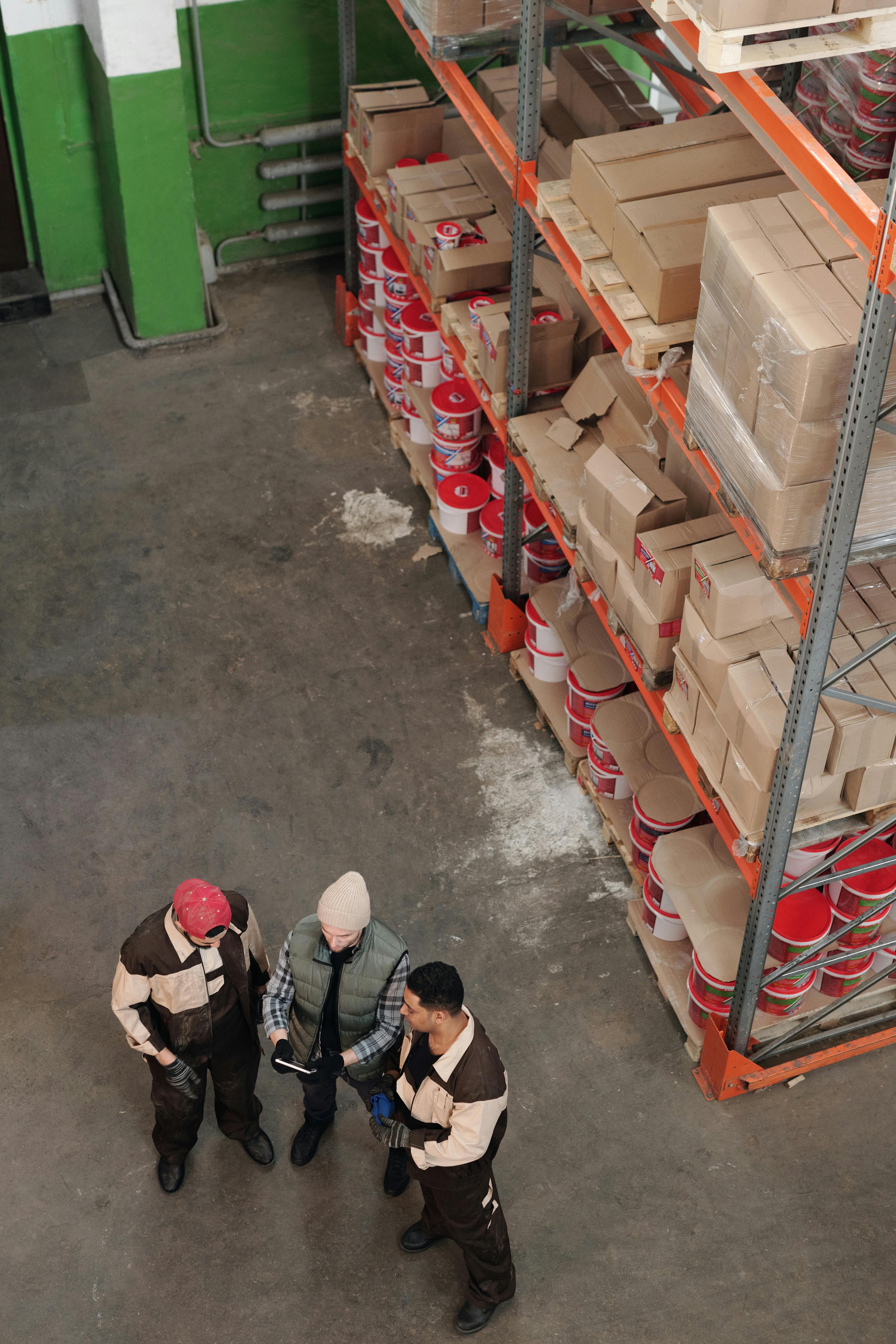
Effective B2B inventory management is built on repeatable systems that keep stock accurate, replenishment predictable, and fulfillment dependable.
Here are the 7 best inventory management strategies you can follow to get you started on optimizing your B2B inventory management.
1. Leverage Technology and Automation
Modern B2B inventory management depends on real-time tracking, especially when stock moves across multiple warehouses, sales channels, or fulfillment partners.
Cloud-based inventory software can automatically synchronize inventory updates, reducing manual work that often leads to discrepancies. Some software allows you to implement barcoding and RFID to improve accuracy on the warehouse floor. When receiving, picking, transferring, or shipping, scanning instead of typing typically results in fewer errors and faster throughput.
2. Data-Driven Demand Forecasting
Demand forecasting helps B2B teams avoid the two classic traps:
- Overstocking slow-moving items
- Running out of high-demand items
To get the most out of your forecasting, you’re going to need to track and analyze historical sales data, seasonality, lead times, and channel behavior so that inventory plans reflect how B2B and DTC or marketplace demand behave differently.
If this is a new concept to you, it will be a hit-or-miss process at first, but as forecasting becomes a regular practice, it’s easier to plan purchases, stabilize replenishment, and reduce urgent “emergency” reorders.
3. Prioritize What Matters With ABC Analysis
ABC analysis helps B2B operators focus time and control where it has the biggest financial impact:
- A — High-value or high-velocity items that typically require tighter monitoring, more frequent cycle counts, and more conservative reorder planning
- B — Moderate items that get a balanced approach
- C — Low-value or low-impact items that can often be managed with simpler rules
This is less about labeling products and more about aligning effort with business risk.
4. Cycle Counting and Warehouse Layout
Annual physical inventory counts are useful, but cycle counting tends to maintain higher accuracy throughout the year.
Instead of checking everything at once, cycle counting verifies smaller subsets of inventory at set intervals, making it easier to catch issues early and reduce the operational disruption of full shutdown counts. Warehouse organization matters just as much. High-demand products should be stored in accessible locations, and labeling systems should support fast, consistent picking and replenishment.
5. Strengthen Supplier Relationships to Reduce Inventory Risk
In B2B, supplier performance can directly shape inventory performance.
Clear communication about lead times, expected demand, and replenishment cadence helps prevent surprises. Strong relationships can also create flexibility and more reliable planning during demand shifts. Diversifying suppliers for critical items can reduce dependency risk, especially if a single supplier disruption would stall production or major customer orders.
6. Use JIT, VMI, or 3PL
Just-in-time (JIT) and vendor-managed inventory (VMI) can reduce holding costs and excess inventory, but only when supplier reliability and coordination are strong enough to support it.
These models work best when both sides share clear expectations, lead time visibility, and replenishment rules. Many B2B companies also lean on 3PL partners for storage and fulfillment, especially for bulky goods or distributed shipping needs. When the 3PL is integrated into inventory systems, it reduces manual reconciliation and improves the trustworthiness of stock availability.
7. Transparent Backorders and Preorders
Preorders can be useful for demand validation, especially with new products or high-demand launches.
Backorders can protect revenue when stock runs low, but only if customers receive clear timelines and frequent updates. Without transparency, backorders quickly become a trust problem. Minimum order quantities (MOQs) can also help protect inventory from being depleted by small, low-margin orders, as long as they’re communicated clearly upfront.
Choosing the Right B2B Inventory Management Software

As you’ve likely already gathered from this article, choosing a B2B inventory management software is going to be the difference between struggle and success.
Unlike basic stock-tracking tools, e-commerce platforms, or native solutions, B2B inventory systems need to support:
- Large order volumes
- Complex workflows
- Multiple sales channels
- Tight coordination between inventory, orders, and finance.
The right platform should reduce manual work, improve visibility, and scale with operations as they grow. Beyond inventory and order management, here are some suggestions for what to look out for in your solutions.
Advanced Capabilities That Add Real Value
For businesses handling regulated, perishable, or high-value products, it’s going to be necessary, perhaps even a legal requirement, to find a tool capable of supporting end-to-end visibility by offering batch, lot, and serial number tracking.
And nowadays, almost every single digital product comes with AI (whether it makes sense or not). So, it’s worth keeping an eye out for tools that offer AI-driven demand forecasting and analytics to further improve planning by identifying trends and automatically adjusting reorder recommendations. Hardware technologies such as barcode scanning and RFID help reduce manual errors in warehouses, speed up cycle counts, and improve overall data accuracy.
Some platforms also support cross-docking, drop shipping, and multi-warehouse fulfillment logic, allowing businesses to route orders efficiently without holding unnecessary stock.
Integration, Usability, and Scalability
On a similar note to AI, most business-critical tools are software, so building your tech stack should be a top priority for you.
To avoid data silos and duplicate work, inventory software should connect seamlessly with:
- ERP systems
- Accounting tools like QuickBooks
- CRM platforms
- E-commerce channels
If you find a tool that doesn’t have a native integration with your favorite solutions, open APIs make it easier to adapt the system as the business evolves.
Usability matters just as much as functionality.
Even powerful software fails if teams struggle to adopt it. An intuitive interface, clear workflows, and minimal training requirements help ensure the system is used consistently across operations, sales, and finance. Scalability should also be evaluated early. As order volumes, SKUs, users, and warehouse locations increase, the system must maintain performance without requiring a complete replacement.
Evaluating Cost and Long-Term ROI
Price alone should not drive the decision.
Instead, focus on the total cost of ownership and return on investment. The best B2B inventory management software:
- Reduces excess stock
- Prevents costly stockouts
- Minimizes manual labor
- Improves order accuracy
Over time, these gains translate into better cash flow, higher customer satisfaction, and more resilient operations.
Choosing a system that supports both daily execution and long-term growth ensures inventory management becomes a competitive advantage rather than a constraint.
Getting Started with B2B Inventory Management

Digit helps B2B companies manage inventory by replacing spreadsheets and disconnected systems with a single, real-time source of truth across purchasing, production, warehousing, and fulfillment.
Built for manufacturers, distributors, and wholesalers, Digit gives teams full visibility into raw materials, work-in-process (WIP), and finished goods from purchase through shipment.
With real-time stock tracking, Digit automatically updates on-hand, allocated, and in-transit inventory as items are received, produced, moved, or shipped. Safety stock levels and reorder points help prevent stockouts, while connected purchase orders ensure replenishment aligns with actual demand. Unit-of-measure conversions, nested pallets and containers, and lot and serial tracking support the complex inventory structures common in B2B operations.
Digit also connects inventory directly to sales orders, manufacturing orders, and work orders, ensuring everything promised to customers is actually fulfillable. Multi-location and bin-level tracking provide visibility across warehouses and storage sites, while forecasting and demand planning tools help businesses balance availability with carrying costs.
By centralizing inventory, production, and order data in one cloud-based system, Digit reduces manual errors, improves traceability, and enables faster, more confident decisions.
Want to pilot it within your B2B inventory management workflows? Try chatting with Digit's free AI demo and see how you can take your business to the next level.
%20(2).jpg)