
WIP tracking software

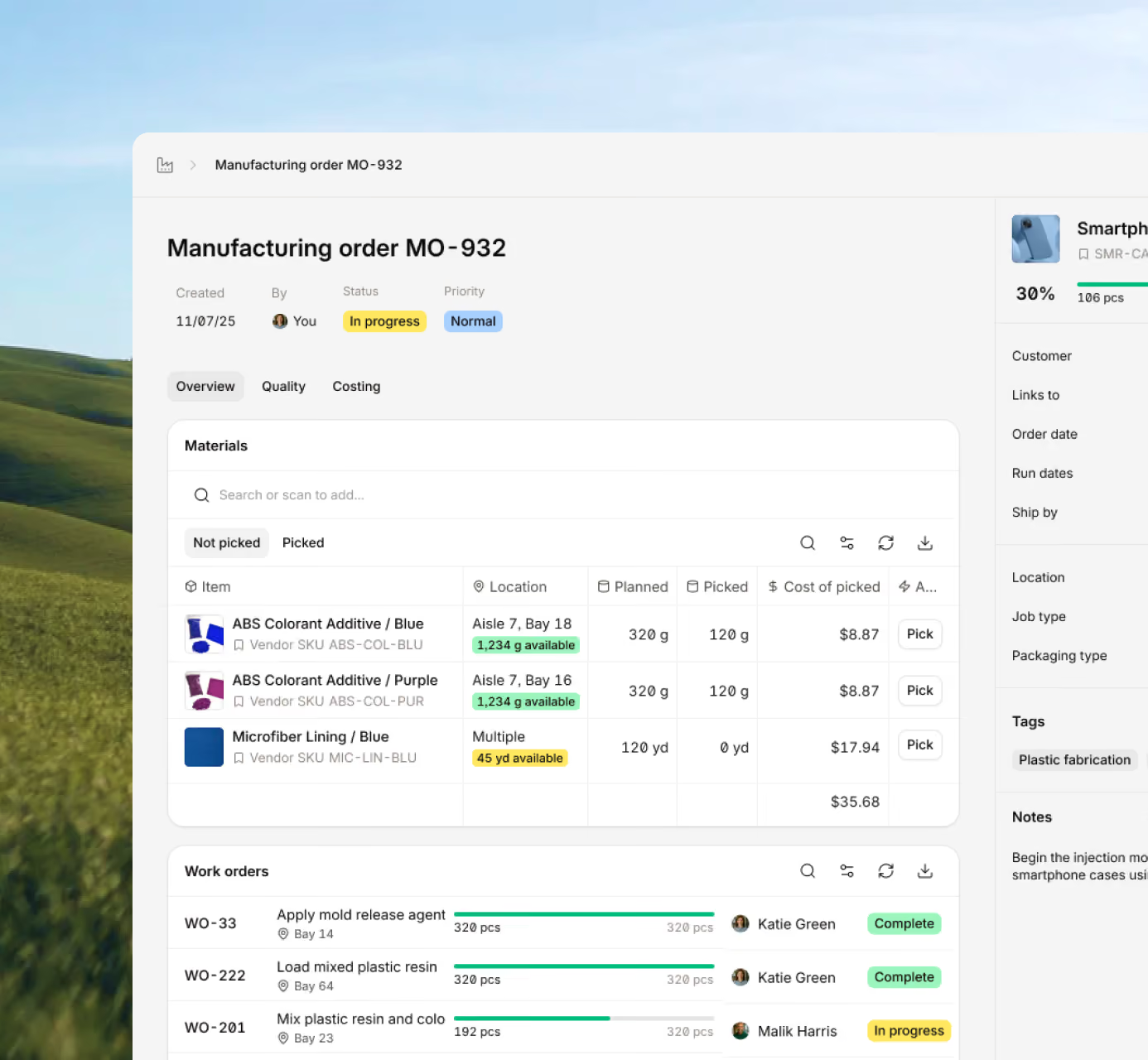
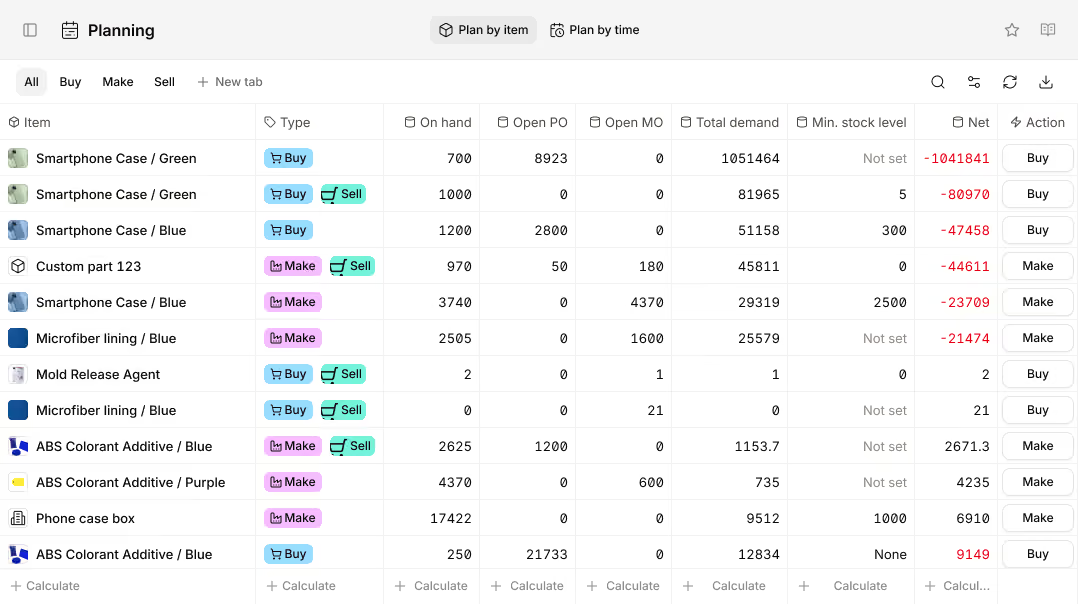
Track the progress of all your manufacturing orders with real-time visibility of all your materials across all your operations.

app.digit-software.com
Digit is trusted by

Losing visibility into work in progress?

It’s easy to overstock without WIP tracking Disconnected spreadsheets mean incorrect stock levels. WIP tracking software gives you a clear, real-time view of inventory and production status across your supply chain.

What is WIP tracking software?

Work-in-progress tracking software gives manufacturers the tools to track all the materials, components, and sub-assemblies as they move through the different stages of production, giving you a clearer view of your actual inventory levels as raw materials are converted into finished products. Manufacturers turn to WIP tracking software because manual processes often produce inaccurate inventory data, leading to delays and bottlenecks in production. The purpose of WIP software is to track the inventory in the production stage so managers know exactly what they have on hand, what’s due to be added to inventory, and if they need to order more materials to meet demand.
"With Digit, everything from our inventory to our production data is the word of truth. I can trust it. I can rely on it."
Joshua Burris
Co-Owner, On Foot Innovations

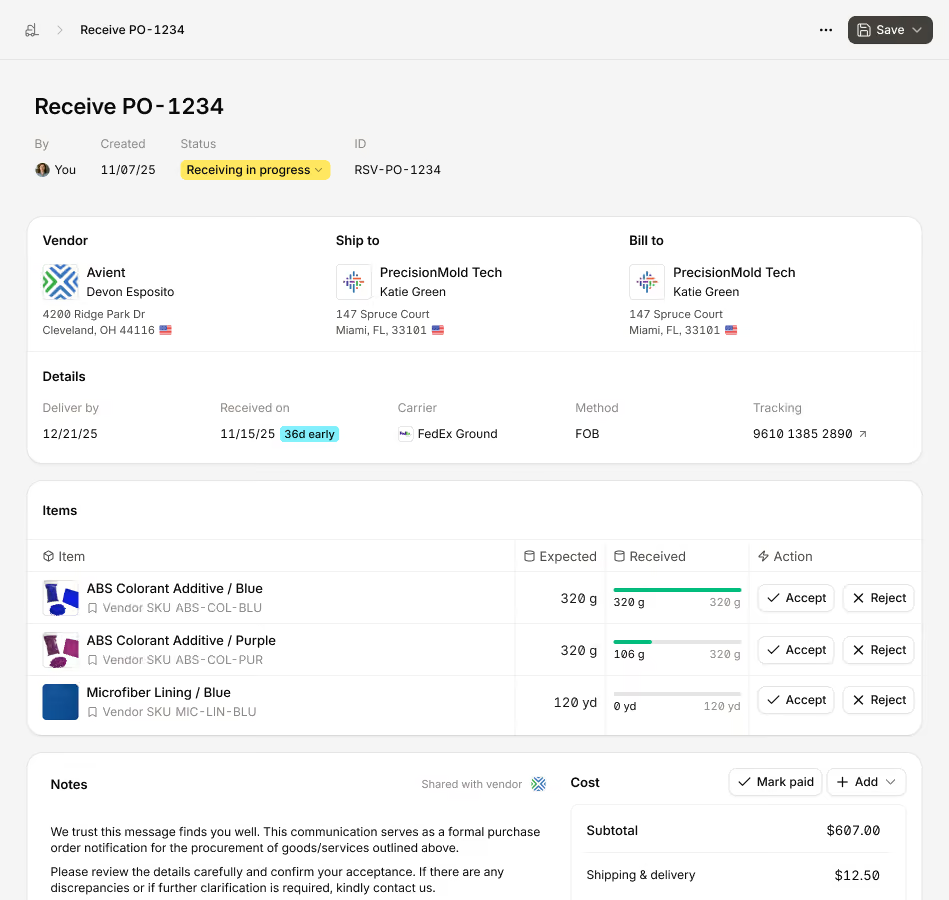
Real-time WIP visibility

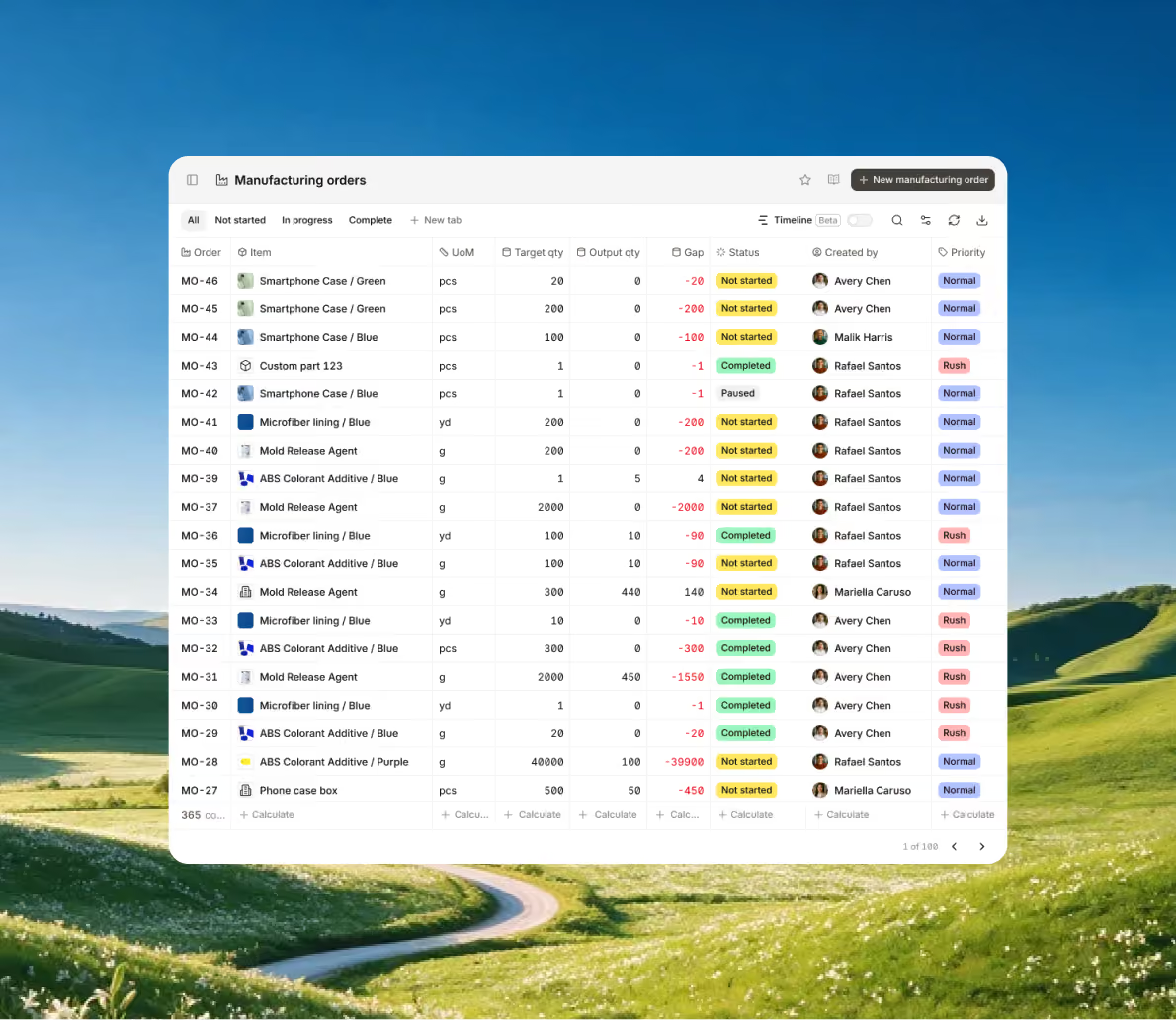
Track every item and job as it moves through production with live data that keeps your team aligned and informed.

Including:

  • Real-time tracking of work in progress across all stages
  • Clear visibility into materials, jobs, and inventory status
  • Automatic updates as production progresses
  • Centralized data for accurate decision-making

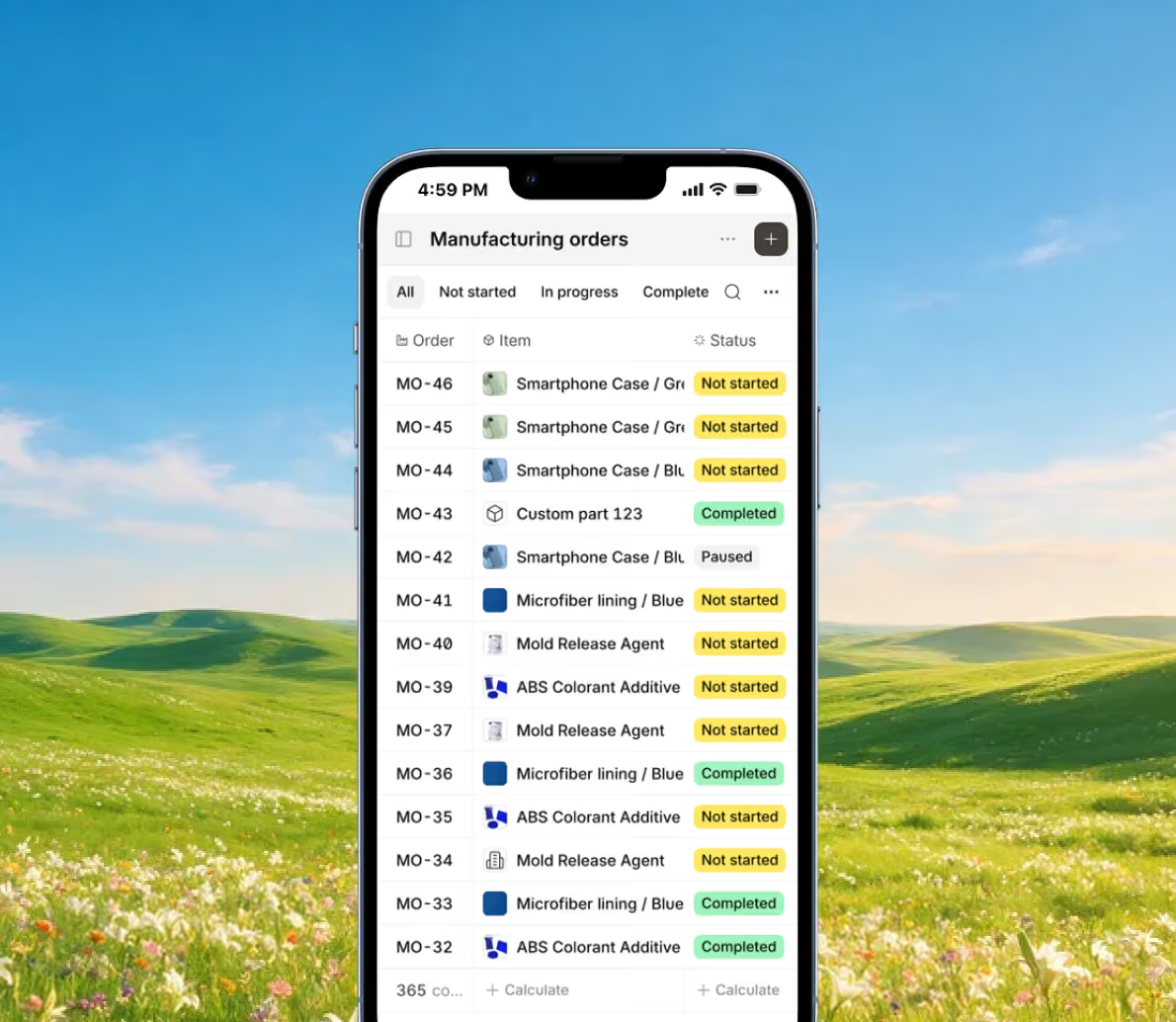
Production flow control

Maintain consistent production with a WIP tracking system that helps you monitor job progress and avoid delays.
Including:

  • Track job status from start to completion
  • Identify bottlenecks and delays early
  • Align production with available materials
  • Improve coordination across teams and workstations
why they chose DIGIT
Trusted by teams who can’t afford to slow down
“Digit immediately stood out as a system that was intuitive, cost-predictable, and aligned with our growth pace, without the complexity and cost of NetSuite.”
Bethany McCoy
Vice President, Ranger Outdoors
“Digit has given us insight into current and upcoming stock. This has allowed us to procure more before we stock out.”
Adam Davis
Shipping & Receiving Manager, Upstate Beverage
“Our entire system has become much more streamlined thanks to both the software itself and the brilliant team behind it. It’s intuitive, clear, and packed with clever features that are rarely found in other ERPs.”
Ricardo Miranda
CEO & Co-founder, Attica Studios
“With Digit, everything from our inventory to our production data is the word of truth. I can trust it. I can rely on it.”
Joshua Burris
Co-Owner, On Foot Innovations
“With Digit, our speed and efficiency has most likely doubled, triple, or quadrupled. Digit has allowed us on every front to be faster, more precise, and it is allowing us to scale.”
Eliott Montgomery
Owner, No.1 Raw Materials
“Digit has been amazing. I love having all the data at my fingertips. I can pull it up on my phone, I can get it on my laptop, I can get it remotely. At any given time I know how much material I’ve got in stock and before I couldn’t do that.”
Joe Watkins
Division Owner, RC Plastics
“Digit has helped us better understand the innerworkings of our warehouse and inventory in real time. I like the attentiveness. We are a small business, so it is extremely appreciated to receive the level of dedicated care that we have received from the Digit team.”
Jackson Barnett
Sales and Strategy, ChemTick Coated Fabrics
“The impact Digit has had has been enormous, saving a lot of time, capturing a lot of data, streamlining a lot of processes; With a system that everyone loves to use.”
Tanner Thomas
Operations Manager, VersaCourt
“As a beverage company producing our own products and contract manufacturing, we needed a unified platform for assembly, sourcing, and traceability. Digit offered the best mix of usability and functionality.”
Chase Brooks
Founder, SolidLiquid
“Digit has exceeded our expectations! They've transformed how we handle our business processes, providing seamless implementation and outstanding ongoing support. The software is both powerful and easy to navigate. We couldn't be happier with our choice."
Joel Rodriguez
Director of IT, Armored Republic
“Now being able to have the insight, here’s our expected usage, here’s what I have on order, and here’s what’s in stock, and levying that against the orders we have, prevents downtime and makes our business run smoother."
Ben Jones
Co-Owner, On Foot Innovations
"Digit is easy to use and clean. The API is open which is a huge sell and the team is very responsive. It is reasonable cost in time and cash to implement unlike other ERPs/MRPs we have considered."
Nathan Whitehouse
CEO, Drayhorse
"Having accurate real-time information let’s us know exactly what to ship, when to ship, without the headaches of having to go through all these Excel spreadsheets."
Dale Jackson
Shipping Manager, VersaCourt
"There comes a moment where an organization outgrows the capabilities of Excel. We were at that point. It was a band-aid and Digit came in and provided us a real solution to move forward and grow with."
Adam Bolin
VP Distribution & Fulfillment, VersaCourt
Chevron right iconChevron right icon

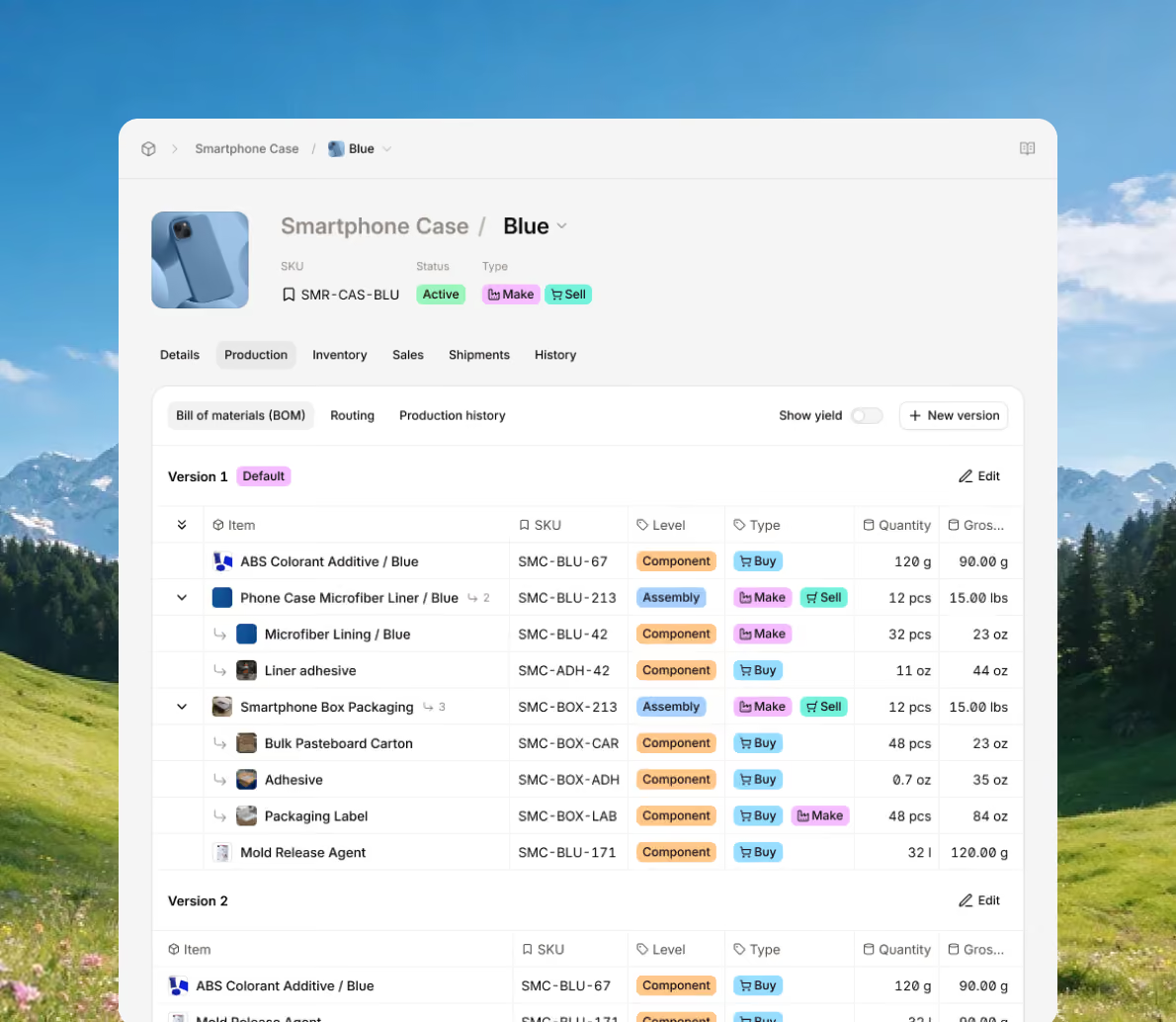
Multi-stage inventory tracking

Understand exactly where materials are within your workflow, from raw input to finished goods.
Including:

  • Track materials across production stages
  • Monitor quantities at each step of the process
  • Maintain accurate WIP inventory levels
  • Support complex and multi-level production flows

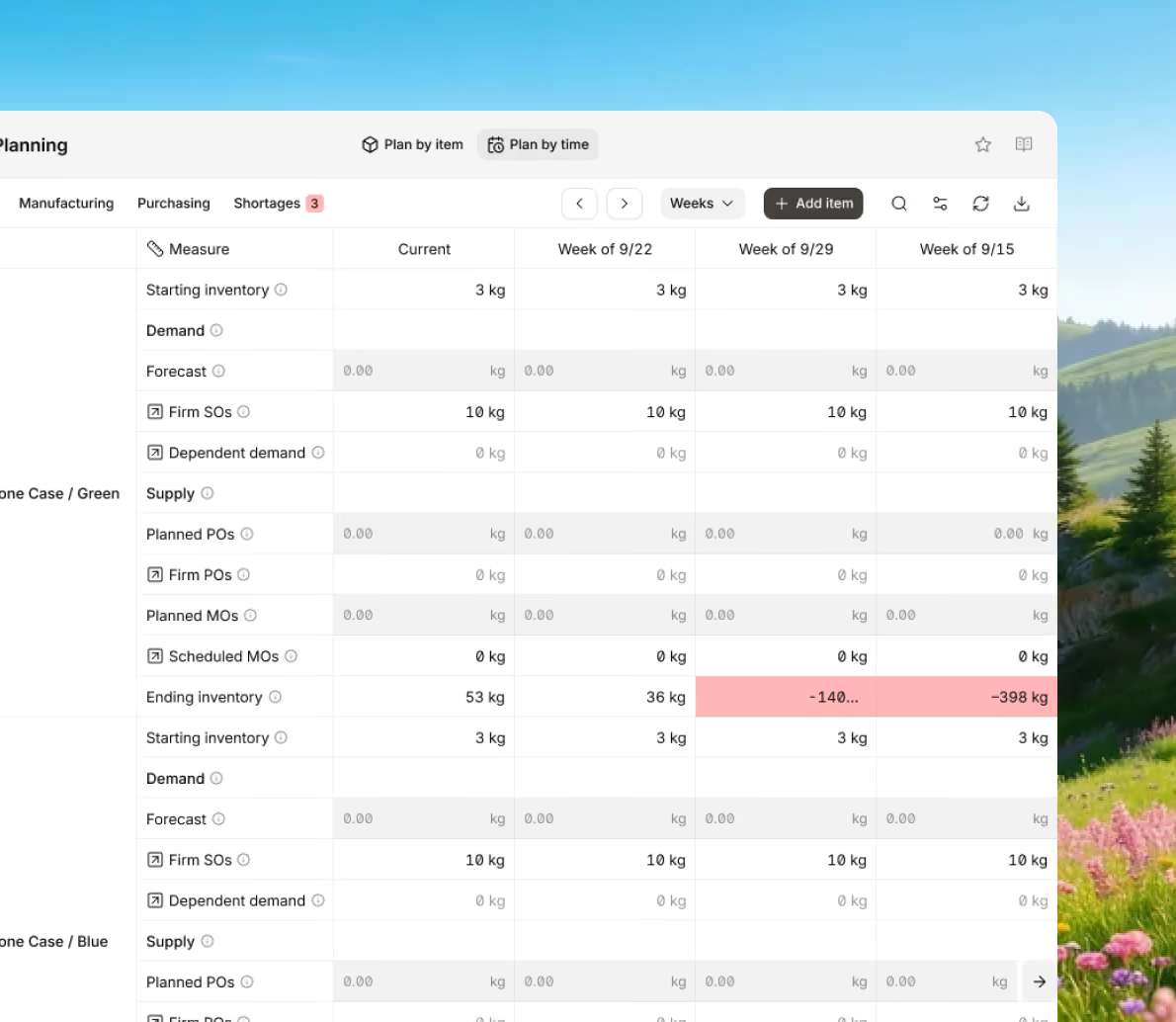
Forecasting and planning

Use real-time data to plan production and ensure materials are available when needed.
Including:

  • Forecast requirements based on live production data
  • Prevent shortages and excess inventory
  • Align purchasing with production needs
  • Improve scheduling accuracy across operations

Multi-location management

Track work in progress across multiple sites, warehouses, or production lines in one system.
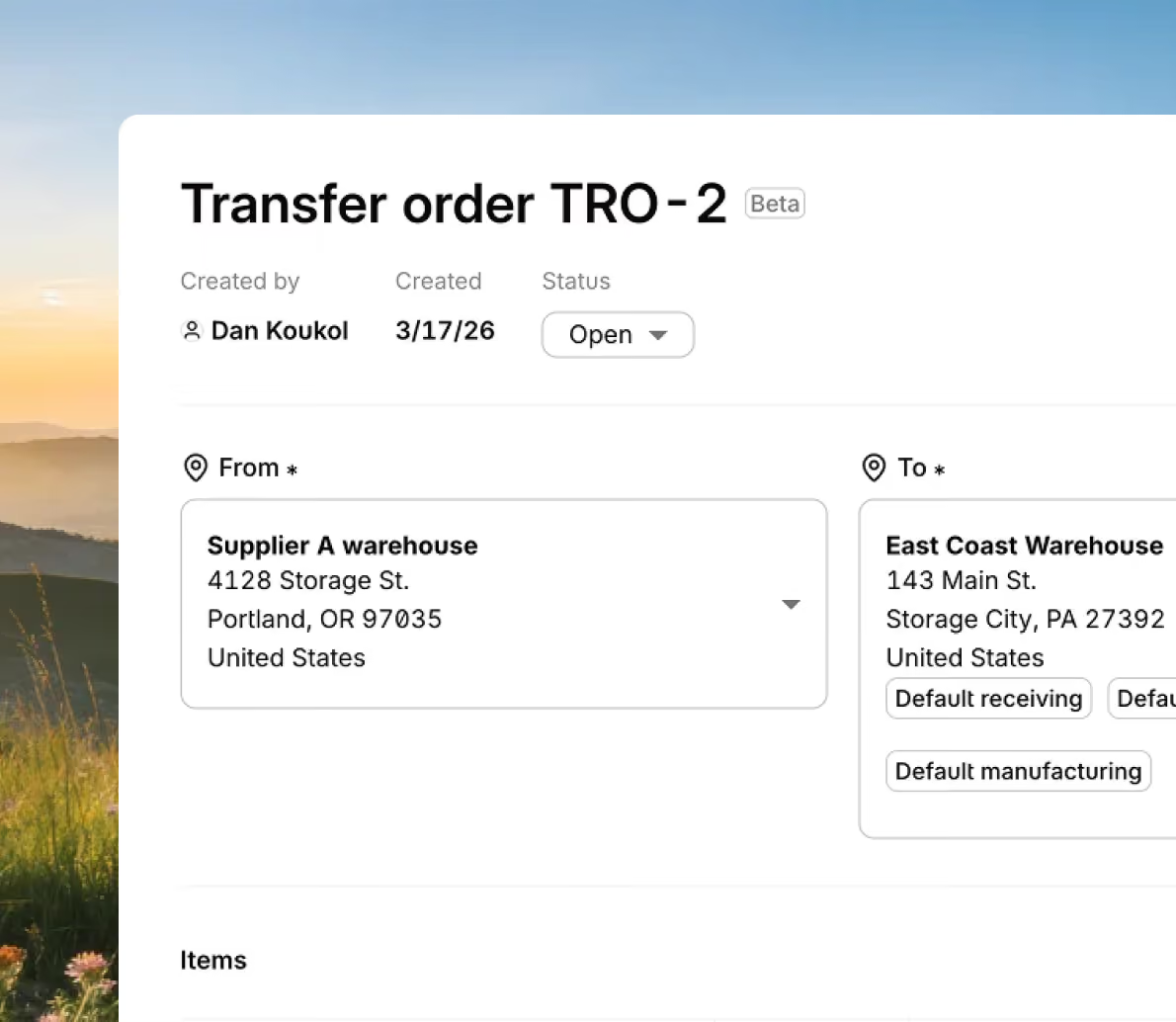
Including:

  • Unified view of WIP across all locations
  • Track transfers between sites in real time
  • Maintain consistency across distributed operations
  • Access data from anywhere with cloud-based software

Integration

A single source of truth for your business

Bring every sales channel and accounting tool together in one system with seamless syncing and flexible API access.

Real people. Real products. Real results.

frequently asked questions
We built Digit to make complex operations simple—and that includes our answers. Here’s everything you should know before getting started.
What does WIP mean in manufacturing?
Chevron down icon

WIP in manufacturing stands for Work-in-Process (or Work-in-Progress) and refers to inventory that has started the production cycle but is not yet completed. 

These are materials that have moved beyond the raw state and are currently being transformed into finished goods, sitting at various stages of production, such as: 

  • Assembly 
  • Machining 
  • Testing 

WIP represents the middle stage of inventory, positioned between raw materials and finished products. From a cost perspective, it reflects the accumulated expenses applied to partially completed goods, including: 

  • Raw materials consumed
  • Labor involved
  • Overhead, such as machinery usage and facility costs

Because these costs have already been incurred but the product is not yet sellable, WIP is often considered "capital tied up” in the production process.

Managing WIP effectively is a key part of running an efficient operation. 

High levels of work in progress can signal bottlenecks, inefficient workflows, or supply-and-demand imbalances. When items spend too long in a partially completed state, it leads to longer lead times, increased holding costs, and wasted resources. Maintaining the right level of WIP helps ensure production flows smoothly without interruptions or shortages.

How does WIP tracking software work?
Chevron down icon

WIP tracking software gives manufacturers a real-time, digital view of everything moving through production, replacing manual methods with a connected system that automatically updates as work progresses.

The software monitors the location, status, and flow of items as they move from one production stage to the next. Every movement (whether materials entering production, a subassembly being completed, or a job moving to the next workstation) is recorded automatically through barcode scanning, RFID tags, or other tracking inputs. This removes the need for manual data entry and keeps information accurate without extra effort from your team.

All of this data is displayed in a live dashboard, giving you a single, reliable source of truth for production activity. You can see which jobs are in progress, what materials are being used, and where each item sits in the production process. Because the system continuously tracks progress, it also surfaces bottlenecks. If items are consistently delayed at a specific stage, the software makes that visible so you can act quickly.

A WIP tracking system also connects to bills of materials, routing, and subassemblies, so you can see not just where an item is, but also which components are required and how it fits into the broader production process. This makes it much easier to manage complex manufacturing environments while keeping inventory, costs, and workflows aligned in one system.

What are the key features of WIP tracking software?
Chevron down icon

WIP tracking software gives manufacturers complete visibility and control over what is being produced, how it is being built, and where it is within the production process.

  • BOM management — Create and manage both single-level and multi-level bills of materials, defining every raw material, component, and subassembly required for production along with exact quantities and relationships. Being able to define the level of detail in your BOMs allows you to set up the WIP tracking system to accurately track how materials are consumed as work progresses.
  • Component and cost tracking — Define each BOM item to include its unit of measure, quantity, and cost. The system automatically calculates total material and production costs, and as work moves through production, you can compare planned versus actual material usage, monitor yield, and identify variances per manufacturing order.
  • Routing and workstation management — Define how production happens on the shop floor. You can create routes that specify each operation, the workstations involved, and the required resources, and connect this routing data directly to your BOM.
  • Subassembly automation — Automatically generate subassembly manufacturing orders, show available quantities in real time, and help plan buffer stock, ensuring intermediate builds are available when needed and fully integrated into production flow.
  • Version control — Track BOM changes over time while maintaining a full history. This ensures every item in production is tied to the correct specifications, improving consistency and traceability as designs and processes evolve.

Together, these features create a centralized, real-time view of production, linking materials, subassemblies, routing, and costs into one system so teams can make better decisions and keep operations running smoothly.

How is WIP inventory calculated and valued?
Chevron down icon

WIP inventory is calculated by tracking all costs invested into unfinished goods and determining how much remains tied up in items not yet complete at the end of an accounting period. The formula is:

Beginning WIP Inventory + Manufacturing Costs – Cost of Goods Manufactured (COGM) = Ending WIP Inventory

The process starts with the value of unfinished goods carried over from the previous period. To this, you add manufacturing costs incurred during the current period — covering raw materials consumed, direct labor, and manufacturing overhead such as equipment, utilities, and facility expenses. You then subtract COGM, which represents the total cost of items completed and moved into finished goods, isolating only the costs still tied up in partially completed items.

WIP inventory is recorded on the balance sheet as a current asset. Because items in WIP are at different stages of completion, manufacturers often use a percentage-of-completion approach — estimating how far each item is along and applying that percentage to the total expected production cost. WIP is typically valued at the lower of cost or net realizable value (NRV), ensuring the recorded value does not exceed what unfinished goods are expected to be worth once completed.

Accurate WIP calculation matters both financially and operationally. On the balance sheet, it ensures inventory values correctly reflect resources tied up in production. On the income statement, it directly affects the cost of goods sold and gross profit. Operationally, if too much value is sitting in WIP, it may indicate bottlenecks or inefficiencies worth addressing.

welcome to Digit

Manage your operations beginning to end

Seriously capable. Remarkably intuitive. Digit brings inventory, production, and sales into one connected system, implemented in weeks, not months.