%201.svg)





What Is the Pick, Pack, Ship Process?

The pick, pack, ship process is a sequence of steps that warehouse operators follow to convert a sales order into a package for shipment.
This process is triggered every time a sales order is created and finished once a product has been handed over to the carrier for delivery. We’ll explore each step in greater detail later in the article, but essentially the process is as follows:
- Picking — Specific items that need to fulfill one or several sales orders are located and removed from storage.
- Packing — Those items are placed into the appropriate packaging for transit, and a packing slip and shipping label are generated and printed.
- Shipping — The package is handed over to the carrier, with the printed labels being applied to the package.
Sounds nice, easy, and straightforward, right? Wrong.
The pick, pack, and ship process requires a huge amount of coordination within your warehouse and with external carrier partners. And, the higher the volume of products and orders being managed by your business, the higher the complexity of getting everything running smoothly to fulfill orders.
That’s why we decided to write this article to help you better understand the process and figure out ways to optimize your warehousing.
The Picking Stage

Picking is where it all starts, with a sales order that needs filling and a warehouse full of products to fulfill it.
This stage is actually the most critical of all, and it is the most expensive by far, accounting on average for around 55% of total warehouse labor costs. To keep these costs as low as possible, you, your warehouse managers, and operators will need to make investments into:
- The layout of the warehouse
- Space utilization
- Staffing strategies
- Technology
To help you get started with optimization, here are some picking strategies you can implement into your workflow.
Picking Strategies
One method might work for one company, but it doesn’t mean that it’s going to work for your company.
The right approach depends on your specific business, based on:
- Order volume
- Warehouse size
- SKU count
- How orders are structured
Here are just some strategies other businesses take.
Single Order Picking
A picker is assigned to one order at a time.
Following this method, when an order comes in, your warehouse operator will only be focusing on the location and collecting the specific items needed for that one order, and taking everything to the packing station. The benefit of this method is that it’s super simple to implement, with a low error rate as the picker's focus is solely on the one order.
It likely goes without saying that this simple method is only really beneficial for a specific setup, where your business has low-volume operations or holds high-value items that require careful handling.
The biggest issue with this method is that it’s not scalable.
Batch Picking
With batch picking, you’re going to send your warehouse operator on an adventure, picking items throughout the entire warehouse for multiple sales orders in a single trip.
Implementing the batch picking strategy can help reduce travel time and works better with a warehouse layout that has been optimized to ensure that the most popular SKUs that customers order are on the same route.
The issue with this strategy is that it can lead to mix-up errors when multiple orders are picked simultaneously.
Zone Picking
Here, a sales order will pass through different zones, and in each zone will be a warehouse operator responsible for picking the items within their zone.
This means an order will move through the warehouse, and the operators will add items to it if necessary, reducing congestion and allowing pickers to operate faster as they will become familiar with their zone over time. A great benefit with this method is that it’s easy to scale as headcount and volumes grow.
The challenge lies in consolidating multi-zone orders and determining who and how the order should move through the zones.
Wave Picking
This method groups orders together based on a shared characteristic and releases those orders for picking altogether.
The characteristics can be based on whatever makes the most sense, but are usually grouped by:
- Carrier cutoff
- Ship date
- Destination region
This method is best for businesses that work with shipping schedules and manage either multi-channel or omnichannel sales. However, to get the wave-picking strategy working properly for you, it will require a lot of upfront planning and even an investment in distribution software to help you track and release sales orders for picking all at once.
The Packing Stage

After the picking stage comes the packing stage, and beyond the obvious fact that this is where items are packed, ready for shipping, it’s also the last chance your business has of catching any picking errors before they reach the customer.
Once the items are all packaged up, labeled, and shipped, the mistake will now become:
- A return
- A replacement
- A damaged customer relationship
This means the first thing we have to do at this stage, before anything else, is to verify that the items picked are correct, something that will take a couple of seconds with barcode scanning and save you from the costs of having to fix the issue after delivery.
The efficiency at your packing stage is going to have a direct impact on your shipping costs and damage rates of items in transit.
For example, using a box that’s too big wastes material, leaves room inside the package for the product to shift and move during transit, and costs more due to dimensional charges from carriers (a fee that can catch you off guard since most only think that charges come from weight). This means you should be stocking a variety of different box sizes to cover most of your order profiles to avoid having to think of custom packaging solutions when it comes to shipment. Outside of packing, it’s best practice to keep a close eye on dimensional weight charges too (at a monthly interval is fine), to understand if your current collection of boxes is becoming a cost problem for you.
And it’s not just the packaging you need to worry about, but the items you're shipping.
Fragile items need extra protection, and before you commit to shipping a large volume of packages, you should test shipping samples. This can either be specialized packaging or extras such as:
- Bubble wrap
- Packing peanuts
- Other dunnage
Damage in transit is the responsibility of the shipper, but it’s the customer who suffers, and damage is almost always preventable with the right packing standards in place.
Once you understand the size of the boxes you need and any additional protection that's required, the next step is to define the process for packing to reduce packing time and guarantee the same packing results each and every time. This means thinking about how each of your products needs to be packed:
- Which box
- Which filler
- Which orientation
- Whether an insert is included
Having these standards saved and documented, either printed off at the packing station or accessible via packaging software, will help you maintain consistency as your teams grow or change.
The Shipping Stage

Shipping is the final warehouse step, but the decisions made here have a direct effect on cost, delivery speed, and customer satisfaction, and you will need to choose:
- The carrier
- The service level
- When to cut off picking
It is also where the cumulative impact of everything that happened in picking and packing becomes visible.
A well-run pick and pack operation that misses its carrier cutoff still ships late.
Label Generation
You have an option here to either have a manual system, where a huge batch of templates are printed off and filled in with a pen, or to have them generated automatically and printed for each order based on:
- Weight
- Dimensions
- Destination
- Service level
- Carrier preference
Manual label creation is slow and error-prone at volume, and a label mistake (wrong address, wrong service level, sloppy handwriting) can be as damaging as a pick error.
Carrier Selection
For operations shipping with multiple carriers, selecting the right one for each package matters more than defaulting to the cheapest option.
A carrier that saves $1.50 per package but delivers two days later might appear cost-effective on a spreadsheet, while quietly eroding repeat-purchase rates. Effective carrier selection balances cost against:
- Delivery speed
- Destination coverage
- Any service level commitments made to the customer
Cutoff Times and Dock Scheduling
Every carrier has a daily pickup cutoff, and missing it means the order ships a day late, regardless of how efficiently it was picked and packed.
Building the entire pick-pack schedule backward from carrier cutoff times is one of the most effective ways to protect on-time shipping rates. If a carrier pickup is at 4:00 PM, the last pack-to-ship handoff needs to happen by 3:30 PM, which means the final pick wave should release no later than 2:00 PM.
In larger operations, dock scheduling ensures outbound loads are staged and ready without creating congestion at the shipping bay.
Tracking and Customer Notifications
Once a package ships, the tracking number should be automatically returned to the customer.
This is not just a convenience, but a meaningful reduction in inbound customer service volume. 'Where is my order' inquiries are among the most common contacts for e-commerce support teams, and operations that send proactive shipping confirmations with tracking links see measurably fewer of them.
Real-time tracking has also become a baseline customer expectation, and failing to provide it creates unnecessary friction in the post-purchase experience.
Pro tip: If you’re looking for software to optimize these processes, then we recommend checking out our article on The 7 Best Warehouse Management Software.
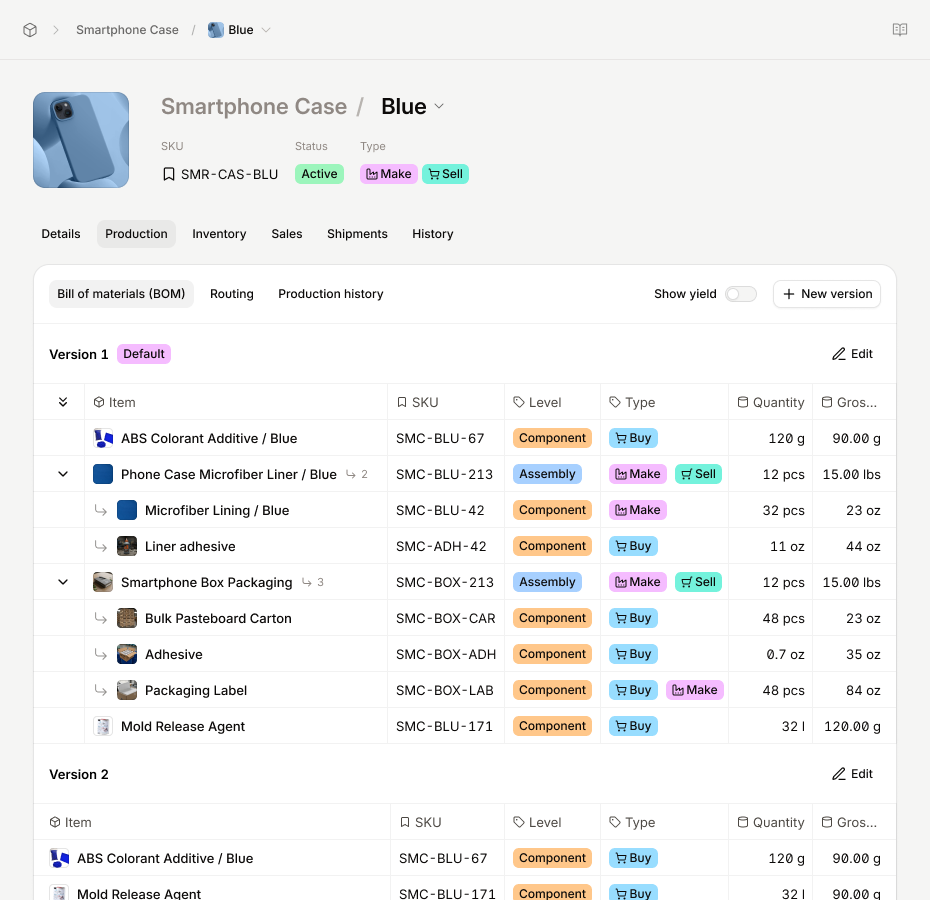
How Software Connects the Full Fulfillment Operation
.jpg)
Each stage of the pick, pack, ship process has its own operational challenges, but the biggest inefficiencies in fulfillment rarely live within a single stage.
A warehouse can pick accurately, pack efficiently, and still ship late because inventory counts were wrong when the order was accepted, or because a reorder wasn't triggered before a key SKU ran out.
This is where the warehouse management system comes into play.
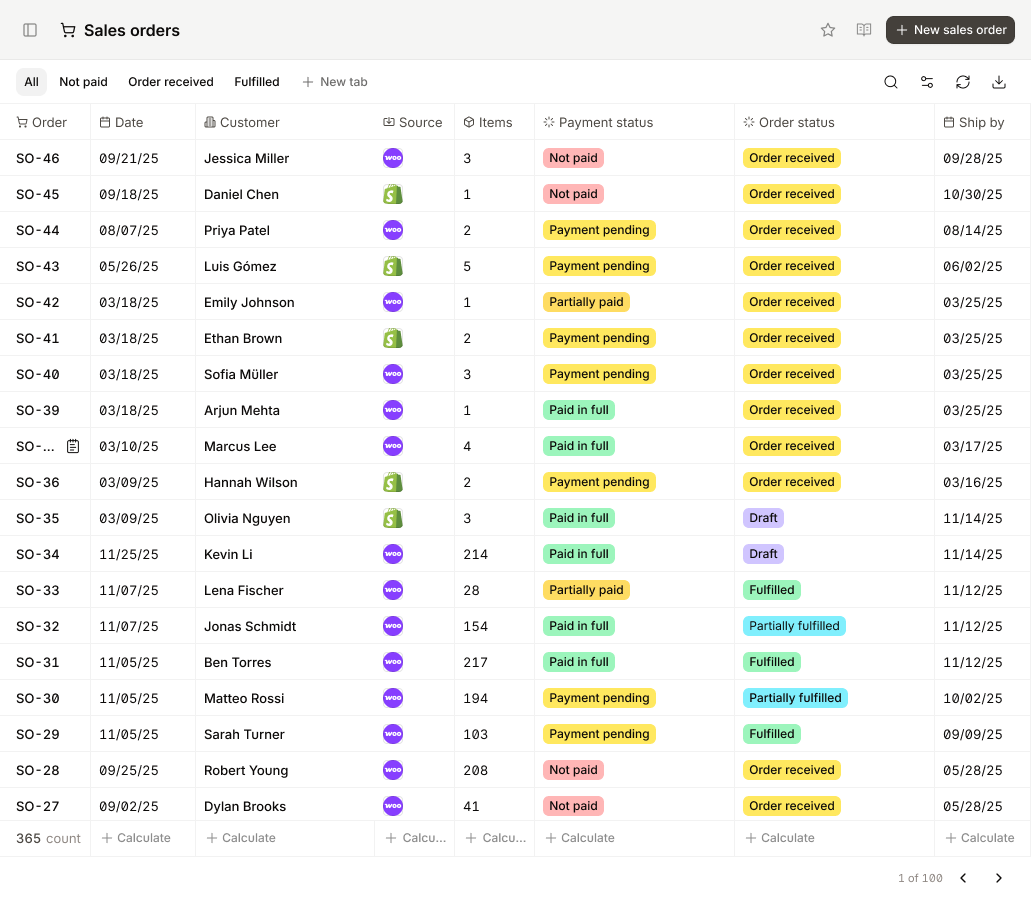
It gives you and your warehouse operators multi-location inventory visibility, so when stock is tracked in real time across every warehouse, sub-location, and bin, the data driving picking decisions, packing confirmations, and shipping manifests all draw from the same source. There is no lag between what the system shows and what is physically available, which means fewer orders are accepted for items that are actually out of stock, and fewer mid-fulfillment discoveries that a location is empty.
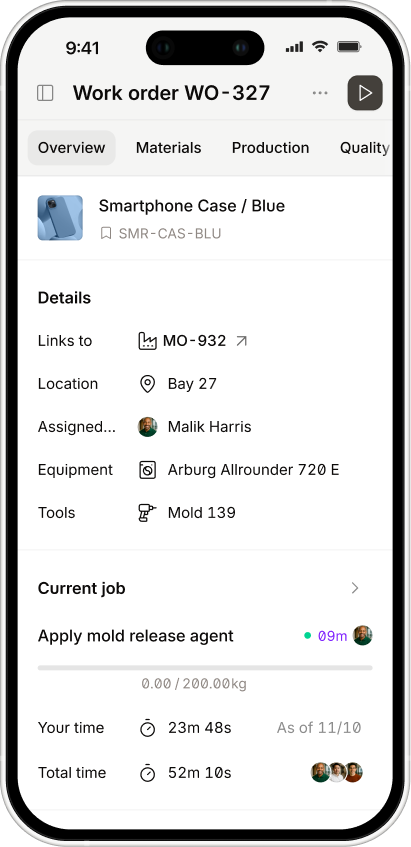
Are you looking for a tool to help you get your picking, packing, and shipping processes under control? Introducing Digit, a WMS that can help you automate your processes to reduce carrying costs and optimize inventory management at multiple locations.
See for yourself by try chatting with Digit's free AI demo and start optimizing your warehouse operations today.


.jpg)

.jpg)