%201.svg)




Overview
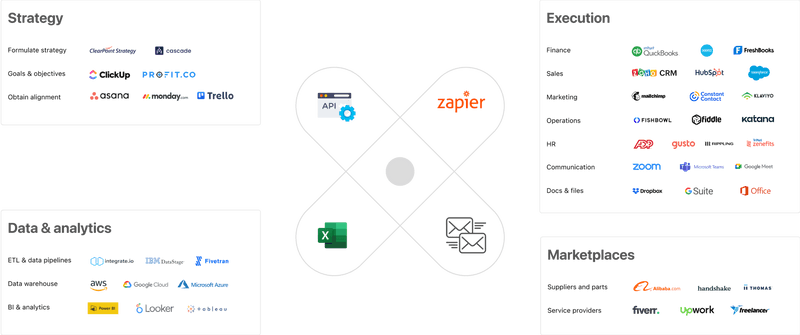
Most organizations use dozens of systems to manage operations, and for the most part, none of these systems talk to each other or to any central system in a way that enhances the organization’s ability to operate at a higher level.
Departmental silos are prevalent, accountability and alignment are lacking, and organizations as a whole are underperforming. In addition, these organizations are disconnected from external marketplaces that would easily allow them to connect with suppliers, customers, investors, and more.
We believe that the effort to integrate this fragmented system landscape via current market solutions (niche application, APIs and system aggregators) is, secretly, a band-aid on the root cause.
For us, solving the problem goes a step deeper and requires eliminating these separate systems entirely. The solution is not to utilize an integrated system, but rather to utilize a singular system.

A great solution requires three parts.
Part 1: A standardized and holistic management framework
Similar to how financial statements standardized accounting and finance, a management framework would provide a standard template that organizations could use to operate effectively.
At its core, this framework would develop a core identity (mission, vision, values), use that to craft strategy, break strategy down into action items, align employees to complete those activities, measure the data produced by those activities, and review that data to determine if the strategy needs to be revised or not.
“So how can organizations create an empowering understanding of the business deeper within their firms? The answer lies in creating a shared view of how the organization works – an explanation of how the operations of the firm ultimately create value in bottom-line financial terms. This shared view of the organization can help establish a common perspective and language for discussing firm performance. With this common view and language in place, it should become much easier for leaders to communicate how the organization is performing and in which areas the organization most needs improvement. It can also make it easier for leaders to understand and evaluate each other’s opinions and suggestions, because the shared language provides a consistent backdrop for what they think and why they want to pursue certain actions. Equally important, the shared perspective can help educate many people deeper within the organization which, in turn, can help improve their ability to contribute to the performance of the organization.”
“Why can’t all employees think like owners? A lofty goal, but one often comes across as an empty slogan. Even if all involved want a company to prosper, do all parts of the organization really understand what makes the business succeed?”
The purpose of a Digit operating system is to provide organizations with a central framework from which to view and manage. Organizations must perform the following activities to operate at a high level:
- Craft a plan based on external threats and opportunities and internal strengths and weaknesses
- Execute on the plan by making progress on its associated initiatives and activities
- Measure the actual results produced from these activities
- Learn from the results to change the plan quickly or continue as planned
Part 2: A singular software platform that allows the framework to be used by the entire organization.
Integrated point-solutions add to an organization’s systems complexity and further distance businesses from the ideal flow of doing things in one place. This problem is also getting worse. According to Statista, the average number of SaaS applications used by organizations globally has increased from 8 in 2015 to 110 in 2021.
We believe the value is in the presence of the products on one platform. This would allow for faster performance, SaaS cost savings, common design patterns, better alignment, and an overall better user experience.
Organizations are propelled forward by the nature and speed of the work done by each of the organization’s individual members and teams. This is where alignment and execution come in.
Part 3: An interconnected marketplace that connects organizations in a more efficient B2B ecosystem.
If organizations are using the same framework and platform, connecting organizations with each other now becomes streamlined and much more effective. Sourcing suppliers, customers, investors, talent and resources is now an auto-loaded table away.
In summary, we exist to help organizations improve performance by equipping them with a:
- Standardized/holistic management framework
- Singular software platform
- Interconnected global marketplace
That’s who Digit is, and that’s what we do.




.jpg)