

What Is Food Manufacturing Automation?
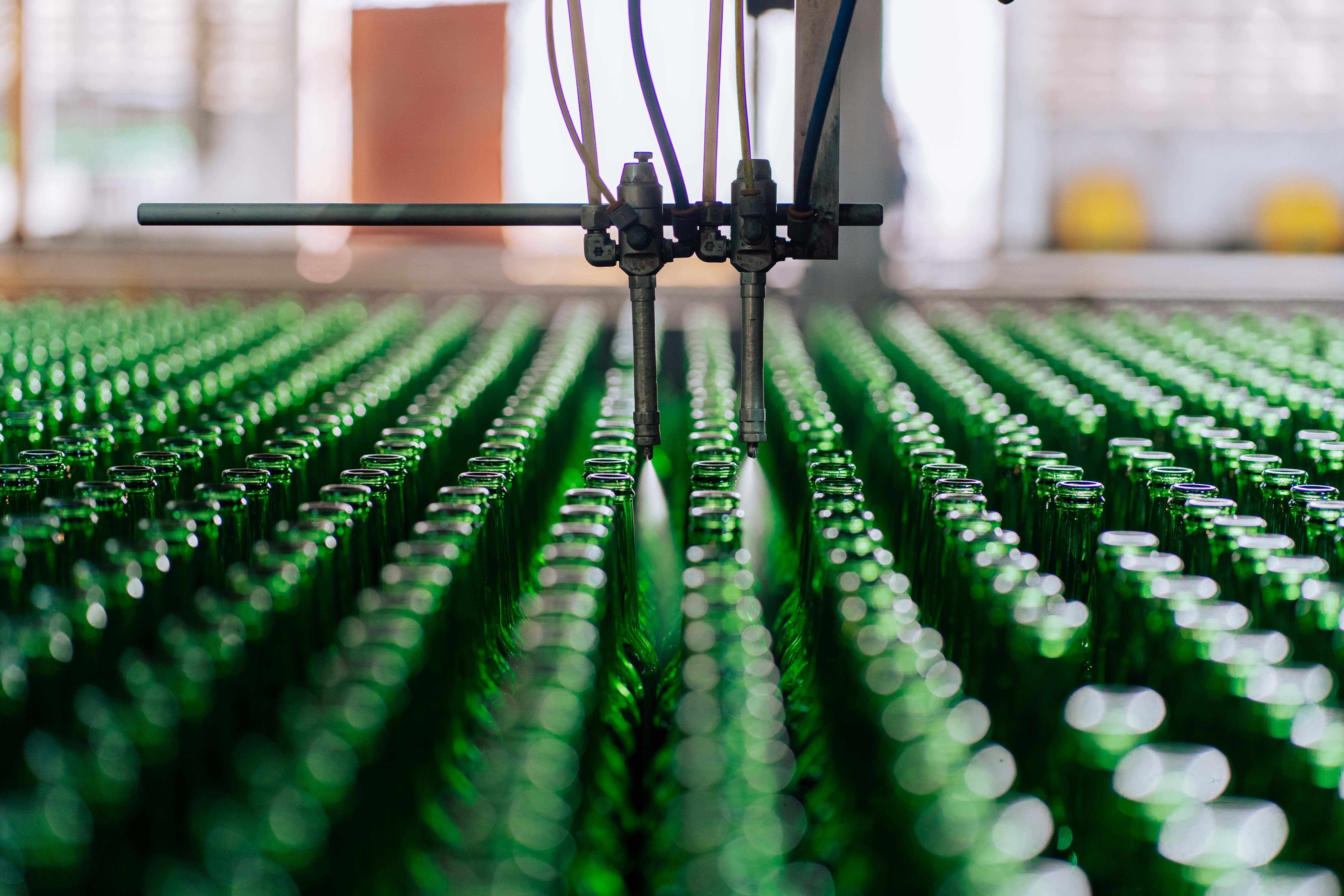
Automation in the food industry refers to using advanced technologies to handle the food manufacturing processes with as little human intervention as possible.
However, with the boom of AI, automation in the food processing industry can be found and implemented in the entire supply chain, so you can find advanced tech already being used across areas such as:
So, these are all the different types of technology you can expect to find if you're someone looking to bring automation into your food manufacturing business.
However, it’s not a matter of just grabbing some Roombas and reprogramming them to drag around inventory as they clean. If you’re going to automate in the food industry, there are three levels to successfully adopting this tech into your business.
The Three Levels of Food Manufacturing Automation
Just as nutrition has its food pyramid, manufacturing has its own hierarchy: the Industry 4.0 automation pyramid.
This pyramid is a structural hierarchy that governs how automation technology should operate across an entire business, covering everything from millisecond machine decisions on the factory floor to supply chain planning at the corporate level.
When you automate your food manufacturing processes, ensure that data flows freely between all three tiers of food manufacturing automation.
Process Level — Device & Control
Starting at the foundation of the pyramid, we have the process level — this stage is focused on how raw materials are converted into finished products.
At this stage, a manufacturer is evaluating how their sensors and actuators will transmit the data they collect to the relevant systems. The two most commonly used systems are Programmable Logic Controllers (PLCs) and SCADA systems.
With these systems set up and the cameras properly implemented, this equipment can run autonomously without a human operator needed, and they will be able to:
- Change the speed of conveyor belts depending on the weight moving along the line
- Manage the pasteurization process by ensuring the temperature is high enough to kill bacteria
- Perform precise measurements of raw materials when moving them into production
- Manage and run the entire cleaning process (called Clean-in-Place, or CIP) from start to finish
And the best part of it all is that with this tech, all this happens within a fraction of a second, all the while keeping food safe and maintaining the same quality with the final products.
Production Level — Manufacturing Execution
Moving up to the production level of the pyramid, we’re now focusing on the software you implement to help you manage your manufacturing operations.
There are many tools you can implement at this stage to help you, but the two most common are probably Manufacturing Execution Systems (MES) or Food Traceability Software. Regardless of which one you choose, you only need to make sure that the system you pick is capable of managing:
- Raw material
- Batch sequences
- Packing, labeling, and palletizing coordination
Whether you're using a fully automated production line, human operators, or a mix, the purpose of this software is to centralize production supervision and reduce how much manual data entry is needed as operations run.
With automated tools and robotics, your software and machinery should finally be able to share data back and forth, keeping production lines running without audits or operators having to spend time filling out paper forms and completing reports.
Business Systems Level — Enterprise
Finally, we have reached the tippy-top of the pyramid, and this is implementing some more software that brings all the raw material, production, and business data together to help business leaders make more informed decisions.
Here you’re going to be looking into implementing tools like Enterprise Resource Planning (ERP) and Advanced Planning and Scheduling (APS) to take advantage of features such as:
- Demand forecasting
- Procurement
- Inventory management optimization
- Supplier management
- Capacity planning
When an ERP is fully integrated with the production level below it, a new customer order can automatically generate production orders, allocate raw materials into production, and schedule capacity to fulfill the order with no need for anyone to step in and assist the tools in this process.
The business systems level is where factory performance translates into profitability and market alignment.
The 4 Reasons Food Manufacturers Are Automating Now
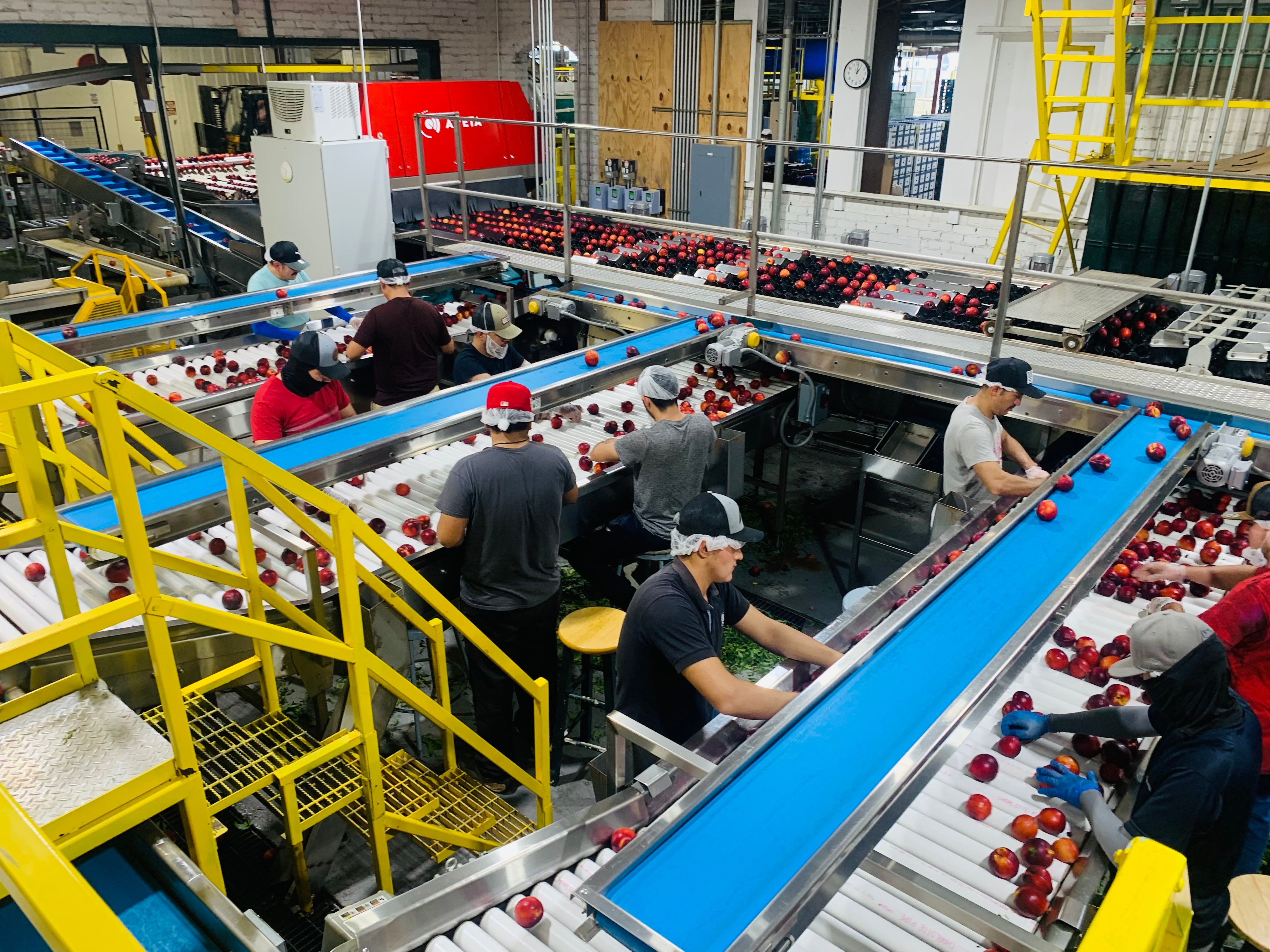
Besides the fear of being left behind as Elon and every other tech bro on the planet scream at us that we’re left behind, there are some legit and even pretty concerning reasons as to why automation in the food industry is becoming more and more common.
The worldwide market for fully automated restaurants reached $8.7 billion by 2025, and according to some industry projections, this figure will climb to $28.4 billion by 2034, an annual growth rate of 15.2% over that nine-year span.
Here are four reasons why automation investment is increasing across the US food and beverage industry.
1. Labor Shortages
Food manufacturing consistently struggles to fill physically demanding roles (particularly in cold storage and freezing environments), and retention remains a persistent problem.
Robotics absorbs these hard-to-staff positions while freeing human workers for higher-value roles in quality oversight, line management, and process improvement.
2. Quality Control and Food Safety Compliance
AI-enabled vision systems inspect every unit at full line speed, catching defects, verifying portions, and flagging seal failures that human inspectors would miss through fatigue alone.
The same systems generate the audit trails that regulators and retail buyers increasingly require, making quality control automation a compliance investment as much as an efficiency one.
3. Waste Reduction
AI and automation in the food and beverage industry have allowed businesses to improve profitability, even though it’s a commodity-driven industry where input costs are largely outside manufacturers' control.
How businesses have achieved this is by using advanced tech to help reduce packaging overuse and minimize spoilage with:
- Precision portioning
- Automated sorting
- Digital inventory tracking
4. Operational Flexibility
Older factory production lines were built to do one job and don't change easily. But food companies are now facing bigger challenges, such as:
- More SKUs
- Demand that shifts with the seasons
- Unpredictable supply chains
Automation in the food industry has helped businesses make their lines more efficient, enabling them to control and adapt their operations more easily and overcome challenges that emerge without delaying or stopping production.
So, with the possibility to improve profit margins that were already paper-thin to begin with, it’s no wonder the use of automation in the food industry is becoming so popular.
However, before you go and convert your pie-making factory into something that resembles Skynet from The Terminator, upgrading your production lines isn’t all sunshine and ice cream. To ensure you’re implementing automation successfully, here are some challenges to be aware of.
Common Challenges in Food Manufacturing Automation
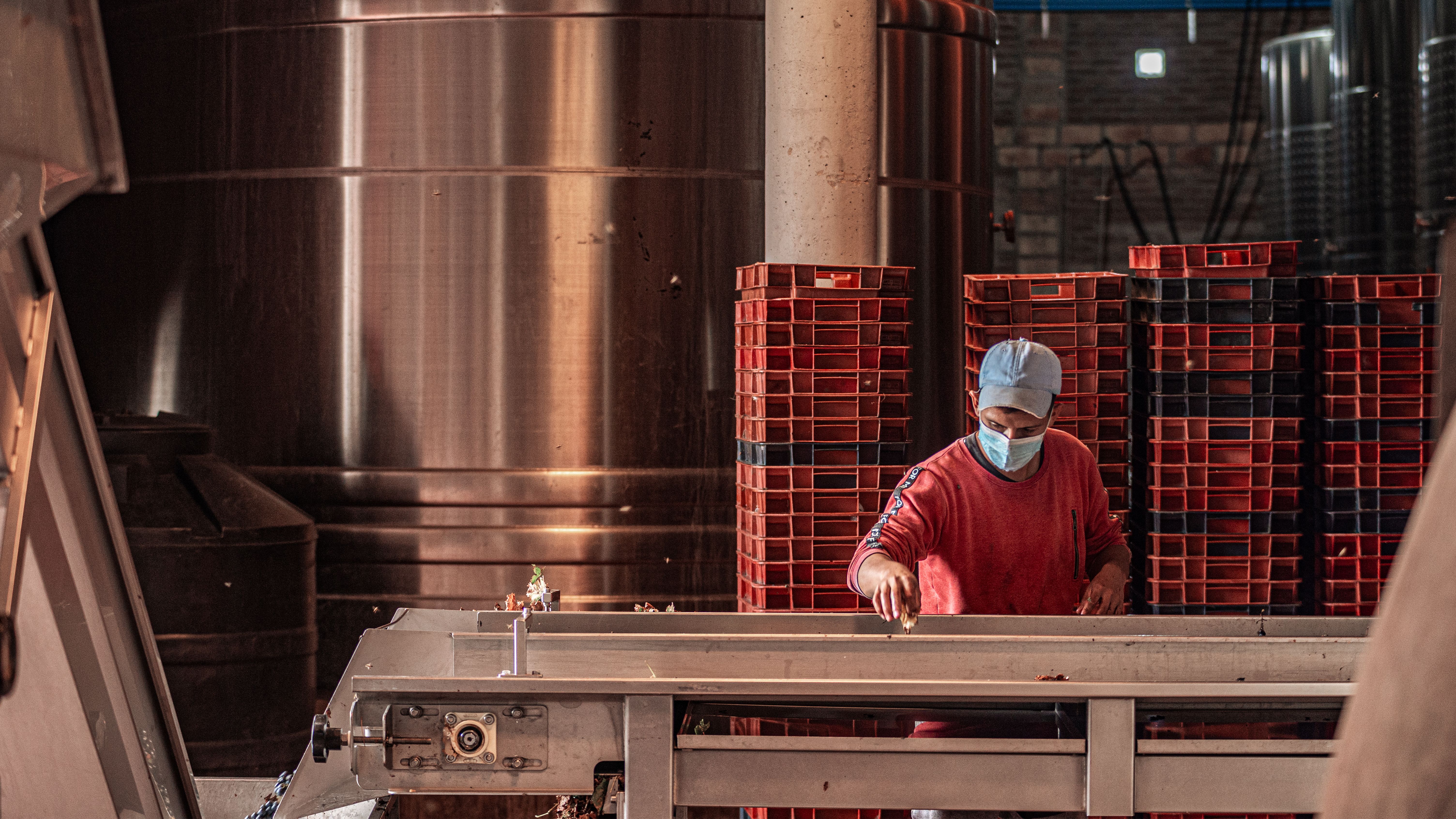
Food manufacturing presents automation challenges that don't exist in other industrial sectors.
The variability of raw ingredients, the physical demands of hygienic environments, and the complexity of integrating modern systems into existing facilities create implementation barriers that manufacturers need to plan for explicitly.
1. Product Variability and Fragility
Unlike automotive or electronics manufacturing, food products are soft, irregularly shaped, and change consistency depending on temperature, ripeness, and batch composition.
Traditional rigid tooling and grippers struggle to handle this variability without bruising, tearing, or mishandling the product. Solving it requires adaptive end-of-arm tooling, vision-guided robotics, and in many cases custom engineering for specific product types.
2. Harsh Washdown Environments
Food facilities operate under USDA and FDA sanitary standards that require daily high-pressure washdowns with caustic chemicals, often in environments that swing between freezing and ambient temperatures.
Automation equipment must be rated for these conditions — standard industrial hardware is not, which narrows the available equipment options and raises per-unit costs compared to other manufacturing sectors.
3. High Capital Requirements
Robotics, vision systems, and the infrastructure required to retrofit older facilities represent substantial upfront investment.
For smaller manufacturers, the capital barrier is the primary constraint, and the ROI case (however strong over a 12–24 month horizon) requires financing structures and phased implementation plans, since smaller manufacturers can't absorb the upfront cost the way larger operations can.
4. System Integration and Legacy Infrastructure
Most food facilities were designed around human labor, with layouts, workflows, and line configurations that don't map cleanly onto automated systems.
Retrofitting modern automation into these environments often requires structural modifications, new conveyor routing, and significant software work to connect new equipment to existing ERP, WMS, or MES platforms. Supply chains compound this. With suppliers, distributors, and retailers each operating different systems, achieving end-to-end data integration across the network is rarely straightforward.
5. Traceability and Compliance Integration
Automated systems must connect seamlessly with HACCP, ISO 22000, and FSMA compliance frameworks, feeding batch and lot data into traceability records in real time.
A system that automates production but creates gaps in the compliance record can create regulatory exposure that outweighs its operational benefits. Integration with Warehouse Management Systems for FIFO inventory control adds another layer of complexity, particularly where major retail customers mandate consecutively numbered batches and tightly controlled expiry date sequencing.
6. Packaging Diversity and Changeover Complexity
SKU proliferation means production lines must handle a wide range of container sizes, materials, and formats.
Each changeover introduces reconfiguration time and the risk of setup error. Automation reduces per-unit labor on any given run, but delivers its full return only when changeover procedures are engineered for speed and repeatability — which requires an upfront investment in modular line design that many facilities haven't made.
And there you have it! Everything you need to know to start joining in on the trend of implementing automation in the food industry. If you want to get a head start on implementing a software, we recommend checking out Digit — a tool designed to help food and beverage companies manage their entire business.
Automating Food Manufacturing with Digit
.jpeg)
Digit is a production and inventory platform built specifically for food and beverage manufacturers, replacing disconnected spreadsheets and manual processes with a single connected system that covers scheduling, stock control, and compliance tracking. Unlike traditional ERP implementations, Digit is designed to go live in weeks rather than months.
Production Scheduling
Digit’s production scheduling sequences are generated automatically based on open orders, current inventory levels, and facility capacity.
Planners get a real-time view of what can be produced, when, and with what materials — without manually reconciling spreadsheets across departments.
Bill of Materials and MRP
An MRP system links Bills of Materials directly to live ingredient inventory.
When a production run is planned, Digit calculates material requirements automatically and generates purchase orders to prevent shortages and over-purchasing. BOM versions are tracked, so recipe changes don't create discrepancies between planned and actual costs.
Lot Traceability
Every material movement and production run records lot data in real time, building a complete chain of custody from incoming raw ingredient to finished, packed product.
This means audits, regulatory inspections, and recall investigations can be handled by querying the system rather than manually reconstructing records.
Inventory Control
Digit maintains live stock counts across multiple sites and storage locations, tracking raw materials, packaging, and finished goods simultaneously.
FEFO (First Expired, First Out) rotation is enforced automatically, and reorder points trigger purchasing alerts before stockouts affect production schedules.
If you would like to see Digit in action, you can always book a call with us, and we’d be happy to give you a demo.
.jpg)