


What Is Light Manufacturing?

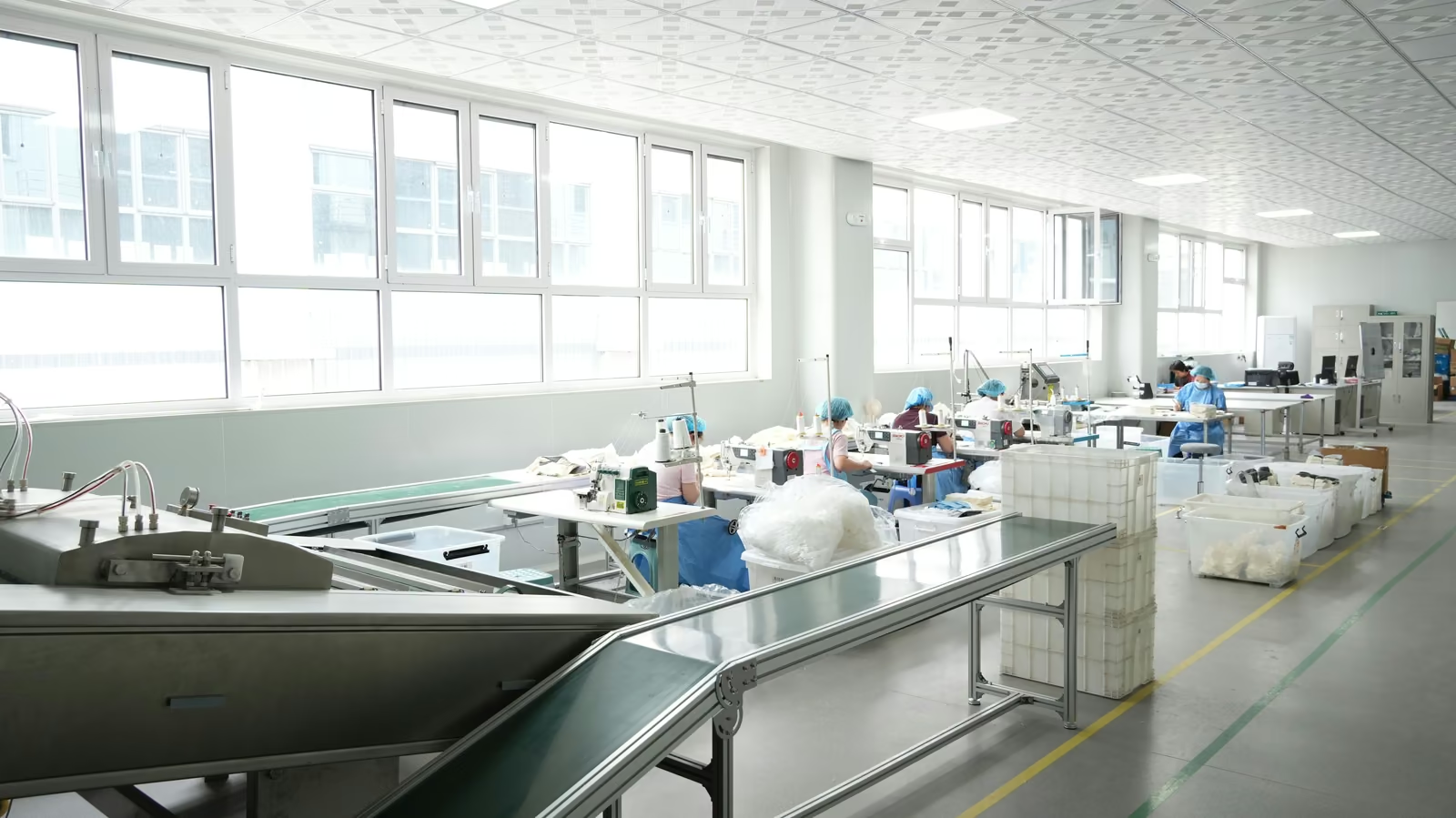
Light manufacturing isn’t the process of making lamps or lightbulbs, but a type of production process that takes place on a smaller scale, using a smaller quantity of raw materials or sub-assemblies with no heavy equipment, producing products such as:
- Food items
- Electronics
- Clothing
- Shoes
- Toys
- Furniture
Light manufacturing tends to require less capital to get up and running (compared to heavy manufacturing), consumes less energy, releases fewer emissions, and doesn’t usually require specialized technology. The light manufacturing process usually involves relatively straightforward steps like:
- Assembling
- Fabricating
- Processing raw materials or components into a finished product
However, if it’s still difficult to understand exactly what light manufacturing is, one useful way to determine whether a business uses it is to analyze the product. If the finished product is intended for a single customer, it’s light manufacturing. However, if the end consumer is something like a geographic area or a network like utilities, infrastructure, or equipment for other industries, it's then going to be heavy manufacturing.
Now, let’s delve a little deeper to understand how to distinguish light manufacturing from heavy manufacturing.
Light Manufacturing vs. Heavy Manufacturing
.jpeg)
Another way to break down the difference between light manufacturing and heavy manufacturing is whether the manufacturer is a B2B or B2C business.
Clothing, consumer electronics, processed food, furniture — these types of products usually go directly to an individual customer, whereas the products from heavy manufacturing are:
- A steel plate destined to become a car body
- A spinning machine used to turn cotton into yarn
- A container ship that transports goods worldwide
Let’s use an example of a tablespoon.
A tablespoon that you use for eating or scooping ice cream from a bowl after receiving either good or bad news is something that you bought yourself.
But the material that made that spoon, a stainless steel plate, is itself a product of a heavy manufacturing process. The spoon originally came from a steel plate that was sold to another manufacturer, who then processed it into an assortment of tableware (including your spoon). This means that heavy manufacturing industries ultimately supply the light manufacturing industry with the materials and machinery they need to make the goods we all buy day in, day out.
So, now that you know it’s the manufacturers who supply the manufacturers, it's easier to understand that the scale of a heavy manufacturer is much greater than that of a lighter operation.
A heavy manufacturing business requires a lot more resources to get up and running, like a specialized workforce that understands how to run long, complex production cycles under extensive regulation, as well as more capital for:
- Larger facilities
- More raw material and components per unit
- Bigger production machinery
Light manufacturers, who first need heavy manufacturers to be up and running, can operate and be profitable on smaller, simpler to make products. They don't need as many assets to get started and can focus on building a leaner workforce, unlike heavy manufacturers, who need specialized teams.
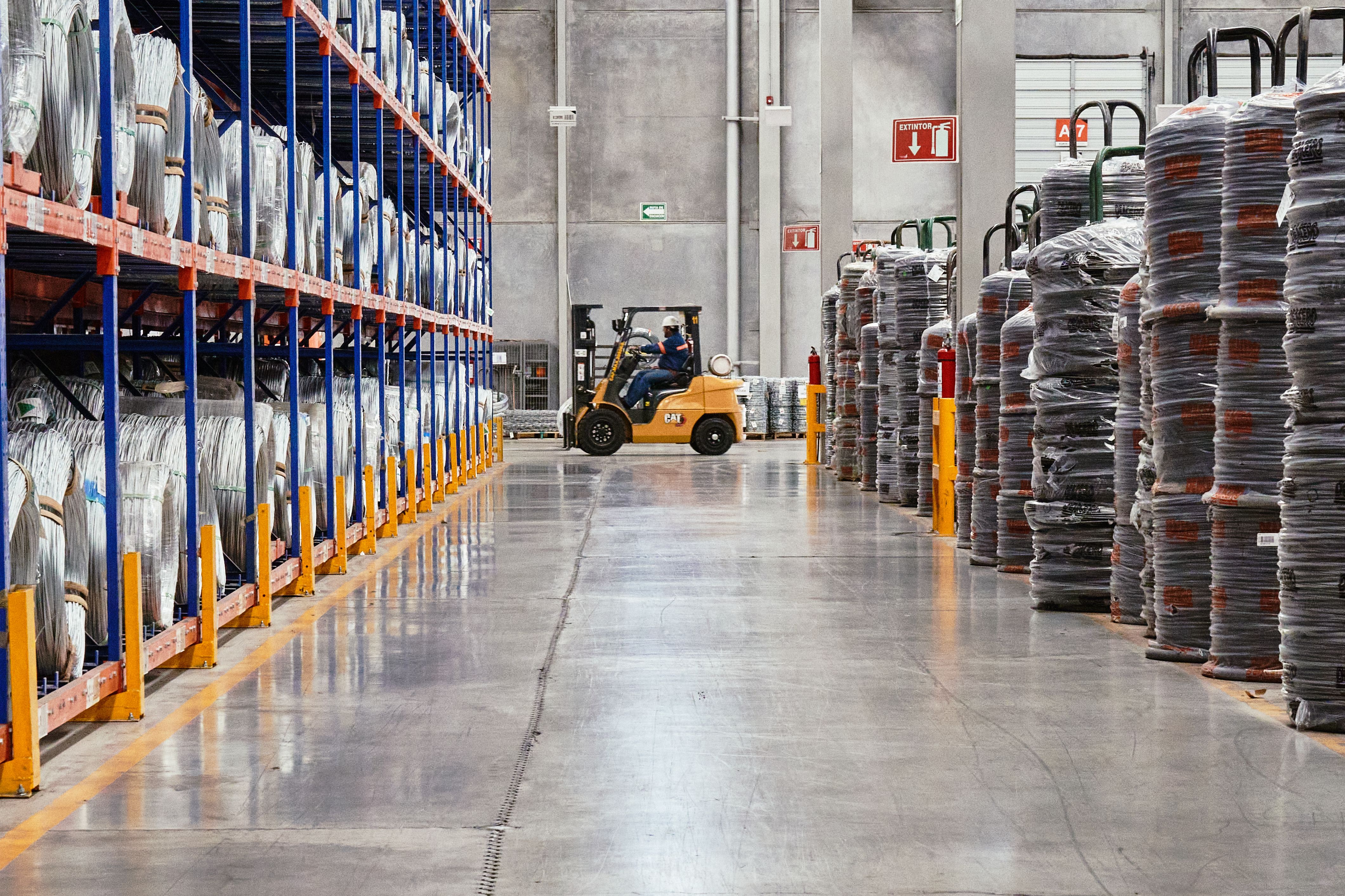
The size of heavy manufacturing operations often leads to a much bigger environmental footprint, due to:
- Emitting significant pollutants
- Requiring hazardous waste management
- Needing buffer zones separating it from residential areas
That’s why if you see images of factories that manufacture steel products like plates and beams, you often see that the factories are sprawling and can be miles upon miles wide.
Compare that to light manufacturing operations, which you can find in the center of communities, occupying maybe a few warehouses or small assembly plants.
How big are heavy manufacturing plants? During the onset of the Russian invasion of Ukraine, the defenders of the city of Mariupol were able to withstand a siege for 85 days by fortifying the nearby Azovstal Iron and Steel Works because it covered 4.3 square miles with refineries, plants, tunnels, and furnaces.
Here is a table to highlight the differences between light manufacturing and heavy manufacturing:
3 Production Methods in Light Manufacturing

Bringing everything back to light manufacturing, let’s now focus on how light manufacturing is carried out by businesses.
As we already touched upon, since light manufacturing doesn’t deal with raw material extraction, a light operation is concerned with making a finished product via:
- Assembly
- Finishing
- Processing
And it does this by creating and relying on streamlined workflows and automation to make those products as efficiently as possible.
Here are the three main production scheduling methods in light manufacturing, which are categorized by the following questions:
- How is production triggered relative to demand?
- What are the physical techniques used to fabricate and assemble goods?
- What are the broader methodologies that govern how a production line runs day to day?
1. Production Workflow Models
The production workflow models will dictate exactly when a manufacturer will start production on a finished good, and this starting point will dictate how the rest of the operation will run.
There are three models manufacturers can follow to decide when they're going to start production. These are:
- Make-to-Stock (MTS) — In this workflow, finished goods are manufactured for sale in anticipation of demand based on demand forecasts
- Make-to-Order (MTO) — In this workflow, finished goods are manufactured for sale based on actual demand, meaning production starts when a customer makes an order
- Make-to-Assemble (MTA) — In this workflow, sub-components are manufactured in advance and held ready, then quickly assembled into the finished product once a specific order arrives
Deciding which is best for you depends on a bunch of factors, and each has its own benefits, from mass-produced, standardized products to customization.
2. Physical Fabrication and Assembly Methods
The actual techniques used to build a product change depending on what you're making. Here are the three you'll run into most:
- Surface Mount Technology (SMT) — the go-to method for anything electronic, including lighting. Automated pick-and-place machines apply soldering paste and set components onto circuit boards. From there, the boards pass through reflow soldering ovens to lock everything in place
- Injection molding — how you make plastic or silicone parts, such as casings, structural components, and optical lenses. Liquid material gets injected into steel molds, then cooled and cured until it hardens into an exact, repeatable shape
- Automated cutting and stitching — the standard in apparel and furniture. CAD software guides the cutters through fabric or other materials, keeping waste down before everything moves on to assembly
3. Process Methodologies
Finally, we get to the process methodologies, which you can think of as how a light manufacturer determines how its production lines or manufacturing operations will run.
As the output for light manufacturing is completely different when you go from one business to another, what methodology works for one manufacturer won’t be a good fit for another. So, here is a list of manufacturing processes and how they work in practice:
- Batch production — Following this process means a manufacturer groups items together based on certain characteristics, such as size, color, purchase date, or expiry date, depending on the product type.
- Continuous flow manufacturing — Following this process means a manufacturer produces a standardized product using an assembly line that continuously builds products, with little to no WIP inventory since everything is constantly moving (this assembly line can comprise humans, robots, or both).
- Cellular manufacturing — Following this process means a manufacturer has a shop-floor setup with machines, tools, and people assigned to workspaces where products are manufactured in small batches.
- Routing manufacturing — Following this process means a manufacturer has established a route that determines how a product or batch will move through the shop floor as it passes through different operations (as well as the order of operations), usually mapped out using a flowchart to identify each step in the process and sequence it efficiently, or a Gantt chart to schedule operations and their relationships over time.
- Lean manufacturing — Following this process means a manufacturer attempts to remove as much waste (or Muda) as possible from the shop floor. Waste here is defined as anything that doesn’t add value to the customer. Achieving lean manufacturing involves streamlining manufacturing processes as much as possible, which is done using tools such as value stream mapping, 5S, and Kanban.
And there you have it, all the production methods that define light manufacturing. But theory is one thing. Practice is another. If you’re looking to optimize your light manufacturing processes, here’s what you’re going to need to do.
Inventory and Production Management for Light Manufacturers
.jpeg)
Efficient production and inventory management in light manufacturing depends on aligning raw material stock with real-time demand, rather than managing it reactively through spreadsheets.
That alignment relies on a few core operational capabilities, each addressing a point where manual processes tend to fail — a gap evident in manufacturers' struggles with overselling, mismatched stock across sales channels, and materials that serve both as sellable products and production components.
Bill of Materials
A multi-level Bill of Materials (BOM) standardizes exactly what goes into each product variant.
For a light fixture, that means the housing, wiring, LED array, and fasteners needed for that specific assembly — ensuring production and inventory systems work from the same product definition rather than guesswork.
Real-Time Inventory Tracking
Stock is separated into sellable units, backstock, and floor samples, and tracked to a specific bin location, lot number, or serial number for full traceability.
This matters most when a defect needs to be traced back to its source, or when the same material (like a blank garment) needs to be tracked both as sellable inventory and as a production component.
Work Order Management
Converting confirmed sales orders directly into work orders connects sales to the shop floor, enabling tracking of labor requirements, reporting of produced quantities, and spotting bottlenecks as they occur.
Automated Procurement
Setting minimum and maximum stock thresholds and safety stock levels lets the system generate purchase orders automatically based on lead times and incoming demand, preventing both stockouts and the capital tie-up that comes from over-ordering.
Multi-Warehouse Control
For manufacturers operating across multiple channels or locations, keeping stock levels synchronized across every site prevents double-selling and lost transfers.
Quality Control and Reporting
Logging quality checks and defects at each production stage maintains compliance and consistency across batches. Reporting on production efficiency, inventory turnover, and cost breakdowns ties everything together, showing where waste or margin loss is actually occurring rather than relying on intuition.
One extra thing that you’re going to need to consider when optimizing your light manufacturing operations is the tools that you’re using to manage all of the above. If you’re looking for a manufacturing ERP system for managing a light manufacturer (regardless of what you produce), we’d recommend checking out Digit.
Powering Light Manufacturing with Digit

Digit brings the capabilities above into a single connected system, replacing the spreadsheets and disconnected tools that most light manufacturers outgrow as they scale.
Real-time stock tracking, multi-level BOMs with version control, and demand-driven purchase order suggestions all live on a single platform rather than across separate spreadsheets and software.
Where Digit adds the most beyond basic inventory tracking is in the fulfillment and cost detail. Picking and packing validation confirms each item before it ships, with barcode scanning and configurable labels attached to bins, SKUs, and lots — reducing shipping errors on orders going out to Faire, Shopify, or wholesale channels alike. BOM cost roll-ups link directly to items and operations, so a formulation or component change updates true production cost automatically rather than requiring a manual recalculation.
Because Digit connects to Shopify, Amazon, WooCommerce, and accounting platforms like QuickBooks, it serves as the single source of truth across every sales channel a light manufacturer sells through — the exact gap that leads to overselling and stock-sync problems manufacturers run into when relying solely on native platform integrations. Manufacturing order scheduling and shop-floor routing round this out, giving visibility into what's running, what's late, and what's next without walking the floor.
See for yourself how Digit can support your light manufacturing by visiting the website and booking a call with one of our manufacturing experts.